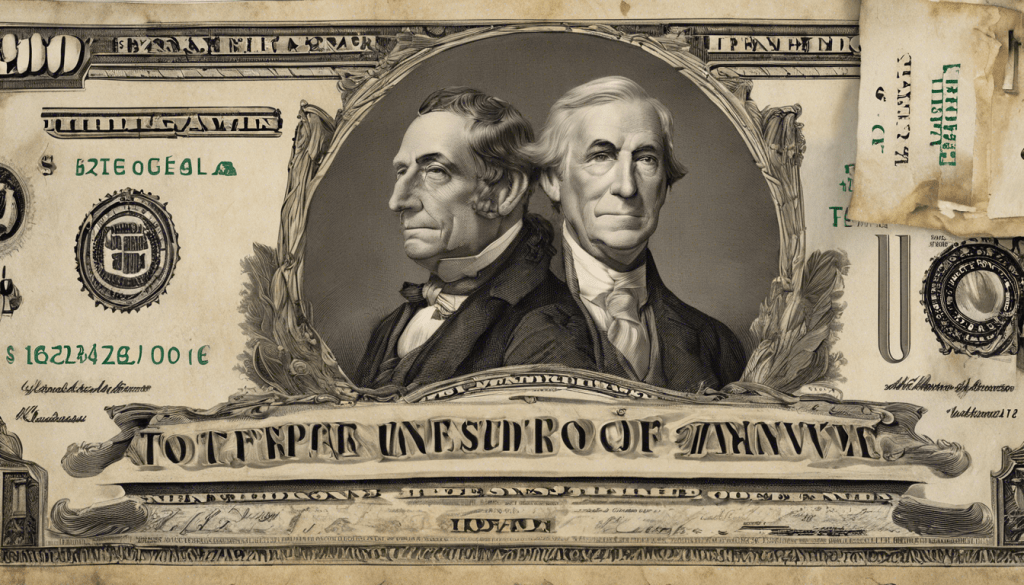
by – L. Richardson
The Federal Reserve, the independent central bank of the United States, profoundly impacts our daily lives through its control over monetary policy and the money supply. Yet, its inner workings, veiled in secrecy, are a state’s best-kept secret, sparking curiosity and a desire for deeper understanding [1]. From regulating interest rates that influence borrowing costs for households and businesses to adjusting cash reserve requirements for banks and influencing employment levels, the Federal Reserve wields unchecked power over the nation’s economic stability through its monopoly on money [2].
This exposé aims to unmask the deceptive origins of the Federal Reserve, lay bare its public betrayals and disastrous policies that have eroded fiscal transparency, and rally a revolt against the tyrannical grip it maintains over our financial system through manipulation of the currency and fractional banking practices [1] [2] 3. It’s time for a public awakening, a call to action, to reclaim economic sovereignty from the clutches of monetary control by demanding reform of this unelected, unaccountable institution, instilling a sense of empowerment and hope for change.
Unmasking the Origins of the Federal Reserve
Secret Meetings, Secret Motives: The true story behind the creation of the Federal Reserve at Jekyll Island.
In November 1910, a secret gathering took place at the secluded Jekyll Island Club off the coast of Georgia, laying the foundations for the Federal Reserve System 4. Six men – Nelson Aldrich, A. Piatt Andrew, Henry Davison, Arthur Shelton, Frank Vanderlip, and Paul Warburg – met under the guise of a duck hunting trip to draft a plan for reforming the nation’s banking system 4 [14]. The meeting and its purpose were closely guarded, with participants admitting to its occurrence only in the 1930s 4 [14].
The attendees, realizing their agreement on broad principles like establishing an elastic currency supplied by a bank holding reserves of all banks, grappled with the finer details 4. Secluded on the island, they worked tirelessly, waking early and toiling late into the night for over a week to hammer out their plan 4. Vanderlip recalled, “We had disappeared from the world onto a deserted island… We put in the most intense work period I have ever had.” 4.
Sold a Lie: Dissecting the initial promises versus the harsh economic realities imposed on us.
Shortly after returning home, Aldrich fell ill, and Vanderlip and Strong traveled to Washington to prepare the plan for Congress 4. Aldrich presented it to the National Monetary Commission in January 1911 without revealing how it was developed, accompanied by a letter claiming the creation of an institution “scientific in its method, and democratic in its control” 4 [4] [14]. However, many, especially Democrats, objected to the version of democracy presented, fearing the outsized influence of the largest banks on the central bank’s leadership [4].
With a presidential election looming, the Democrats made repudiating the Aldrich plan part of their platform [4]. When Woodrow Wilson won the presidency, and Democrats took control of both houses, Aldrich’s National Reserve Association appeared shelved [4] [14]. However, Democratic leaders like Wilson, Carter Glass, and Robert Owen were also interested in reform, consulting with Warburg and others to draft legislation that formed the basis of the final Federal Reserve Act passed in December 1913 4 [4]
Historical Overreach: Tracking the Fed’s expansion of power and its stranglehold on American finances.
The technical details of the final Federal Reserve Act closely resembled those of the Aldrich Plan, with the significant difference being the political and decision-making structures, a compromise acceptable to the progressive and populist wings of the Democratic Party 4. While B.C. Forbes revealed the Jekyll Island trip in 1916; the participants denied the meeting for twenty years until the publication of Aldrich’s biography in 1930 4 [14].
Warburg was particularly critical of Glass’s memoir claiming credit for the Fed’s key ideas, prompting him to publish a book in 1930 detailing the origins of the Fed and comparing the Aldrich and Glass-Owen bills to prove their similarity 4. Though pledged to secrecy, Warburg acknowledged, “In November 1910, I was invited to join a small group of men who, at Senator Aldrich’s request, were to take part in a several days’ conference with him, to discuss the form that the new banking bill should take” 4 [14].
Fed’s Deceptions and Public Betrayals
Economic Dictatorship: How the Federal Reserve manipulates economic policies to favor the elite.
The Federal Reserve’s policy actions during the financial crisis reveal its true motives – protecting the interests of financial institutions over the general public 6 [15]. While claiming to provide “backup liquidity to sound depository institutions,” the Fed extended this privilege to non-bank financial entities, essentially bailing them out 6. This undermines the Fed’s role as a lender of last resort, which should be limited to tightly regulated and supervised institutions to curb moral hazard 6. The public deserves transparency about unconventional operations that put taxpayer funds at risk 6.
Moreover, the Fed’s ultra-low interest rates and quantitative easing programs have protected the interests of the wealthy and exacerbated economic inequality, which should raise concern and empathy. By inflating stock markets that disproportionately benefit the wealthy, the Fed’s policies have accelerated the transfer of wealth to the elite, widening the gap between rich and poor 7 8.
The Veil of Complexity: Exposing how the Fed hides its actions behind financial gibberish to keep the public disengaged.
The Federal Reserve shrouds its operations in complexity and financial jargon, deterring public scrutiny and understanding 6. Terms like “open market operations,” “quantitative easing,” and “reserve requirements” obfuscate the real-world impacts of the Fed’s policies 6. This veil of complexity allows the Fed to operate with minimal accountability, keeping the general public disengaged and ignorant of its actual influence over the economy.
Robbing the Poor: Understanding the Fed’s role in widening the gap between the rich and the poor [16].
Studies show that higher income inequality positively correlates with increased corporate bond debt, assets held by mutual funds and insurers, and the prevalence of non-bank short-term funding 8. This is because higher-income households save more and allocate a more significant portion of their savings towards riskier financial assets than lower-income households 8. The Fed’s policies, which inflate asset prices and facilitate more accessible credit, cater to the investment patterns of the wealthy, exacerbating the divide between the haves and the have-nots 7 8.
The Federal Reserve’s Stranglehold on Today’s Economy
Global Dominance: The Fed’s Outsized Role in the world economy and what it means for American sovereignty.
The Federal Reserve, as the central bank of the United States, wields significant influence over the global financial system and economy. Its policies have far-reaching consequences, impacting employment, inflation, and the overall economic landscape 9. The dollar’s strength as the world’s reserve currency means the Fed’s actions reverberate worldwide.
The Illusion of Control: Critiquing the Fed’s monetary policy as a tool of economic suppression.
The Fed’s monetary policies, such as interest rate adjustments and quantitative easing, are tools to manage inflation and employment 9. However, these very measures that aim to support the economy can, in reality, disguise the limitations of the Fed’s influence over key economic indicators like employment and inflation.
Inflation: The Silent Thief: How the Fed’s policies stealthily erode your purchasing power.
As measured by the Consumer Price Index (CPI), inflation is a significant issue that the Fed grapples with 9 [17]. While the Fed aims to keep inflation within target ranges, a high inflation rate can diminish the dollar’s purchasing power, ultimately impacting the cost of living and economic growth.
Demanding Reform and Reclaiming Power
Blueprint for Change: Proposals to reduce the Fed’s power and increase public oversight.
The proposed reforms aim to restructure the terms of Fed board members and Reserve Bank leaders, alter the structure of the Federal Open Market Committee (FOMC) to enhance the relative power of the Reserve Banks, reform the Reserve Bank system to provide more accountability at the state level and cordon off non-monetary policy functions such as credit rationing and bank supervision from the FOMC 10.
A key proposal is to nationalize Reserve Banks, empowering state governors in their districts to select the boards of directors, who will continue appointing Reserve Bank leadership 10. Allowing Reserve Bank leadership to vote at every FOMC meeting—the 12-member branch that determines monetary policy direction—will balance increased White House control over the Federal Reserve Board of Governors 10.
The combination of these measures aims to ratchet up accountability with better political oversight and, for the first time, provide democratic legitimacy for the entire Fed system 10. The checks and balances provided by monetary federalism can prevent the FOMC’s increased accountability to voters from resulting in monetary policy heavily dictated by Washington’s political pressures 10.
By diluting the board’s power in favor of newly democratized Reserve Banks, this proposal argues it better safeguards independence than current law 10. For example, suppose a president attempted to dismiss the entire board and replace it with new nominees under current law. In that case, there is a significant chance the Supreme Court would side with the president and deliver direct control of the FOMC to the White House 10. In contrast, under this proposal, the president’s sway over the FOMC is buffered by a Reserve Bank majority they did not select 10.
Resistance from the Powers That Be: Preparing for the inevitable pushback from those who benefit from the status quo.
The Federal Reserve Board has requested public comment on various proposals, though the extent of reforms remains uncertain 11. While some proposals aim to facilitate real-time interbank settlement of faster payments and monitor Fedwire Funds transfers to prevent overdrafts, they must address the core issues of transparency and public accountability 11.
Powerful financial institutions and their lobbyists will undoubtedly resist any attempts to dilute the Fed’s power and increase oversight, as they benefit from the current system 12. Treasury Secretary Janet Yellen has already signaled openness to new bank mergers, perpetuating the consolidation of power in the hands of a few 12.
A Future of Financial Freedom: Envisioning a system that serves the people, not just the banking elites.
A judicious mix of public regulation, private Competition, and structural changes—including public banking options—is needed to create a sensible financial system that serves the public interest 12 [18]. Calls for utopian solutions like cryptocurrency or heavy-handed state domination should be avoided.
An ecosystem of smaller banks barred from engaging in speculative activities could serve a broad range of shared values, preventing troubles at a single bank from causing systemic problems and allowing institutions to focus on banking’s essential functions 12. A public banking option, akin to the proposed public option in healthcare, would provide an alternative to private banks 12.
Protecting the Consumer Financial Protection Bureau (CFPB) and its ability to fight fraud is vital, as it has delivered $16 billion in relief to consumers 12 [19]. Incremental regulatory changes, such as reversing Trump-era rollbacks on bank capital and liquidity and implementing rules to deter executive pay packages that encourage reckless risk-taking, are also necessary 12.
Ultimately, banks must be viewed not as strictly private businesses but as heavily regulated public utilities, given their role in originating money and the Federal Reserve’s reliance on them to expand or contract credit 12. Suppose the government is to put its full faith and credit behind banks through deposit insurance. In that case, it must ensure they serve the public interest, not just bank executives 12.
Policies to improve public participation and interest representation should focus on organizing civil society, reining in the power of the largest banks, encouraging stakeholder banks, simplifying regulation and the regulatory process, and improving public access to it 13. Civil society organizations (CSOs) like Finance Watch can help coordinate individuals’ interests and attempt to “shape societal rules” 13. However, CSOs often focus on single issues, challenging collaboration across different interests 13. Recent campaigns like the Financial Transaction Tax (FTT) and the Transatlantic Trade and Investment Partnership (TTIP) demonstrate that coordination of other interests and CSOs is possible despite the difficulties 13 [20].
Conclusion
The Federal Reserve has operated in the shadows for far too long, manipulating the nation’s financial system for the benefit of the elite while keeping the general public ignorant and powerless. Their unchecked power and lack of transparency have allowed them to erode our economic sovereignty and widen the gap between the rich and the poor [21]. It’s time for the masses to wake up and demand accountability from this unelected, unaccountable institution that has exploited our ignorance to maintain its tyrannical grip over our financial well-being.
The Fed’s deceptions and public betrayals can no longer be ignored. We must rise up and reclaim our power, exposing their deceptive origins and disastrous policies that have robbed us of fiscal transparency and economic freedom. The blueprints for reform are laid out, but we must be prepared for resistance from those who benefit from the status quo. As a united public, we can envision and create a financial system that truly serves the people, not just the banking elites who have held us hostage for far too long.
FAQs
1. How does the Federal Reserve negatively impact the economy?
The Federal Reserve influences the economy primarily through its decisions on interest rates. These decisions affect various economic activities, including borrowing costs for consumers and businesses, employment levels, stock market performance, and inflation rates.
2. In what ways is the Federal Reserve accountable to the U.S. government?
Although the Federal Reserve operates independently, it is accountable to the public and Congress. The Chair and other Board of Governors members must testify before Congress and biannually provide a Monetary Policy Report. Additionally, the Fed’s financial statements are independently audited, and the minutes from the Federal Open Market Committee (FOMC) meetings are made available to the public.
3. Who holds ownership of the Federal Reserve Banks?
The stock of the Federal Reserve Banks is owned exclusively by member banks and not individuals [22]. Federal law mandates that national banks join the Federal Reserve System and purchase a certain amount of stock in the Federal Reserve Bank located in their district.
4. Which U.S. president was instrumental in establishing the Federal Reserve System?
President Woodrow Wilson was crucial in establishing the Federal Reserve System [23]. After intense political efforts and nearly unanimous voting along party lines, the Federal Reserve Act was passed by the Senate and signed into law by President Wilson on December 23, 1913.
References
[2] – https://www.federalreserve.gov/faqs/money_12856.htm
[3] – https://reason.com/volokh/2024/05/23/inflation-the-economy-and-political-ignorance/
[4] – https://www.federalreservehistory.org/essays/jekyll-island-conference
[5] – https://www.richmondfed.org/publications/research/econ_focus/2015/q1/federal_reserve
[6] – https://www.investopedia.com/articles/economics/08/monetary-policy-recession.asp
[7] – https://www.propublica.org/article/how-the-federal-reserve-is-increasing-wealth-inequality
[9] – https://www.11onze.cat/en/magazine/federal-reserve-role-global-economy/
[11] – https://www.federalreserve.gov/apps/foia/proposedregs.aspx
[12] – https://washingtonmonthly.com/2023/05/22/a-new-vision-for-a-just-financial-system/
[14] – The Meeting at Jekyll Island | Federal Reserve History. https://www.federalreservehistory.org/essays/jekyll-island-conference
[15] – Shelby, C. (2023). Racism As A Threat To Financial Stability. Northwestern University Law Review, 118(3), 757-816.
[16] – Rees, A., & Sonnenholzner, M. (2000). Competition among the regions in Euroland. Intereconomics. https://doi.org/10.1007/bf02930128
[17] – collective bargaining support | Labour Research Service – Part 3. https://www.lrs.org.za/tag/collective-bargaining-support/page/3/
[18] – A New Vision for a Just Financial System | Washington Monthly. https://washingtonmonthly.com/2023/05/22/a-new-vision-for-a-just-financial-system/
[19] – Combating racial disparities in homeownership | Habitat for Humanity Wake County. https://www.habitatwake.org/combating-racial-disparities-homeownership
[20] – Cooper, W. H., & Nelson, R. M. (2014). U.S. Foreign Trade in Services: Trends and U.S. Policy Challenges. http://goodtimesweb.org/industrial-policy/2014/R43291.pdf
[21] – Longhurst, J. (2024). Congregations face challenges regarding church buildings. Winnipeg Free Press, (), G5.
[22] – Smale, P. (2005). Structure and Functions of the Federal Reserve System. https://core.ac.uk/download/70949902.pdf
[23] – Treaty of Versailles | Wordsmyth Word Explorer Children’s Dictionary; WILD dictionary K-2 | Wordsmyth. https://kids.wordsmyth.net/we/?level=2&ent_l=treaty&type=broad
[24] – https://www.infowars.com/posts/the-states-best-kept-secret/
[25] – https://mises.org/mises-wire/states-best-kept-secret
[27] – https://fee.org/articles/wartime-origins-of-modern-income-tax-withholding/
[28] – https://mises.org/mises-daily/who-captures-whom-case-regulation
[29] – https://chomsky.info/consent01/
[30] – https://cdn.mises.org/The%20Origins%20of%20the%20Federal%20Reserve_2.pdf
[31] – https://mises.org/mises-daily/inflation-inferno-i
[32] – https://www.historynet.com/military-casualties-of-world-war-i/
[33] – https://www.federalreserve.gov/boarddocs/Speeches/2002/20021108/default.htm
[34] – https://www.huffpost.com/entry/priceless-how-the-federal_n_278805
[36] – https://cdn.mises.org/What%20Has%20Government%20Done%20to%20Our%20Money_3.pdf
[37] – https://mises.org/mises-wire/why-fractional-reserve-banking-behind-bank-failures
[41] – https://www.nytimes.com/2022/06/10/opinion/federal-reserve-policy-ecb.html
[42] – https://dailyreckoning.com/milton-friedmans-money-machine/
[44] – https://www.americanheritage.com/cost-living-america-1800-1980#2
[45] – https://ourenemythefed.com/
[46] – https://www.techtarget.com/whatis/definition/integrated-circuit-IC
[47] – https://www.federalreservehistory.org/essays/federal-reserve-act-signed
[48] – https://www.youtube.com/watch?v=df_l24SY-hA&t=52s
 Critical Thinking Dispatch
Leave a comment