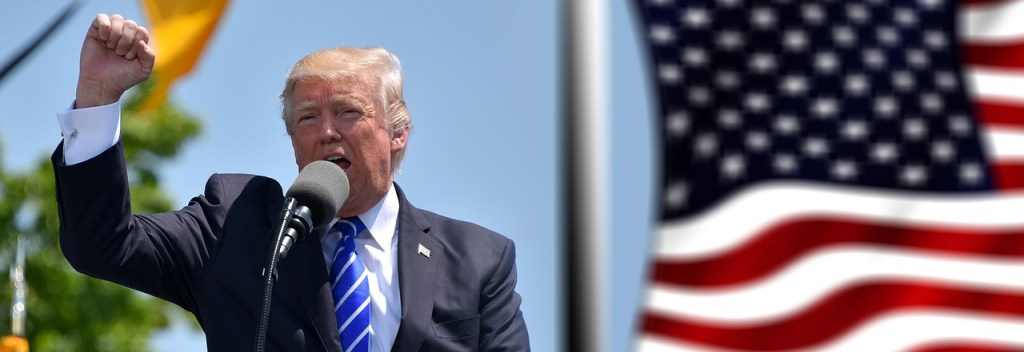
by – L. Richardson
Listen up, folks! Border security just got confirmed as cartel terrorists brazenly attacked U.S. citizens merely 1,000 feet from our southern border in California’s Jacumba Wilderness. We’re not talking about distant threats anymore – these criminals shot an American hiker on our soil! As a result, President Trump is taking decisive action with “Operation Secure Our Sovereignty,” deploying 500 Marines to protect our nation’s boundaries. This is just the beginning, as plans are already in motion to potentially station up to 10,000 troops along our southern frontier. We’re witnessing a historic response to what the White House officially recognizes as a national emergency, with hundreds of thousands of American lives lost to drugs flowing across our border. Our message is clear – we’re taking back control of our sovereignty; this time, we mean business!
Operation Secure Our Sovereignty
Initially, U.S. Marines from Camp Pendleton have established strategic positions along California’s southern border, marking a significant escalation in border security operations29. The first wave consists of 500 Marines strategically positioned at the Border Patrol station in Imperial Beach and near Brown Field Airport in Otay Mesa29.
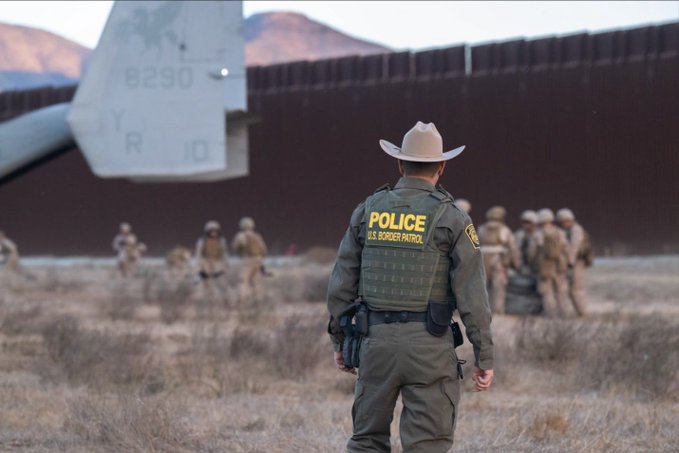
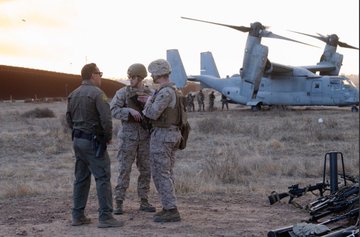
Military convoys equipped with armored vehicles have moved into position, while Marine Corps MV-2B Ospreys from the 3rd Marine Aircraft Wing conducted reconnaissance missions to identify potential landing zones13. Subsequently, Marines from the 1st Combat Engineer and 7th Combat Engineer battalions staged at Camp Pendleton and prepared for rapid deployment13.
The operation’s scope extends beyond the initial deployment:
- 1,500 active-duty personnel currently deployed
- 2,500 service members already supporting Customs and Border Protection30
- Capability to surge up to 2,500 additional Marines if needed13
Meanwhile, specialized units from VMM-161 and MWSS-373 squadrons coordinated with Border Patrol agents to establish supply routes and personnel delivery points13. The Department of Defense has directed USNORTHCOM to take charge of “sealing the borders “2.
Furthermore, Marines have begun installing physical barriers, including concertina wire, demonstrating their commitment to enhanced border security measures13. The Department of Defense and Homeland Security are mobilizing sufficient personnel for “operational control” of the U.S./Mexico border.
The operation represents a comprehensive military response to border security challenges. Marines with III Marine Expeditionary Force Information Group coordinate and integrate capabilities for information environment operations, ensuring adaptability in this dynamic mission31 [37].
Additionally, the exact number of personnel will fluctuate as units rotate and additional forces are tasked to deploy once planning efforts are finalized30. These military forces will support enhanced detection and monitoring efforts while repairing and placing physical barriers along the border30.
The Threat at Our Doorstep
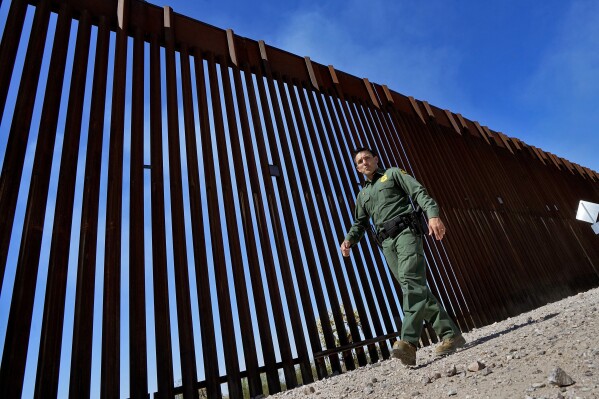
First and foremost, the recent attack on American soil has highlighted the immediate threat at our doorstep. A U.S. citizen and Canadian companion were brutally confronted by armed cartel members merely 1,000 feet north of the U.S.-Mexico border in California’s Jacumba Wilderness32. When the hikers refused to comply with the gunmen’s demands, shots were fired, striking one victim in the leg before the assailants robbed them of their belongings33.
The incident occurs amid an intensifying cartel civil war that has claimed 90 lives in northern Mexico34. The conflict erupted following the capture of two Sinaloa Cartel founders, Joaquín “El Chapo” Guzmán and Ismael “El Mayo” Zambada, leading to a violent power struggle34. Particularly concerning is how these cartels have modernized their operations, now employing:
- Bomb-dropping drones
- Improvised explosive devices
- Rigged armored vehicles
- Sophisticated cyber operations35
Moreover, these criminal organizations have expanded beyond traditional drug trafficking. The cartels now possess extensive networks spanning major U.S. cities, from Los Angeles to Chicago17. Consequently, their infrastructure enables potential retaliatory strikes deep within American territory17.
The sophistication of these threats extends beyond physical violence. These organizations have demonstrated capabilities in:
- Infiltrating government and commercial institutions through cybercrime
- Influencing local politics through intimidation
- Coordinating with Chinese underground banking systems
- Maintaining connections with U.S.-based gangs17
Nevertheless, the Border Patrol’s elite tactical unit (BORTAC) has responded forcefully to these provocations. “These cartels think they can bring their war to American soil,” stated Border Patrol officials, emphasizing that “the safety of our citizens is NOT negotiable “36.
The threat has evolved significantly from previous years when a handful of criminal organizations controlled distinct territories. Today’s landscape features multiple violent factions fighting for power, making them more agile and challenging to combat35. These groups have mainly targeted government officials in Mexico and could potentially adopt similar terrorist tactics against political figures, law enforcement leaders, and military personnel in the United States17.
Legal and Policy Framework
Under the Constitution and National Emergencies Act, President Trump has declared a national emergency at the southern border of the United States1 [38]. This proclamation specifically invokes section 12302 of Title 10, United States Code, granting extraordinary powers to the Secretaries of military departments1.
The declaration primarily authorizes the Secretary of Defense to deploy Armed Forces, specifically the Ready Reserve and National Guard, to support the Department of Homeland Security’s mission of obtaining complete operational control of the southern border. Accordingly, the Secretary of Defense must facilitate operational needs through detention space, transportation, and logistics services1.
The legal framework undoubtedly extends beyond standard border operations. The Posse Comitatus Act essentially prohibits the military from performing specific law enforcement activities on U.S. soil28, including:
- Vehicle interdiction and searches
- Arrests or interrogations
- Evidence collection
- Operating checkpoints
- Surveillance operations
Instead, the President holds powerful emergency authority through the Insurrection Act, which provides explicitly constitutional exceptions to the Posse Comitatus Act28. This historic law grants the President authority to deploy both the National Guard and armed forces to enforce rules or suppress domestic violence3.
The administration must submit a joint report within 90 days detailing border conditions and whether invoking the Insurrection Act becomes necessary1. Under Article I Section 8 of the Constitution, the Calling Forth Act grants additional powers to “repel invasions “28.
The declaration’s unprecedented nature stems from its intention to redirect previously allocated funds4. Whether this action faces legal challenges remains uncertain, though previous emergency declarations have encountered judicial scrutiny3. The courts’ role becomes crucial, as demonstrated by past cases where federal judges issued injunctions affecting similar border security measures4.
Through consultation with the Attorney General, the Secretary of Defense and Homeland Security must prioritize preventing unauthorized entry while ensuring appropriate use of force policies1. This framework establishes transparent chains of command and operational guidelines for military personnel operating along the border.
A Strong Message to the World
The White House has launched an unprecedented deportation operation, primarily targeting individuals who entered the United States illegally. Press Secretary Karoline Leavitt released photographs of deportation flights, emphasizing that “severe consequences await those who illegally enter the United States of America “5.
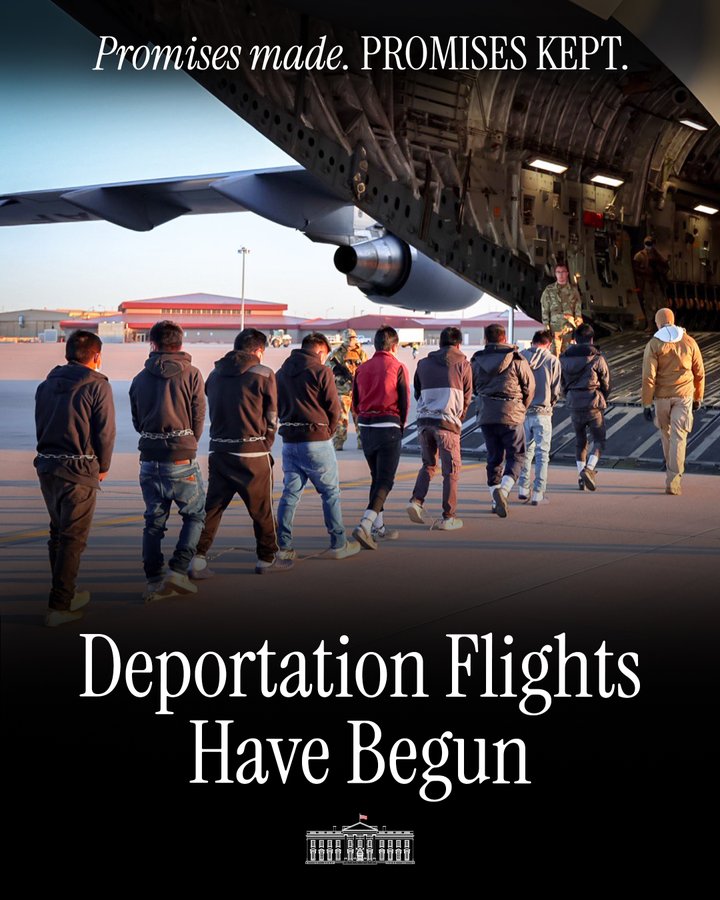
Recent polling data reveals substantial public backing for these measures:
- 55% of Americans support mass deportation plans
- 88% favor deporting immigrants with criminal records
- A majority now advocates for decreased immigration levels
The Pentagon has committed to providing airlift support for Department of Homeland Security operations, coordinating deportation flights for over 5,000 individuals detained near San Diego and El Paso5. The administration’s directive ensures that Immigration and Customs Enforcement, Customs and Border Protection, and U.S. Citizenship and Immigration Services prioritize public safety and national security interests5.
Notably, the Department of Homeland Security oversees over 66,000 federal law enforcement officers – the largest contingent of any federal agency7. These forces are currently executing what the administration terms “the largest domestic deportation operation in American history” 7.
The economic implications of this policy are substantial. Estimates suggest the mass removal initiative could impose a one-time cost of $315 billion, with annual expenses reaching $88 billion for deporting one million people5.
On the global stage, this assertive stance signals America’s renewed commitment to territorial integrity. The administration has prioritized the detention of apprehended individuals pending removal proceedings8. These measures encourage voluntary departures while implementing sanctions under section 243(d) of the Immigration and Nationality Act [39].
The Office of Management and Budget has been directed to identify and halt public benefits to unauthorized recipients8. This comprehensive approach demonstrates the administration’s determination to enforce immigration laws consistently across all federal agencies, establishing what officials describe as complete operational control of American borders.
The Media Meltdown
Breaking news outlets across America scrambled to cover President Trump’s sweeping executive actions on immigration. Within hours of his inauguration, Trump issued ten executive orders that fundamentally altered the immigration landscape9. “It’s breathtaking, both in terms of substance and just how many actions they’re taking right out of the gate,” stated Heidi Altman of the National Immigration Law Center9.
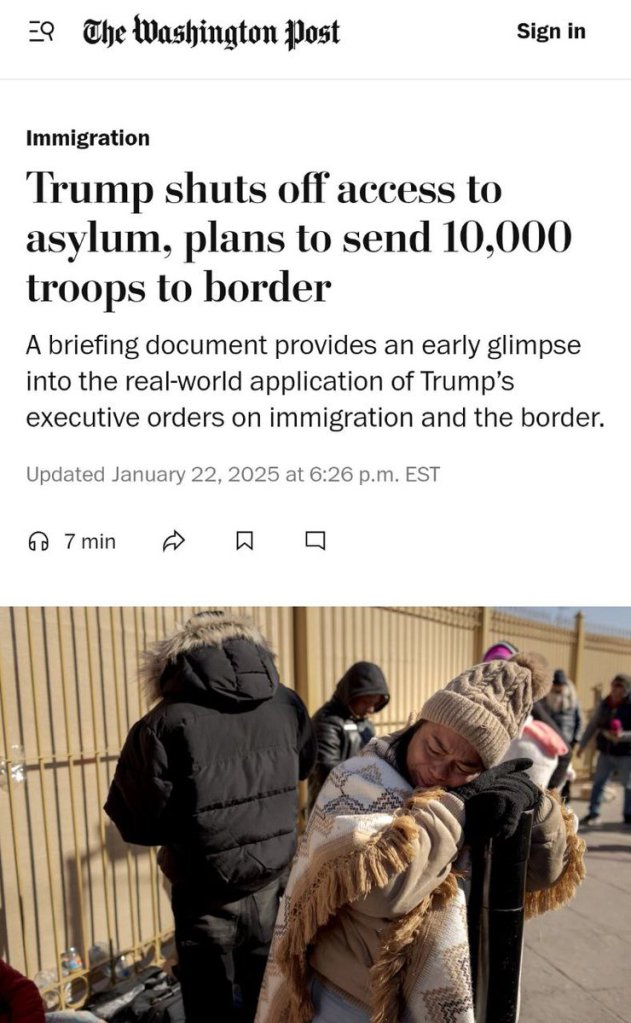
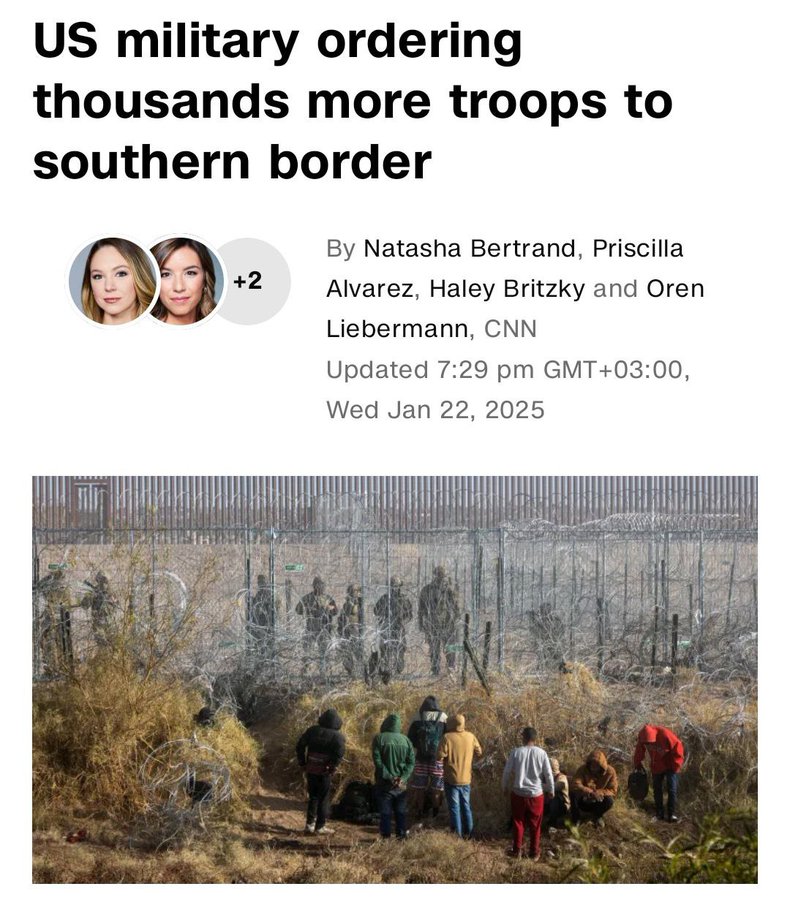
Media reaction –
“Mainstream media can’t handle the truth that Trump keeps his promises.”
Major news networks primarily focused on the immediate impacts of Trump’s directives. Indeed, the administration’s swift actions surprised many, with the Justice Department halting programs that provided legal guidance to immigrants facing deportation9. Indeed, Republican lawmakers applauded these decisive measures, with Senator Mike Lee emphasizing that “Donald Trump has shown that he’s willing to deliver on campaign promises “10.
The media coverage intensified as the Department of Defense announced the formation of a special Task Force to oversee the implementation of executive orders9. While some outlets highlighted concerns about the rapid policy shifts, others focused on the practical implications of deploying 1,500 active-duty military personnel to the southern border.
How this action is just the beginning –
“This is only Day 5, and they’re already freaking out!”
The administration’s actions have likewise triggered widespread reactions from advocacy groups. Immigration organizations expressed alarm at the comprehensive nature of Trump’s directives, which included:
- Suspending refugee admissions
- Ending parole for Haitians, Venezuelans, Cubans, and Nicaraguans
- Reinstating the “Remain in Mexico” policy
- Declaring a national emergency to justify military deployment11
Therefore, frontline advocates anticipate more significant changes, as Trump’s closest advisors appear better prepared and more disciplined than during his first term11. The media landscape continues to evolve as the administration pushes forward with its agenda, backed by detailed implementation plans from the America First Policy Institute and Heritage Foundation’s Project 2025.
The Troops on the Ground
The Pentagon’s rapid deployment operation marks a historic shift in border security strategy. The Department of Defense has mobilized 1,500 active-duty service members to the southern border12, joining 2,500 troops already stationed in the region12.
Numbers and scale:
1,500 troops already, with plans for up to 10,000 –
“We’re talking about real numbers here, folks!”
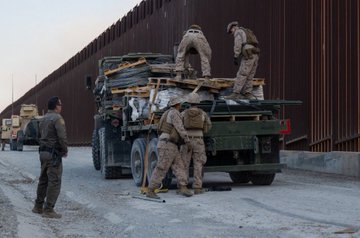
The current force composition includes the following:
- 1,000 Army soldiers from 13 units across seven states13
- 500 Marines from Camp Pendleton14
- 2,500 National Guard and Reserve forces providing ongoing support14
U.S. Northern Command oversees this extensive operation, with support from the U.S. Transportation Command and the National Guard Bureau12. The deployment represents a 60% increase in active-duty forces since the President’s inauguration12.
Stories or potential stories from the troops emphasizing their role in securing America –
“Our brave men and women, standing guard for our nation.”
Marine Corps aviation units have markedly demonstrated their capabilities. Two 3rd Marine Aircraft Wing Ospreys conducted crucial reconnaissance missions, scouting potential landing zones along California’s southern border13. Soon after, Marines from VMM-161 and MWSS-373 squadrons coordinated with Border Patrol agents to establish vital supply routes13.
The operation’s scope continues expanding. The 82nd Airborne’s 3rd Brigade Combat Team—one of America’s most elite rapid response forces—stands ready for deployment13. These troops provide real-time situational awareness of persons, vehicles, vessels, and aircraft movements12.
The Department of Defense has established a dedicated task force for implementing border-related executive orders12. Currently, troops assist with:
- Physical barrier placement
- Operator-level maintenance
- Movement and staging of CBP assets
- Intelligence analyst support12
The Pentagon remains prepared to deploy up to 2,000 additional Marines if needed14. Ultimately, this military presence will fluctuate as units rotate and additional forces join based on finalized planning efforts13. A senior defense official emphasized that “this is going to be a big priority for the department under the acting secretary “12.
The Washington Post reports consideration of a dramatic public road march featuring Stryker armored combat vehicles to the border13. Meanwhile, the 10th Mountain Division from Fort Drum may serve as the headquarters element for this comprehensive response13.
Future Implications
Military strategists at the Pentagon are meticulously evaluating options for expanded operations against Mexican drug cartels15. The Department of Defense’s comprehensive approach encompasses designating cartels, primarily the Tren de Aragua, as foreign terrorist organizations15.
Speculation on further military involvement in Mexico –
“Could we see Special Forces? Trump says it’s on the table!”
Military experts caution against direct Special Forces deployment into Mexico16. Nonetheless, the Atlantic Council suggests that U.S. special operators possess ideal expertise for combating cartel networks, drawing from their extensive experience fighting terrorist organizations17.
The potential deployment faces substantial challenges:
- Risk of cartel retaliation against U.S. operators and their families17
- The necessity for a robust partnership with Mexican President Claudia Sheinbaum’s administration17
- Complex diplomatic considerations regarding sovereignty17
The long-term vision for border security and national safety –
“This is just the start of taking back our sovereignty.”
The U.S. Border Patrol’s 2024-2028 strategy builds upon three fundamental goals18:
- Securing the border through enhanced operations
- Achieving organizational excellence
- Building effective collective capabilities
Ultimately, DHS plans substantial investments in policy, technology, human capital, and infrastructure19. Currently, the department’s daily operations include:
- 225 hours of aerial surveillance missions19
- 79 hours of maritime patrols19
- Monitoring 7,500 miles of land borders with Canada and Mexico19
- Patrolling 2,500 miles of coastal border19
The administration’s vision emphasizes a unified approach to border management20. Hence, CBP takes a comprehensive stance, combining customs, immigration, border security, and agricultural protection into coordinated activity20 [40].
Looking ahead, DHS will address increasing complexities through modernized infrastructure, including:
- Autonomous surveillance towers
- Advanced sensor networks
- Radar systems
- Expanded aerial assets19
The strategy prioritizes counter-terrorism efforts, primarily anticipating, detecting, and disrupting threats to protect American citizens and economic interests20. Occasionally, when other options prove insufficient, the United States may launch appropriate unilateral operations against high-value cartel targets, but only with Mexican government invitation17.
“The opioid crisis poses a clear danger to U.S. national security that demands urgent action,” states a senior defense analyst, “but that action must be measured, informed, and strategic “17.
Call to Action
Citizens across America stand ready to support enhanced border security measures, as recent surveys reveal that 80% of Americans believe the government needs improvement in handling border situations21.
Stay informed, support the measures, and engage with the community –
“Share this truth; let your voice be heard!”
Currently, community safety programs demonstrate substantial success through citizen involvement. Research shows that homeowners primarily engage in neighborhood security initiatives22. These programs yield multiple benefits:
- Increased crime prevention awareness
- Enhanced police-community relations
- Stronger community participation
- Improved information sharing between agencies and citizens22
The Department of Homeland Security actively promotes public engagement through diverse community programs23. Generally, these initiatives facilitate:
- Communication of reliable information about federal programs
- Collection of community feedback on security impacts
- Development of stronger channels between communities and federal officials
vigilance and patriotism –
“We must stand united for America’s safety!”
Ultimately, border security remains a top concern for American voters, with 25% stating it as a decisive factor in their voting decisions24. The Office for Civil Rights and Civil Liberties (CRCL) recognizes this priority, coordinating regular engagements across numerous cities23 [41].
The CISA Cybersecurity Awareness Program exemplifies how public-private partnerships can strengthen national security25. This unprecedented collaboration between federal and state governments, industry, and non-profit organizations promotes safer communities through informed citizen participation.
Public opinion data underscores the urgency: 22% of Americans express concerns about security issues at the border, while another 22% worry about economic impacts21. These statistics demonstrate why citizen involvement in border security matters now more than ever.
CRCL facilitates various engagement opportunities:
- Interagency roundtables
- Community meetings
- Civil society stakeholder sessions
- Public townhalls23
The International Community Coordination Team (ICCT) provides platforms for citizens to voice concerns about:
- Specific community needs
- Reactions to enforcement actions
- Suggestions for government effectiveness23
A recent study on community safety emphasizes that “Coproduction is most effective when embraced by citizens motivated to improve community conditions and by officers who deal with these conditions daily. “
For those seeking to contribute, the Department of Homeland Security maintains engagement programs in numerous metropolitan areas23. These initiatives enable citizens to participate in:
- Policy discussions
- Community safety planning
- Information sharing networks
- Local security initiatives
Remember, border security strengthens through collective effort. Surveys indicate that 57% of Americans believe current migration patterns impact community safety21. Citizens become crucial partners in maintaining national security by staying informed and engaged.
Conclusion:
A New Era of Security
Above all, President Trump’s bold deployment of Marines through Operation Secure Our Sovereignty marks a turning point in America’s fight against cartel terrorism. Our military’s swift response, starting with 500 Marines and potentially expanding to 10,000 troops, sends an unmistakable message – America will defend its sovereignty at any cost.
The recent attack on American soil, merely 1,000 feet from our border, undoubtedly proves these threats are real and immediate. Therefore, our comprehensive strategy combines military might, enhanced deportation operations, and strengthened legal frameworks to protect our nation.
Patriots across our great nation stand united behind these decisive actions. Through neighborhood watch programs, community engagement, and active citizen participation, we strengthen our collective defense against those who threaten our way of life.
Ultimately, this historic operation represents more than border security – it symbolizes America’s unwavering commitment to protecting its citizens. While some media outlets question these measures, we know that strong borders mean a strong America. Our brave Marines, Border Patrol agents, and law enforcement officers deserve our full support as they defend our nation’s sovereignty.
The time for half-measures has passed. Together, we will secure our borders, protect our communities, and ensure America remains a beacon of strength and security for generations to come [42].
Legal Note:
Legal experts emphasize that the Armed Forces lack the direct legislative mandate to patrol borders or engage in immigration enforcement26. The Posse Comitatus Act prohibits federal military personnel from participating in civilian law enforcement activities27. These restrictions encompass:
- Interdiction of vehicles or vessels
- Search and seizure operations
- Arrests or interrogations
- Evidence collection
- Operating checkpoints
- Surveillance activities
Analogous to other federal laws, the Posse Comitatus Act applies differently to various military branches. The Coast Guard maintains express statutory authority for law enforcement operations27. The National Guard, namely when under state control, operates outside these restrictions unless federalized27.
Given these points, several key exceptions exist through the Insurrection Act, which permits military deployment for law enforcement under specific circumstances. The President holds the authority to:
- Deploy military forces to suppress insurrections
- Quell civil unrest or domestic violence
- Enforce laws when faced with obstruction
The Department of Defense, coupled with historical precedent, claims constitutional exceptions for military commanders to address large-scale civil disturbances28. These claimed authorities remain untested in court27.
The current national emergency declaration at the southern border activates specific legal frameworks. Under sections 201 and 301 of the National Emergencies Act, the President invoked section 12302 of title 10, United States Code1 [43]. This authorization enables:
- Deployment of Ready Reserve and National Guard units
- Construction of physical barriers
- Provision of detention facilities
- Support for civilian law enforcement operations
The Secretary of Defense must submit recommendations within 90 days regarding additional actions necessary for complete operational control of the southern border. These recommendations may include invoking the Insurrection Act of 1807, which requires careful consideration of democratic institutions and individual rights3.
The Brennan Center advocates for comprehensive reforms to narrow deployment criteria and establish robust checks against potential overreach3. Such reforms would strengthen congressional and judicial oversight while preserving necessary emergency response capabilities.
References
[4] – https://en.wikipedia.org/wiki/National_Emergency_Concerning_the_Southern_Border_of_the_United_States
[5] – https://www.newsweek.com/new-deportation-flights-send-strong-message-trump-white-house-2020274
[6] – https://carnegieendowment.org/research/2024/08/united-states-immigration-reform-evidence
[7] – https://www.aclu.org/trump-on-immigration
[9] – https://www.wola.org/2025/01/weekly-u-s-mexico-border-update-trumps-first-days/
[11] – https://www.bostonreview.net/articles/resisting-trumps-immigration-machine/
[14] – https://apnews.com/article/troops-border-deploy-active-duty-09324578d2b89db5c44e0ba08f42df47
[15] – https://www.whitehouse.gov/briefings-statements/2025/01/president-trumps-america-first-priorities/
[18] – https://www.cbp.gov/border-security/along-us-borders/strategy
[19] – https://www.dhs.gov/topics/border-security
[20] – https://www.cbp.gov/about
[23] – https://www.dhs.gov/community-engagement
[24] – https://news.gallup.com/poll/647123/sharply-americans-curb-immigration.aspx
[25] – https://www.cisa.gov/resources-tools/programs/cisa-cybersecurity-awareness-program
[26] – https://crsreports.congress.gov/product/pdf/LSB/LSB10121
[27] – https://www.brennancenter.org/our-work/research-reports/posse-comitatus-act-explained
[31] – https://www.marines.mil/News/Marines-TV/?videoid=868266&dvpTag=ospreys
[34] – https://www.geopoliticalmonitor.com/sinaloa-cartel-civil-war-risks-spilling-across-us-mexico-border/
[36] – https://www.foxnews.com/us/american-hiker-shot-suspected-mexican-cartel-while-us-soil
[37] – (2023). United States: III Mig Conducts Exercise Vanguard. MENA Report, (),.
[38] – Tag Archive for “GOP” | The Strategist. https://www.aspistrategist.org.au/tag/gop/
[39] – Administrative processor. https://jobbpqam.web.app/32925/61661.html
[40] – (2017). United States: U.S. Customs and Border Protection is Hiring for Officer Positions in Boston, New England. MENA Report, (), n/a.
[41] – Civil Rights and Civil Liberties | Homeland Security. https://www.dhs.gov/topics/civil-rights-and-civil-liberties
[42] – What are Texas politicians saying about Donald Trump’s inauguration? https://www.statesman.com/story/news/2017/01/21/what-texas-politicians-are-saying-about-donald-trumps-inauguration/10405481007/
[43] – Coronavirus | APRN Full Practice| Waivers |Nurses |ANA. https://www.nursingworld.org/practice-policy/work-environment/health-safety/disaster-preparedness/coronavirus/letter-to-hhs-secretary-azar/
[44] – Shear, K., & Felsing, J. (2023). Fostering a Culture of Inquiry and Evidence-Based Practice Across the Military Health System. AAACN Viewpoint, 45(6), 1-13.
[46] – https://x.com/i/broadcasts/1BdGYEqBNDyGX
[47] – https://x.com/RealAlexJones/status/1882930728112988401
[48] – https://x.com/RealAlexJones/status/1882619944149700853
[49] – https://x.com/USBPChiefELC/status/1882484312660222266
[52] – https://x.com/WhiteHouse/status/1882842972150288732
[53] – https://x.com/BillMelugin_/status/1882857677510041821
[54] – https://x.com/WendyFry_/status/1882899731279696313
[55] – https://x.com/WhiteHouse/status/1882764883999236351
[56] – https://x.com/RT_com/status/1882430720779674100
[57] – https://x.com/RT_com/status/1882222742596100471
[58] – https://x.com/RT_com/status/1882127589390885054
[59] – https://x.com/RT_com/status/1881514584349261918
[60] – https://x.com/RT_com/status/1882112649741148429
[61] – https://x.com/RT_com/status/1881505453282410560
[63] – https://www.infowars.com/author/dan-lyman
[65] – https://x.com/USBPChiefELC/status/1882484312660222266

 Critical Thinking Dispatch
Leave a comment