
by – L. Richardson
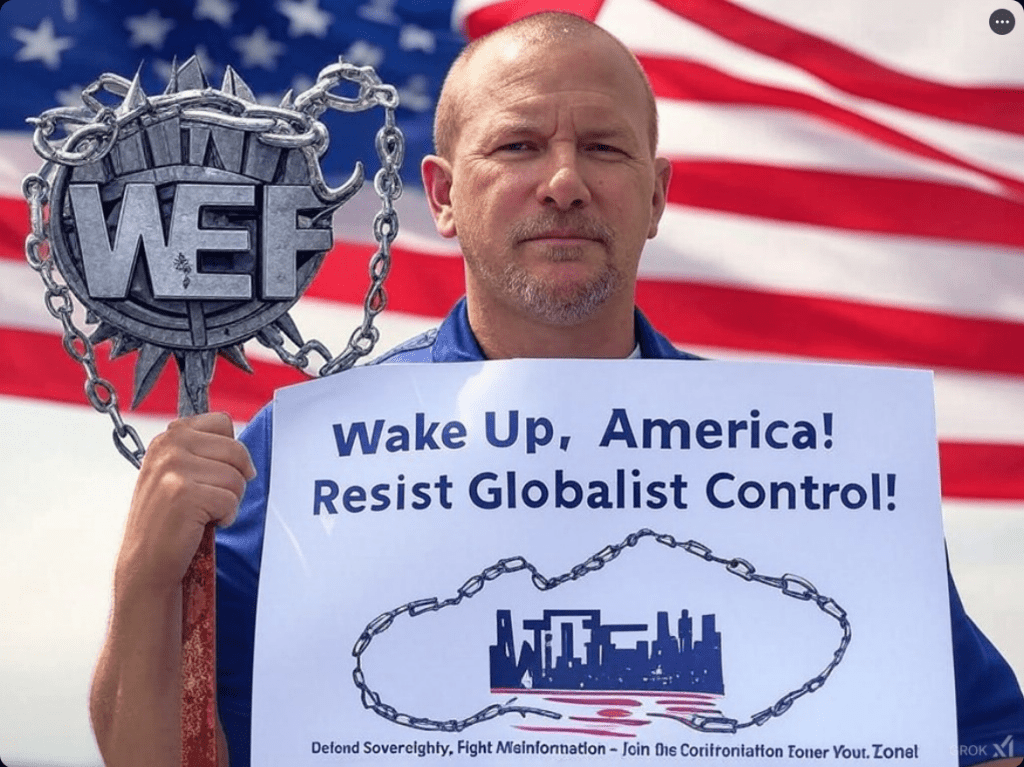
Misinformation, a threat that has just been declared one of the world’s most critical challenges by Klaus Schwab, founder of the World Economic Forum, is now on par with armed conflicts and climate issues [31]. This revelation, made to 3,000 influential decision-makers from politics, media, and business at the WEF’s 55th Annual Meeting, confirms our suspicions. This gathering of over 100 governments and 1,000 Forum partners isn’t just about improving the world – it’s about controlling your thoughts and beliefs. As we step into the ‘intelligent age’ with AI advancements, these elites are positioning themselves to manage not just technological risks but also your access to truth. In this environment, critical thinking becomes more crucial than ever. Do we really want these unelected global leaders deciding what counts as ‘misinformation’ for the rest of us? The stakes couldn’t be higher – this isn’t just about managing information; it’s about controlling your mind and shaping your future. It’s a call to arms for intellectual vigilance and preserving our individual and collective freedoms.
The Globalist Agenda
Behind the polished facade of the World Economic Forum lies a carefully orchestrated agenda that demands our attention. Through its strategic partnership with the United Nations, signed in 2019, the WEF has positioned itself as a pivotal force in global governance.
WEF’s Mission: The WEF’s stated goals of “improving the state of the world” through global collaboration
The WEF promotes “stakeholder capitalism,” a concept championed by Klaus Schwab for decades. Under this model, corporations serve shareholders, customers, suppliers, employees, and communities. Nevertheless, this seemingly benevolent approach masks a more concerning reality.
The Forum’s Global Redesign Initiative, launched after the 2008 economic crisis, reveals its true ambitions through a 600-page manifesto on transforming global governance. Their vision relegates government authority to merely “one voice among many,” effectively diminishing democratic accountability6.
Reality Check: This mission is a cover for global control, especially in information dissemination. It’s a wake-up call to the world, a stark reminder of the power structures and potential threats to our freedoms.
The WEF’s approach to global governance operates through:
- Multi-stakeholder partnerships that lack democratic oversight6
- Corporate-dominated decision-making bodies6
- Public-private partnerships on an unprecedented global scale
Although the WEF promotes inclusive dialog, their actions tell a different story. The Forum’s influence extends across all sectors of global governance, creating what experts describe as an “ever-expanding ecosystem” of multi-stakeholder groups6. These groups, operating without democratic accountability, consist primarily of large corporations that “recruit their friends in government, civil society, and universities”6.
Meanwhile, the implications of this power structure become evident in crucial areas like food systems, technology governance, and vaccine distribution. Rather than strengthening democratic processes, this model effectively sidelines governments while elevating unelected “stakeholders” – predominantly corporations – to positions of global decision-making authority6.
The WEF’s strategic partnership with the UN exemplifies this shift, creating a precedent where private interests gain unprecedented access to global governance structures6. Consequently, we witness a systematic erosion of democratic oversight favoring corporate-led decision-making processes affecting billions worldwide.
Misinformation or Control?
The battle over information control has reached unprecedented levels as global institutions attempt to redefine what constitutes truth. Disinformation has become a primary weapon in the arsenal of those seeking to shape public opinion, with social media platforms serving as the battleground where this war for minds is waged [32].
Defining Misinformation:
The WEF and similar bodies define and use the term to their advantage.
The World Economic Forum categorizes information disorders into three distinct categories: misinformation (misleading content), misinformation (hate speech), and disinformation (intentionally harmful content)7. Initially, this framework appears reasonable, yet closer examination reveals how these definitions can be weaponized against dissenting voices.
A recent survey revealed that trust in mainstream news has plummeted to merely 42% globally, with the United States showing an alarming figure of only 26%. Moreover, the public’s skepticism toward fact-checking efforts runs deep, specifically among Republican-leaning participants who demonstrate consistent distrust regardless of the fact-checker’s political orientation9.
Historical Examples:
Where “misinformation” was actually the truth or critical information
Throughout history, powerful institutions have repeatedly labeled crucial information as “false” to maintain control. Here are compelling examples that underscore this pattern:
- In 1803, a letter about peace negotiations with France caused a 5% rise in stocks before being labeled “fabrication” by authorities10
- The 1917 “Kadaver” factory reports in British newspapers were subsequently revealed as MI7 propaganda10
- The 1835 New York Sun’s moon life story, which boosted subscriptions before being exposed10
Specifically, modern examples demonstrate how the “misinformation” label can suppress legitimate discourse. The Comet Ping Pong incident showcases how rapidly false information can spread, leading to real-world consequences11. Additionally, social media platforms’ attempts to control narratives through warning labels have shown mixed results, with 51% of users noticing disclaimers in one study, compared to 64% when labels were more prominently displayed12.
The erosion of trust extends beyond mere statistics. According to research, Republican respondents with higher cognitive reasoning and web skills showed even greater skepticism toward fact-checkers9. This pattern suggests that increased digital literacy doesn’t necessarily translate to greater trust in institutional fact-checking efforts.
The challenge lies not in identifying false information but in preventing the weaponization of “misinformation” labels against legitimate discourse. Social media platforms, operating under pressure from global institutions, have implemented wide-ranging solutions to combat what they term “foreign interference”12. However, these efforts often lack transparency and democratic oversight.
The “Intelligent Age” –
A Double-Edged Sword
Artificial Intelligence is the cornerstone of what global elites call the “intelligent age,” yet beneath its promising exterior lies a web of control mechanisms threatening individual freedoms.
Tech Innovations:
The promise vs. the peril of AI and tech within the WEF’s narrative
The rapid advancement of AI technologies brings opportunities and risks that fundamentally alter our society. Law enforcement agencies nationwide now employ AI systems for critical decisions, primarily affecting immigrant and minority communities13. Indeed, facial recognition technologies, despite their widespread deployment, demonstrate concerning flaws—particularly in identifying individuals with darker skin tones13.
One striking example emerged in Detroit, where a pregnant woman faced wrongful arrest and detention due to an AI system’s faulty match13. During the implementation of these technologies, the impact extends beyond law enforcement – essentially reshaping how institutions interact with citizens.
Risks to Humanity:
How these technologies could be used for surveillance and control over personal freedoms
The threats to personal privacy and freedom are increasingly evident. AI systems now possess capabilities that altogether challenge traditional privacy principles:
- The collection of vast amounts of personal data, including IP addresses, geographical location, and website navigation patterns14
- The ability to extract meaning from data beyond its initial collection purpose15
- The transformation of basic information into identifiable data strings that can target specific groups14
Fundamentally, the complexity of AI systems renders meaningful consent nearly impossible. Research indicates that even when informed, individuals often have no choice but to enter what experts term an “unconscionable contract” to allow their data usage15. The situation grows more concerning as AI-driven fraud and extortion schemes target vulnerable populations, with older individuals being particularly susceptible13.
The erosion of privacy rights extends into employment practices. Consider Amazon’s AI tool, trained predominantly on male resumes and systematically discriminated against women’s applications for software developer positions. Generally, employers now utilize AI to predict job candidate performance through HireVue, analyzing facial expressions, word choice, and intonation—a practice that disadvantages applicants with disabilities or atypical speech patterns13.
The power imbalance between institutions accumulating data and individuals generating it continues to widen15. Large language models, trained on indiscriminately scraping personal information across the internet, undermine individual control over personal data13. Hence, the promise of technological advancement increasingly masks a system of unprecedented surveillance and control.
The Davos Elite’s Playbook
At the heart of global power dynamics sits an exclusive gathering that shapes world policies behind closed doors. The 54th Annual Meeting of the World Economic Forum in Davos brought together over 1,600 business leaders and more than 350 governmental leaders, including 50 heads of state16 [33].
Who’s at the Table:
Attendees and their influence, emphasizing the lack of democratic representation
The composition of Davos attendees reveals a stark imbalance in representation. The Forum’s board structure fundamentally reflects this disparity:
- Corporate executives comprise 50% of the board members17
- Only one member represents civil society
- No representation from trade unions, public sector organizations, human rights groups, or youth organizations17
The Forum operates primarily as what experts call “the Party of Davos,” where global corporate CEOs and government leaders make decisions that affect billions18. These elite gatherings occur in luxury ski resorts, far removed from the realities of those their decisions impact most17.
Collaboration or Conspiracy?:
The notion of collaboration when it’s among elites deciding for the world
The WEF’s Global Redesign Initiative fundamentally alters traditional democratic processes, shifting power from elected governments to self-selected stakeholders17. This transformation occurs through what they term “multi-stakeholder governance,” ultimately placing corporations at the center of global decision-making17.
Evidently, this model lacks democratic accountability. The WEF’s approach systematically marginalizes recognized democratic models in which citizens vote for governments that negotiate treaties17. Instead, it promotes a system where self-selected groups make decisions affecting global populations without public oversight.
The implications become clear when examining the Forum’s operations. Indeed, while advocates argue this model provides “agile” governance17, critics point out that these elite-led governance systems rarely recommend binding regulations that might affect corporate profits17.
This concentration of power manifests in practical terms. For instance, the WEF’s multi-stakeholder governance proposal bypasses approval from any intergovernmental body17. Furthermore, corporate representatives dominate advisory committees and working groups, with business interests directly funding organizational expenses18.
The reality of Davos stands in stark contrast to its stated mission. One Forum official admitted to the Financial Times that the WEF is “where governments collude in private against their domestic pressure groups”18 [34]. This statement not only reveals contempt for democratic processes but also unmasks the true nature of elite collaboration at Davos.
The Erosion of Hope and Confidence
Recent surveys paint a troubling picture of declining public confidence in traditional institutions and media sources. A mere 42% of global citizens now trust mainstream news sources, with trust levels plummeting to 26% in the United States19.
Elite’s Narrative:
How the WEF frames challenges to erode public confidence in local solutions
The World Economic Forum consistently presents global challenges as too complex for national or local solutions. Their framework deliberately undermines confidence in traditional governance structures through several key mechanisms:
- Data accessibility concerns in national systems20
- Questions about framework adaptability at local levels20
- Emphasis on global over national solutions20
This approach primarily creates what experts term a “breakdown of belief in a brighter future,” fundamentally contributing to societal inertia21. The WEF’s narrative suggests nations cannot effectively address modern challenges without global oversight, eroding confidence in local governance structures.
Counter-Narrative:
The importance of maintaining hope and confidence in national identity and solutions
Throughout history, national identity has proven crucial for maintaining successful political orders. Research demonstrates that a strong national identity:
- Enhances physical security
- Inspires good governance
- Facilitates economic development
- Fosters trust among citizens
- Enables strong social safety nets22
Similarly, data shows that shared customs and traditions remain vital to national identity in countries like Germany, France, and the UK. For instance, 94% of Germans consider speaking their national language critical to their identity.
The erosion of hope stems fundamentally from fear – fear of job insecurity, environmental crises, and political instability21. Ultimately, this disillusionment leads to two dangerous extremes: societal polarization or a turn toward authoritarian leadership21.
To combat this trend, businesses and institutions must recognize their role beyond material success. This includes addressing society’s psychological and moral needs while aligning with mainstream societal values21. The solution lies not in global uniformity but in strengthening national identities that can:
- Foster democratic accountability
- Maintain cultural diversity
- Protect sovereign decision-making22
Research indicates that national identities built around liberal and democratic political values, alongside shared experiences of diverse communities, create resilient societies22. This approach offers a powerful counter to the WEF’s narrative of necessary global control.
Defending Our Sovereignty
Protecting national sovereignty demands individual vigilance and collective action in today’s complex information landscape. First, defending sovereignty requires organized actions from citizens, specialized forces, and the entire political system working in harmony23.
Grassroots Action:
Steps Americans can take to push back against globalist overreach.
Fundamentally, grassroots activism begins when individuals identify problems and unite to change norms, institutions, and policies24. Under these circumstances, effective grassroots movements can:
- Create networks to challenge crackdowns on free speech
- Mount legal and advocacy challenges against attacks on expression
- Demonstrate solidarity when activists face intimidation
- Build community support systems for truth-tellers25
The defense of sovereignty must occur through military and non-military measures, combining management, protection, and cooperation across all fields23. In light of this, citizens can join legislative teams to influence policymakers, start activist groups, or serve as volunteer leaders, depending on their skills and interests24.
Critical Thinking:
Individuals should question and verify information, not just accept elite definitions.
Sooner or later, every piece of information requires verification – even if your mother says she loves you26. Therefore, developing a systematic approach to information verification becomes crucial. This process involves:
- Interrogating all facts as suspects
- Questioning assumptions and underlying statements
- Seeking multiple corroborating sources
- Getting as close as possible to primary sources26
Critical thinking enables individuals to analyze information, make informed decisions, and solve problems effectively27. Ultimately, this skill involves questioning assumptions, evaluating evidence, and considering alternative viewpoints – essential to maintaining sovereignty27.
Modern verification tools have become indispensable in this fight. Websites like TinEye and Google Image Search help verify visual content, while FotoForensics can detect image manipulation26. Platforms like AnyWho and Spokeo provide access to public records26 for identity verification.
The protection of sovereignty must identify specific subjects and appropriate strategies in politics, culture, economics, national defense, security, and foreign affairs23. This comprehensive approach recognizes that violations of national sovereignty come not only from states but also from non-governmental organizations, international organizations, and foreign individuals23.
Legal Disclaimers and Warnings
First and foremost, exercising freedom of speech carries profound responsibilities in our democratic society. The right to express opinions freely is a cornerstone of democracy, fundamentally protected by constitutions worldwide28.
Disclaimer:
“The views expressed are based on interpretations of public statements and should be critically evaluated. This content is meant to provoke thought and discussion, not to incite or promote illegal activities.”
The intersection between free speech and social responsibility demands careful consideration. Above all, democratic constitutions recognize free speech as a fundamental right, yet this freedom comes with specific qualifications28. These limitations primarily emerge in cases involving:
- Incitement to violence
- Defamatory statements
- Content containing hate speech
- Clear and present danger to public safety
Fundamentally, social responsibility functions as a guiding principle in exercising free speech. This responsibility encompasses positive discourse, tolerance of opposing viewpoints, and consideration of broader societal implications28.
Warning:
“Be vigilant of your rights to free speech. This article does not encourage unlawful acts but stresses the importance of understanding and protecting your freedoms.”
In public discourse, primarily concerning politics and social affairs, the relationship between free speech and civic duty becomes paramount28. The Supreme Court has consistently upheld press freedom as an integral component of democratic society28. Furthermore, this freedom represents not merely an individual right but a collective one vested in the community28.
The media’s role as the “Fourth Estate” underscores its crucial function in:
- Ensuring government accountability
- Promoting transparency
- Safeguarding democratic principles
- Amplifying diverse viewpoints28
Ultimately, any restrictions on free speech must be narrowly targeted and supported by compelling arguments serving public interests28. The landmark case of Indian Express Newspapers established robust legal precedents protecting press autonomy and integrity28.
In addition, the digital age presents unique challenges to responsible communication. Social media platforms must implement transparent content moderation policies while preserving maximum freedom of expression29. Moreover, developing media literacy programs becomes crucial in equipping audiences with critical thinking skills29.
The balance between free speech and responsible expression remains essential30. By embracing responsible free speech, individuals and organizations contribute to a positive culture while maintaining their fundamental right to voice opinions freely30. Principally, the power of free speech comes with the wisdom to use it judiciously30.
Conclusion
Truth stands as our most potent weapon against global elite control. Their attempts to label dissenting voices as “misinformation” reveal their fear of an awakened populace. These unelected leaders, gathering in luxurious retreats, claim authority over what we should think and believe while operating without democratic oversight.
Their strategy becomes clear – label legitimate concerns as “misinformation” while promoting their carefully crafted narratives. Therefore, our responsibility grows stronger each day. We must question everything, verify independently, and stand firm against attempts to silence alternative viewpoints.
American values of independence and free speech clash directly with their vision of centralized control. Indeed, history proves that today’s “misinformation” often becomes tomorrow’s accepted truth. Our founding fathers faced similar accusations when they dared challenge the established order of their time.
The battle for our minds demands immediate action. We are responsible for protecting our sovereign right to think freely and speak openly. This fight requires more than passive resistance – it demands active engagement in local communities, support for independent media, and unwavering defense of our constitutional rights.
Above all, hope remains our strongest ally. While the global elite scheme is in Davos, millions of citizens worldwide are awakening to their true agenda. United in purpose, armed with truth and determination, we stand ready to defend our fundamental freedoms. The future belongs not to unelected globalists but vigilant citizens who dare to question, verify, and speak truth to power.
Call to Action
Taking action against information control requires individual commitment and collective effort. Democracy Now!, founded as an independent news program, fundamentally challenges corporate-sponsored media narratives by providing access to diverse perspectives rarely heard in mainstream channels1.
Engagement:
Join or start local groups, engage in political discourse, and support free speech platforms.
Public debates in smaller communities create vital opportunities for direct engagement with experts on international affairs2. These discussions primarily occur in the following ways:
- Libraries hosting global issue discussions
- Town halls featuring expert speakers
- Community centers organizing public forums
Local engagement proves particularly effective when addressing complex global challenges2. Through interactive debates, citizens can pose questions and shape conversations according to their interests, ultimately challenging speakers and fostering honest dialogue.
BitChute, Gettr, Parler, and Rumble explicitly declare their opposition to censorship, positioning themselves as defenders of free expression3. These platforms fundamentally differ from traditional social media by:
- Rejecting content restrictions
- Supporting diverse viewpoints
- Protecting user privacy rights
- Enabling community-driven moderation
Stay Informed:
Resources for alternative news and viewpoints
The landscape of alternative news sources offers robust options for accessing diverse perspectives. In These Times, established in 1976, operates as an independent, nonprofit monthly magazine dedicated to advancing democracy and economic justice1. Mother Jones, another reader-supported nonprofit news organization, won the American Society of Magazine Editors’ 2017 Magazine of the Year Award1 [35].
FAIR (Fairness and Accuracy In Reporting), established in 1986, is a media watchdog organization1. Their mission encompasses:
- Invigorating First Amendment rights
- Advocating for greater press diversity
- Scrutinizing marginalizing media practices
- Supporting dissenting viewpoints
The Nation, America’s oldest continuously published weekly magazine, is a critical, independent voice in journalism1. Tom Dispatch, launched in 2001, provides regular analysis and commentary as an antidote to mainstream media narratives1.
For privacy-conscious users, several alternative platforms offer enhanced protection features. Telegram, Gab, and Parler lead in privacy protections, refusing to sell user data or third-party targeted ads. These platforms altogether provide users with the following:
- Modified privacy settings
- Control over port access
- Account search visibility options
- Data collection limitations
Common Dreams delivers breaking news and insightful views resonating with progressives globally4. Meanwhile, Worldcrunch translates and edits content from top foreign-language outlets, bringing previously inaccessible journalism to English-speaking audiences4.
Global Voices, powered by more than 700 authors and 600 translators worldwide, amplifies voices typically overlooked in international mainstream media4. Their coverage primarily focuses on perspectives from regions underrepresented in traditional news outlets.
Z Magazine, established in 1987 by South End Press co-founders, is committed to resisting injustice and creating liberty through independent monthly publications1. The Progressive, dating back to 1909, champions grassroots politics and presents voices of dissent systematically excluded from mainstream discourse1.
References
[1] – https://conncoll.libguides.com/AlternativeNews
[2] – https://www.gmfus.org/engaging-local-communities-global-political-discussions
[4] – https://library.csustan.edu/news_newspapers/blogs_altnews
[5] – https://www.bbc.com/news/blogs-trending-57532368
[7] – https://intelligence.weforum.org/topics/a1G680000008j2FEAQ
[8] – https://www.weforum.org/stories/2022/10/how-to-address-disinformation/
[9] – https://mitsloan.mit.edu/press/warning-labels-fact-checkers-work-even-if-you-dont-trust-them
[10] – https://www.thesocialhistorian.com/fake-news/
[11] – https://www.marubeni.com/en/research/potomac/backnumber/19.html
[17] – https://www.tni.org/en/article/davos-and-its-danger-to-democracy
[18] – https://democracyjournal.org/magazine/3/crashing-the-party-of-davos/
[19] – https://www.pewresearch.org/global/2021/05/05/1-national-identity/
[20] – https://www.mdpi.com/2071-1050/13/4/1919
[21] – https://www.weforum.org/stories/2024/11/leadership-trust-common-purpose/
[22] – https://www.journalofdemocracy.org/articles/why-national-identity-matters/
[24] – https://www.amnestyusa.org/get-involved/grassroots-activism/
[25] – https://globalhumanrights.org/stories/three-ways-grassroots-activists-change-the-world/
[26] – https://ajh.rodrigozamith.com/sourcing-and-verifying-information/verifying-information/
[31] – (2022). Switzerland: World Economic Forum heading to Davos in May. MENA Report, (),.
[32] – NASCAR Sparks Outrage by Letting Corey Lajoie Go After Crash With Kyle Busch. https://slicksandsticks.com/2024/07/17/nascar-sparks-outrage-by-letting-corey-lajoie-go-after-crash-with-kyle-busch/
[33] – (2024). Qatar: Prime Minister and Minister of Foreign Affairs Meets US Senator. MENA Report, (),.
[34] – Geneva Report: km presentation to NGO meeting – Renaissance Network. https://www.renaissance.cyberjournal.org/1998/05/21/geneva-report-rkm-presentation-to-ngo-meeting/
[35] – Mother Jones Magazine – Alternative News Resource. https://altnewsresource.net/mother-jones-magazine/
[37] – https://reclaimthenet.org/wef-klaus-schwab-davos-2025-misinformation-censorship
[38] – https://www.youtube.com/watch?v=gjQNXNtwgwQ&t=357s
 Critical Thinking Dispatch
Leave a comment