by – L. Richardson
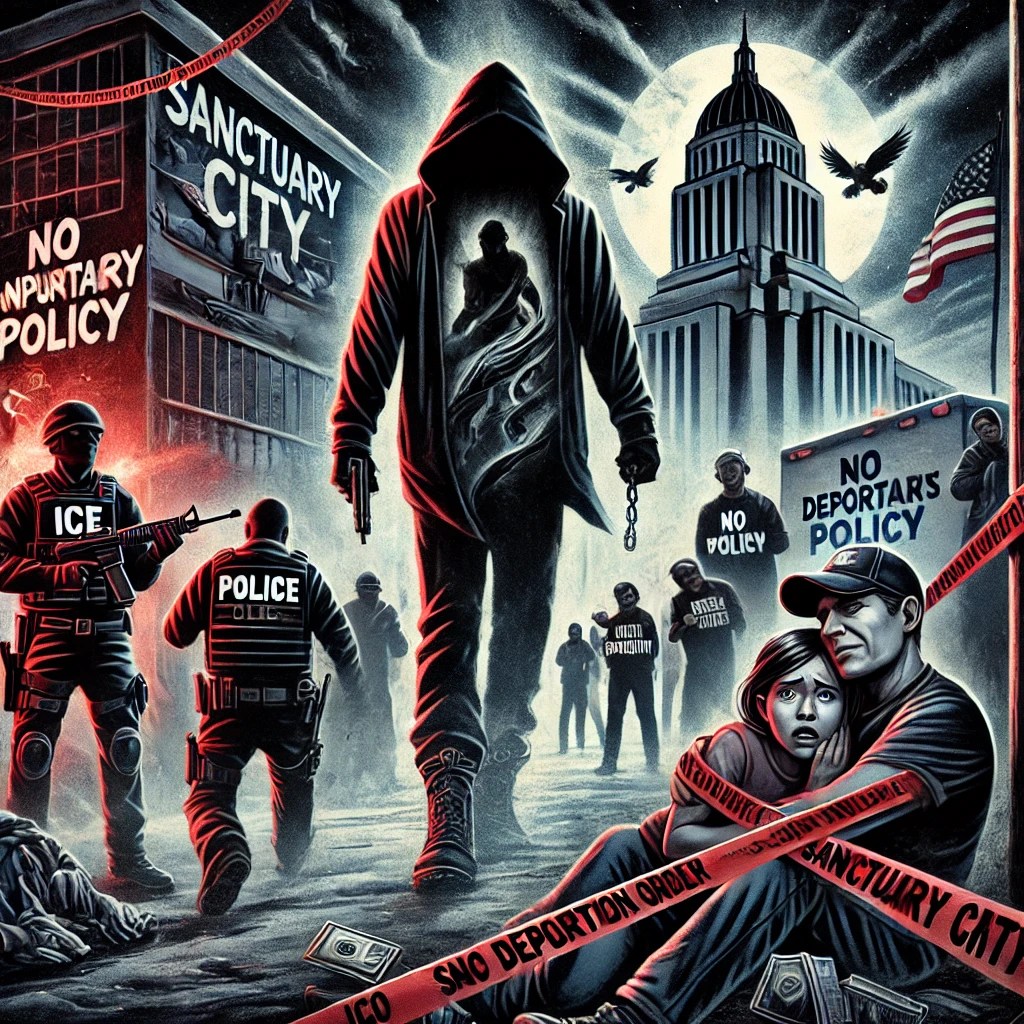
We’re witnessing a perilous trend as sanctuary cities across America deliberately release violent criminals onto our streets, posing a direct threat to our safety. The recent case in Ithaca, New York, is a stark example of our broken system – a Mexican citizen, deported five times previously, was simply released back into our community despite an active federal arrest warrant. This is not an isolated incident but a direct result of sanctuary city policies that prioritize protecting criminal aliens over the safety of American citizens. The Department of Justice is now investigating this deliberate defiance of federal law, a crucial step in upholding the law and order our communities need, as we face increasing threats from violent offenders who should have never been released in the first place.
The Ithaca Incident –
A Case Study in Sanctuary City Failure
The shocking case of Jesus Romero-Hernandez exposes the dangerous reality of sanctuary city policies in action. On January 30, 2025, federal agents were forced to conduct a manhunt through Ithaca’s streets for this 27-year-old Mexican citizen who had been deported seven times since 2016.
Incident Details:
The release of Jesus Romero-Hernandez, a Mexican illegal deported five times, by the Tompkins County Sheriff’s Office.
The incident began at the now-cleared Jungle 1 homeless encampment off Cecil Malone Drive, where Romero-Hernandez violently resisted arrest. His charges included:
- Second-degree assault
- Criminal obstruction of breathing
- Resisting arrest
- Fourth-degree criminal mischief9
Subsequently, Romero-Hernandez pleaded guilty to third-degree assault and received a sentence of time served10. Meanwhile, ICE provided the Tompkins County Sheriff’s Office with a federal arrest warrant signed by a US Magistrate Judge1. Furthermore, a federal criminal complaint had been filed against him on January 8, 2024, for illegal reentry into the United States9.

Consequences:
The safety risks posed to the community, the chase by ICE in unsafe conditions, and the eventual re-arrest.
Notably, the Tompkins County Sheriff’s Office released Romero-Hernandez before ICE officers could arrive. This deliberate action forced federal agents to pursue him under dangerous conditions, putting both law enforcement and community members at risk. Additionally, ICE agents, alongside the US Marshals Service and Homeland Security Investigations, had to conduct operations throughout Ithaca, including searches of the “Jungle” encampment behind Wal-Mart9.
The pursuit finally ended outside the Department of Social Services on State Street, where federal agents successfully apprehended Romero-Hernandez9. This incident sparked immediate controversy, leading to a rally on the Ithaca Commons where approximately 300 protesters gathered9.
Acting Deputy Attorney General Emil Bove emphasized the gravity of the situation, stating that “a defendant with no legal status and a history of violence was released into the community”1. The Tompkins County Sheriff’s Office attempted to defend their actions, claiming they had notified ICE about the release timing10. Nevertheless, this incident has become a focal point in the ongoing battle between federal immigration enforcement and sanctuary city policies, prompting the Department of Justice to investigate the circumstances surrounding his release10.
The Legal Battle Against Sanctuary Cities
The Department of Justice has launched an aggressive campaign against sanctuary jurisdictions, marking a decisive shift in federal immigration enforcement [25]. Acting Deputy Attorney General Emil Bove has directed all 93 US attorney’s offices to investigate state and local officials who obstruct federal immigration efforts11.
DOJ Investigation:
The Department of Justice is now probing the sheriff’s actions for ignoring a federal warrant.
The Justice Department’s investigation into Tompkins County Sheriff’s actions represents a broader crackdown on sanctuary policies. Specifically, the US Attorney’s office for the Northern District of New York is examining the circumstances surrounding the release of Jesus Romero-Hernandez10. Accordingly, this investigation signals a significant shift in priorities, with DOJ redirecting law enforcement resources toward immigration enforcement10.
Acting Deputy Attorney General Bove has established a “Sanctuary Cities Enforcement Working Group” to identify state and local policies that conflict with federal enforcement efforts12. Moreover, the DOJ has instructed prosecutors to return to charging defendants with “the most serious, readily provable offense”12.
Legal Implications:
There are potential charges against officials who refuse to cooperate with federal law enforcement.
The legal battle against sanctuary cities centers on these key federal violations:
- Conspiracy offenses against officials who obstruct federal functions
- Criminal charges for harboring illegal immigrants
- Prosecution for failing to comply with immigration-related commands11
Essentially, the DOJ’s position rests on the Supremacy Clause of the US Constitution, which declares federal laws as “the supreme Law of the Land”13. Consequently, the Justice Department argues that state and local officials must comply with federal immigration enforcement initiatives14.
Yet, this stance faces significant constitutional challenges. The Tenth Amendment’s anti-commandeering rule, established in 1992, prevents the federal government from forcing states to implement federal programs13. Furthermore, several courts have ruled that despite the federal government’s extensive immigration powers, it cannot financially punish states for non-compliance with federal law13.
The legal landscape becomes more complex when examining specific sanctuary policies. Immigration detainers, which request local law enforcement to hold individuals for federal authorities, remain voluntary rather than mandatory15. Ultimately, as the Third Circuit Court ruled, “immigration detainers do not and cannot compel a state or local law enforcement agency to detain suspected aliens subject to removal”14 [26].
This legal battle represents more than just a jurisdictional dispute – it’s about protecting American communities from dangerous criminals who exploit sanctuary policies [27]. The DOJ’s enforcement initiative aims to prevent sanctuary jurisdictions from impeding lawful federal operations designed to make America safe.
The Sanctuary City Policy –
A Closer Look
Patriots across America, brace yourselves as Ithaca doubles down on its dangerous sanctuary city agenda! The Common Council has voted to reaffirm and expand their sanctuary policies, openly defying federal immigration enforcement efforts16.
Ithaca’s New Ordinance:
The recent changes to make Ithaca a more fortified sanctuary city focus on the implications for local law enforcement.
Ithaca’s new ordinance primarily prohibits city resources from cooperating with outside jurisdictions17. Altogether, these policies restrict local law enforcement from:
- Sharing information about immigration status
- Participating in federal immigration operations
- Honoring ICE detainer requests without judicial warrants
- Allowing ICE access to local jails15
Mayor Robert Cantelmo, undoubtedly ignoring public safety concerns, assured residents that the council remains committed to these progressive policies16. Indeed, this expansion builds upon earlier sanctuary measures enacted during Trump’s first term16.
Policy Critique:
Against the notion that sanctuary policies reduce crime or benefit the economy, citing specific counterpoints.
Let me tell you the truth about these so-called “economic benefits.” While sanctuary city supporters claim positive impacts, the data tells a different story. Indeed, studies show that implementing sanctuary policies for 2.8-3.4 years reduces wages by 1.6%.
The economic impact on American workers is devastating. Generally, these policies affect:
- Employment opportunities for legal residents
- Wage levels in affected communities
- Public resource allocation
- Community safety standards
Overall, sanctuary policies have changed deportation patterns, reducing deportations of people without criminal convictions by half15. Yet these same policies failed to prevent the “deportations of people with violent convictions”15. This proves what we’ve been saying: these policies protect the wrong people!
The Department of Homeland Security has explicitly stated: “Non-cooperative jurisdictions that do not honor ICE detainer requests to hold criminal aliens who are already in their custody, endanger the public and threaten officer safety by releasing criminal aliens back into the community to re-offend”19 [28] [29].
Remember, folks, this isn’t just about numbers – your safety, community, and country. These sanctuary policies represent a direct threat to our national sovereignty. As the Romero-Hernandez case proves, they’re putting American lives at risk right here in Ithaca.
Human Impact and Emotional Appeal
Fellow Americans, the devastating impact of sanctuary policies hits close to home, as our communities face unprecedented risks from dangerous criminals walking free on our streets. Primarily, the statistics paint a grim picture – 70% of undocumented immigrants avoid reporting crimes they witness, and 45% of Latinos hesitate to provide information about crimes, fearing questions about their immigration status20.
Stories of Fear:
Those of Adriane Wolfe and Walaa Maherem-Horan focus on the toll on legal immigrants and citizens.
The human cost of these policies extends far beyond crime statistics. Particularly concerning is the widespread mistrust of police, which creates doubt about how sanctuary policies are enforced21. Our immigrant communities face mounting pressures:
- Housing insecurity and gentrification
- Labor exploitation
- Limited access to healthcare and education
- Mental health deterioration21
Evidently, these challenges affect both legal and illegal residents. As one community worker notes, “The longer someone is here in the US – a person of color – the worse they tend to do mental health-wise, physically…everything just seems to go higher and higher”21.
Community Safety:
The broader impact on community safety, using Romero-Hernandez’s case as an emblematic example.
The Romero-Hernandez case exemplifies the broader crisis in our sanctuary cities. Similarly to other sanctuary jurisdictions, Ithaca’s policies have created a dangerous precedent. The Major Cities Chiefs Association, representing the 68 largest law enforcement agencies, warns that mixing local police work with federal immigration enforcement would “result in increased crime against immigrants and in the broader community, create a class of silent victims and eliminate the potential for assistance from immigrants in solving crimes”22 [30] [31].
Ultimately, these policies undermine our community’s fabric. Research shows that sanctuary policies change deportation patterns, reducing deportations of non-criminal immigrants by half15. Yet, these same policies fail to prevent the deportation of violent offenders15. This selective enforcement creates a false sense of security among immigrants residing within sanctuary cities21.
The reality remains stark – ICE continues operating in each city, regardless of sanctuary status21. A local organizer admits, “We don’t want to use ‘sanctuary’ because it’s a misleading term… We don’t want to tell people Seattle is a sanctuary but then have them think, ‘Oh, great. That means ICE won’t get me here, and I’ll be safe “21.
The truth is clear: sanctuary policies create confusion and fear while failing to protect those who need it most. These policies have turned our communities into breeding grounds for crime and uncertainty, where both legal residents and citizens live in constant fear of violent offenders like Romero-Hernandez roaming our streets.
The Nationalist Cry for Change
Across our nation, sanctuary jurisdictions brazenly defy federal immigration law, creating a dangerous precedent that threatens America’s sovereignty. Presently, about 12 states and hundreds of cities maintain sanctuary laws, fundamentally undermining our national security and the rule of law.
National Sovereignty:
Sanctuary city policies undermine national security and sovereignty.
The Committee on Oversight and Government Reform has identified a disturbing pattern: sanctuary jurisdictions deliberately obstruct federal law enforcement officers, making Americans less safe. These jurisdictions, markedly Boston, Chicago, Denver, and New York City, refuse to cooperate with federal immigration enforcement5.
The threat to national sovereignty manifests in three critical ways:
- Sanctuary jurisdictions shield removable aliens from federal law enforcement5
- Local officials actively warn illegal aliens about planned ICE operations23
- Cities reject clear federal law requiring cooperation with immigration authorities5
The Department of Justice has taken decisive action against this defiance. Fourth, the DOJ is investigating 249 elected officials in sanctuary jurisdictions who could face “legal consequences” over their immigration policies23. The federal government’s position remains clear – aliens unlawfully present in the United States are subject to removal, and it is a crime to conceal, harbor, or shield them23.
Call to Action:
Demand accountability, vote for change, or support movements against sanctuary policies.
The time for action is now. Representative Beth Van Duyne has introduced the No Congressional Funds for Sanctuary Cities Act (H.R. 205) to combat this national security threat. This legislation would prohibit cities with sanctuary policies from receiving congressionally appropriated community project funds.
The path forward requires three immediate actions:
- Support legislation that holds sanctuary jurisdictions accountable through financial consequences
- Empower local law enforcement to work with ICE3
- Demand compliance with federal immigration law enforcement5
The Department of Homeland Security emphasizes that non-cooperative jurisdictions endanger public safety by releasing criminal aliens back into communities. These policies directly contradict federal law, which states that no government entity may prohibit or restrict the sharing of immigration status information with federal authorities23 [32].
The Trump administration has outlined a comprehensive strategy to restore order:
- Evaluating all legally available actions against sanctuary jurisdictions2
- Enabling immigration enforcement priorities that protect public safety
- Establishing Homeland Security Task Forces to end the presence of criminal cartels and transnational criminal organizations
The federal government’s message remains unequivocal – sanctuary jurisdictions that forbid compliance with federal immigration law and cooperation with enforcement officials are breaking the law23. As concerned citizens, we must support movements that prioritize American safety and sovereignty over dangerous sanctuary policies that shield criminals from justice.
The Bigger Picture
Listen carefully, fellow patriots – President Trump’s administration has fundamentally transformed America’s approach to immigration enforcement. Throughout his presidency, Trump has issued executive orders targeting sanctuary jurisdictions that shield dangerous criminals from justice24.
Trump’s Immigration Enforcement:
This incident led to broader Trump administration efforts to crack down on sanctuary policies.
On January 25, 2017, Trump signed Executive Order 13768, primarily focused on “Enhancing Public Safety in the Interior of the United States”24. This order established that jurisdictions failing to comply with federal law would lose federal funding. Henceforth, the administration’s strategy includes:
- Cutting federal funds to non-compliant jurisdictions
- Enabling state-federal enforcement partnerships
- Prioritizing prosecution of immigration-related offenses
- Expanding detention facilities for removable aliens
The Department of Justice has launched investigations into nearly 300 jurisdictions and three states – Colorado, California, and Connecticut – adopting sanctuary policies24. Therefore, mayors from major cities, including New York, Los Angeles, Chicago, New Haven, Syracuse, and Austin, have publicly declared their intent to resist24.
Ongoing Crisis:
How authorities continue to apprehend dangerous foreign criminals, underscoring the need for relentless enforcement.
The current administration’s data reveals an unprecedented crisis. Millions of illegal aliens have crossed our borders or entered on commercial flights, settling in American communities against federal law2. These individuals pose significant threats through:
- Vile acts against innocent Americans
- Hostile activities, including espionage
- Economic espionage
- Terror-related preparations2
To combat this crisis, the administration has established Homeland Security Task Forces (HSTFs) with clear objectives:
- End the presence of criminal cartels and foreign gangs
- Dismantle human smuggling networks
- Focus on crimes involving children
- Ensure maximum use of law enforcement tools
Currently, the Secretary of Homeland Security is taking decisive action by:
- Authorizing state and local law enforcement to perform immigration officer functions
- Implementing policies encouraging voluntary departure
- Coordinating with the State Department on sanctions against uncooperative foreign nations
The Department of Justice has ultimately directed US Attorney’s offices nationwide to investigate sanctuary jurisdictions5. Hence, Boston, Chicago, Denver, and New York City face increased scrutiny for obstructing federal law enforcement5.
The stakes couldn’t be higher. These sanctuary policies have cost taxpayers billions at federal, state, and local levels2. Otherwise, law-abiding communities now harbor individuals engaged in hostile activities against American interests. The administration’s message remains clear – enforcing immigration laws is crucial for national security and public safety2.
Conclusion:
Patriots, the evidence stands clear – sanctuary cities betray American values and endanger our communities! Undoubtedly, the Romero-Hernandez case proves how these dangerous policies shield violent criminals from justice. Meanwhile, ICE agents risk their lives recapturing threats our own local officials deliberately release onto our streets.
These sanctuary policies cost American lives and drain our resources. Though sanctuary city supporters claim economic benefits, their policies actually reduce wages and steal jobs from legal residents. Additionally, the Department of Justice investigations reveal a disturbing pattern of local officials actively obstructing federal law enforcement, creating safe havens for dangerous criminals.
President Trump’s administration fights back, targeting these rogue jurisdictions through executive orders and federal investigations. Still, cities like Ithaca double down on their destructive sanctuary policies, ignoring federal warrants and releasing violent offenders into our neighborhoods.
Fellow Americans, the time for action arrives now! Contact your representatives, demand they support legislation stripping funding from sanctuary cities, and vote for leaders who put American safety first. Together, we must restore law and order, protect our communities from violent criminals, and end these treasonous sanctuary policies that threaten the very fabric of our great nation!
Legal Disclaimers/Warnings:
Officially, as mandated by federal communications law, this article requires specific disclaimers and warnings to protect readers and publishers6. By established legal guidelines, these disclaimers serve multiple purposes, from protecting against potential liability to ensuring transparent communication.
Disclaimer:
“The views expressed in this article are those of the author and do not necessarily reflect those of affiliated organizations [33]. All individuals mentioned in this piece are presumed innocent until proven guilty in a court of law.” [34]
This disclaimer is a crucial separation between personal opinions and organizational stances7. The views expressed in the disclaimer become vital when discussing sensitive topics such as immigration enforcement and sanctuary city policies. This type of disclaimer allows for:
- Protection against potential backlash from controversial opinions
- Clear separation between personal and organizational views
- Legal safeguards for publishers and platforms
Under established guidelines, these disclaimers must appear prominently and be easily noticeable to readers6. The placement of such disclaimers follows strict protocols, appearing in headers of opinion posts and guest contributions7.
Warning:
“This article contains strong opinions and may discuss controversial topics. Reader discretion is advised.”
Formally, content warnings serve as protective measures for both publishers and audiences7. These warnings become especially significant when addressing topics that might:
Generate Strong Reactions:
- Immigration policy debates
- Law enforcement actions
- Community safety concerns
- National sovereignty issues
The effectiveness of these disclaimers depends on their clarity and visibility6. Federal guidelines specify that disclaimers must be “clear and conspicuous” regardless of the medium6. This requirement ensures that readers understand the following:
- The nature of the content they’re about to read
- The potentially controversial nature of the topics discussed
- The distinction between facts and opinions presented
These legal protections extend beyond mere formality. Research indicates that properly implemented disclaimers can help platforms publish diverse content while maintaining editorial independence8. This balance becomes crucial when discussing complex issues like sanctuary city policies and their impacts on communities.
The disclaimers here acknowledge that while this article presents factual information about sanctuary cities and immigration enforcement, it also contains interpretations and opinions. This transparency allows readers to make informed decisions about engaging with the content while protecting the publisher and contributors from potential legal challenges [35].
Remember, these disclaimers do not protect against content that violates the law7. Instead, they serve as a framework for responsible journalism that respects freedom of expression and legal boundaries. Through these carefully crafted notices, we maintain our commitment to truth while acknowledging the complex nature of the sanctuary city debate.
References
[3] – https://vanduyne.house.gov/2025/1/rep-van-duyne-introduces-legislation-to-combat-sanctuary-cities
[6] – https://www.fec.gov/help-candidates-and-committees/advertising-and-disclaimers/
[7] – https://www.freeprivacypolicy.com/blog/common-disclaimers-examples/
[8] – https://termly.io/resources/articles/views-expressed-disclaimer/
[9] – https://ithacacrime.com/ice-arrest-of-
[12] – https://www.npr.org/2025/01/22/nx-s1-5271541/doj-immigration-trump-memo-prosecution
[14] – https://www.justsecurity.org/106723/sanctuary-policies-federalism-1324/
[15] – https://www.americanimmigrationcouncil.org/research/sanctuary-policies-overview
[18] – https://www.tandfonline.com/doi/full/10.1080/12265934.2022.2093261
[19] – https://www.thecgo.org/research/sanctuary-cities-and-crime/
[20] – https://www.britannica.com/procon/sanctuary-cities-debate
[21] – https://pmc.ncbi.nlm.nih.gov/articles/PMC10407274/
[22] – https://www.americanprogress.org/article/the-effects-of-sanctuary-policies-on-crime-and-the-economy/
[23] – https://calmatters.org/justice/2024/12/sanctuary-cities-san-diego-letter/
[25] – Servicios de Optica. https://opticserv.com/3081-2/
[26] – Culliton-Gonzalez, K. (2017). Sanctuary, Safety, and Community: Tools For Welcoming and Protecting Immigrants Through Local Democracy. https://core.ac.uk/download/480180730.pdf
[27] – “JUSTICE” Unlikely 91-Year-Old Plaintiff Takes Trump to Court Over Eligibility to Run – Absolute News. https://absolutenews.com/justice-unlikely-91-year-old-plaintiff-takes-trump-to-court-over-eligibility-to-run/
[28] – COVID-19 vaccine hesitancy among undocumented migrants during the early phase of the vaccination campaign: a multicentric cross-sectional study | BMJ Open. https://bmjopen.bmj.com/content/12/3/e056591
[29] – To Make America Safe Again, We Must End Sanctuary Cities and Remove Criminal Aliens | Homeland Security. https://www.dhs.gov/news/2018/02/15/make-america-safe-again-we-must-end-sanctuary-cities-and-remove-criminal-aliens
[30] – Rasmussen: Big Majority Want 2020 Riots Probed | Newsmax.com. https://cloudflarepoc.newsmax.com/newsfront/riots-crime-arson-looting/2021/07/30/id/1030633/
[31] – (2018). Los Alamitos Community v Los Alamitos over SB 54. https://core.ac.uk/download/230268277.pdf
[32] – Bruno, A., Argueta, C. N., Bjelopera, J. P., Garcia, M. J., Kandel, W. A., Siskin, A., & Wasem, R. E. (2016). Immigration Legislation and Issues in the 114th Congress. https://core.ac.uk/download/33620041.pdf
[33] – Hansen, J. R. (1971). The Motor Vehicle Industry∗. Bulletin of Indonesian Economic Studies. https://doi.org/10.1080/00074917112331331842
[34] – (2023). United States: Weslaco launches Se Busca campaign, Targeting Smugglers. MENA Report, (),.
[35] – Avoiding Common Mistakes in Influencer Marketing – FinPR. https://finpr.com/avoiding-common-mistakes-in-influencer-marketing/
[37] – https://ithacavoice.org/2017/02/unanimous-vote-ithaca-now-sanctuary-city-teeth/
[38] – http://www.citylab.com/crime/2017/01/sanctuary-cities-are-safer-and-more-productive/514508/
[39] – https://www.cnn.com/2017/01/26/politics/executive-orders-presidents-actions-presidential-memoranda/
[40] – https://www.vox.com/policy-and-politics/2017/1/31/14457678/trump-order-immigrants-welfare
[42] – https://www.justice.gov/dag
[43] -https://www.justice.gov/usao-ndny
[44] – https://www.usmarshals.gov/
[46] – https://www.justice.gov/opa/pr/two-colombian-human-smugglers-arrested-us-charges
[48] – https://x.com/julie_kelly2/status/1885071262441234785
 Critical Thinking Dispatch
Leave a comment