by L Richardson
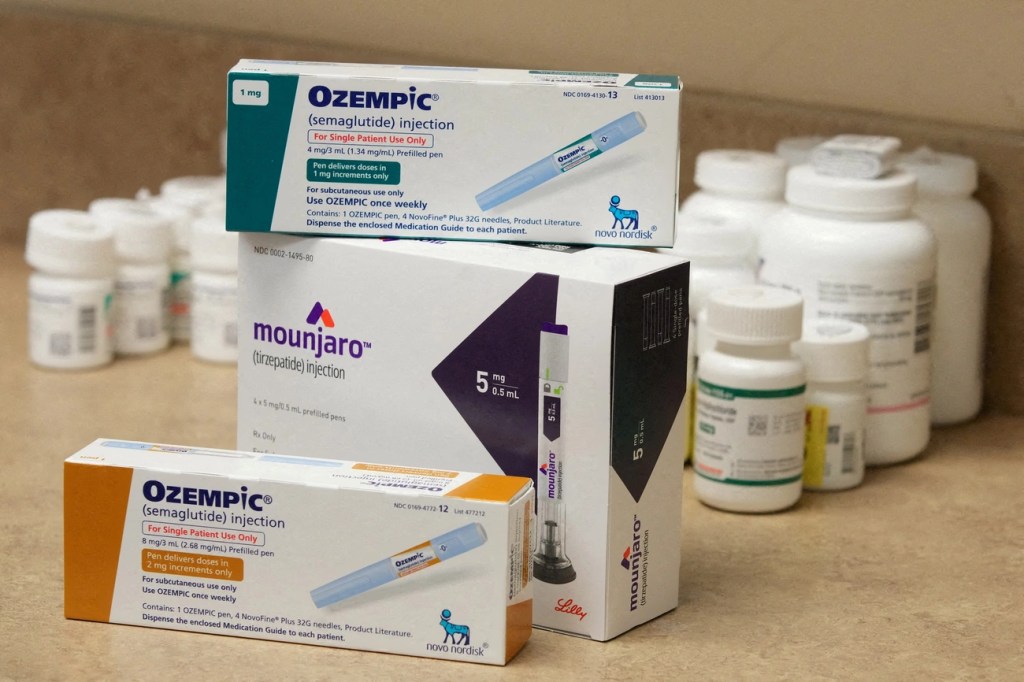
Ozempic side effects are becoming a national concern as semaglutide emerged as the top-selling drug in the United States in 2023, generating an astounding $38.6 billion in sales, while tirzepatide secured eighth place with $13.2 billion[15]. We’re witnessing an unprecedented pharmaceutical takeover that’s reshaping American healthcare and potentially threatening our personal liberties.
Despite unclear long-term effects, these weight-loss medications have become so popular that Hollywood celebrities are hoarding them, causing shortages of the chemical compounds [16]. Furthermore, an estimated 133 million Americans suffer from at least one chronic illness[17], creating fertile ground for Big Pharma’s expansion. With Lilly and Novo Nordisk developing a dozen more similar drugs and spending approximately $10 million annually on lobbying—not to mention Nordisk’s estimated $100 million advertising budget for Ozempic last year[16]—we must question whether this pharmaceutical dominance aligns with our values of self-reliance and freedom from corporate control.
II. The Explosive Rise of GLP-1 Drugs: From Lizard Venom to Trillion-Dollar Empires
Image Source: The New York Times
The semaglutide market hit an astounding $28.43 billion valuation in 2024, with projections showing it will rocket to $93.60 billion by 2035[18]. This meteoric rise represents Big Pharma’s takeover of American health, with two foreign giants leading the charge to hook millions of Americans on weekly injections and monthly payments.
Ozempic/Wegovy and Mounjaro/Zepbound’s market surge, revenue stats, and government deals
Novo Nordisk’s Ozempic has captured 31.5% of the weight-loss drug market, followed by Eli Lilly’s Mounjaro at 23.4% [19]. Their dominance extends through their entire product lines—Wegovy grabs another 16.5%, Zepbound 11.6%, and various other brands split the remainder[19]. Essentially, just two corporations control the entire multi-billion-dollar market.
The financial tsunami these drugs created propelled Eli Lilly to become the first healthcare company to reach a staggering $1 trillion valuation in November 2025[20]. This milestone wasn’t achieved through innovation or competition, but by securing the most significant potential market in drug industry history.
Mounjaro alone generated $6.50 billion in Q3 2025—a 109% increase year-over-year—with Zepbound sales surging 185% to $3.60 billion[21]. This cash avalanche continues despite the supposed “price cuts” negotiated by the Trump administration.
Under the highly publicized “TrumpRx” program, Ozempic and Wegovy prices fell from $1000 and $1350 per month to $350[22]. For Medicare and Medicaid recipients, the price drops to $245 per month [22]. Yet this merely represents a shift in who pays—from private individuals to taxpayers—while ensuring Novo Nordisk’s profit streams remain intact.
Eli Lilly similarly agreed to reduce Zepbound from $1086 to approximately $346 per month [22]. These apparent concessions actually open vast new markets by making the drugs affordable to millions more Americans, setting up generations of customers dependent on weekly injections.
Additionally, the deal facilitates Medicare coverage of obesity drugs for the first time [22], creating an enormous new taxpayer-funded revenue stream. Medicare beneficiaries will pay just $50 monthly[22], with the government—meaning taxpayers—covering the remainder. This is precisely how Big Pharma ensnares entire populations into pharmaceutical dependence.
Side effects horrors (nausea, gut paralysis, “Ozempic face”) as un-American shortcuts mocking hard work.
Behind the slick marketing and celebrity endorsements lies a litany of side effects that undermine American values of self-discipline and perseverance. Rather than encouraging hard work and dedication, these drugs offer shortcuts—with serious consequences.
“Ozempic face” exemplifies these consequences. This condition, coined by cosmetic dermatologist Dr. Paul Jarrod Frank[23], describes the dramatic facial changes following rapid weight loss from these drugs:
- Hollowed, gaunt appearance with sunken cheeks and eyes
- Sagging, loose skin creates premature aging
- More visible wrinkles and lines
- Thinning lips and prominent bone structure[24] [25] [23]
These changes occur because rapid weight loss depletes two critical skin proteins—elastin and collagen—that maintain a youthful appearance [25].
Instead of the healthy, vibrant look that comes from a disciplined diet and exercise, GLP-1 users often appear unnaturally aged and haggard.
Even more concerning are the serious digestive issues. Gastrointestinal symptoms—nausea, vomiting, diarrhea, and constipation—are by far the most common side effects[2]. More alarming still are the rarer but potentially life-altering complications, including pancreatitis, gastroparesis (stomach paralysis), and bowel obstructions[2].
Many users seek emergency care for severe abdominal pain, inability to pass gas or bowel movements, and extreme vomiting[2]. These aren’t minor inconveniences; they represent serious medical emergencies that can require hospitalization.
The medications also carry a boxed warning—the FDA’s most serious caution—about the risk of thyroid cancer[23]. Animal studies showed increased cancer risk in animals given semaglutide, raising questions about long-term human safety.
One particularly insidious aspect: when patients stop taking these drugs, they typically regain the lost weight[23]. This creates a dependency trap—either stay on the expensive medications indefinitely or watch your weight return, often with increased hunger and blood sugar spikes[23]. What could be more un-American than surrendering your body’s natural regulation to a foreign corporation’s patented chemicals?
Novo’s profits funding Ukraine aid—why subsidize globalists over our borders?
As everyday Americans struggle with inflation and economic uncertainty, Novo Nordisk—a Danish corporation—is using profits generated in the United States to fund globalist foreign policy objectives rather than addressing our domestic needs.
In 2022, as the Ukraine-Russia conflict escalated, the Novo Nordisk Foundation donated 25 million Danish kroner (approximately 3.4 million euros) to the World Health Organization’s response in Ukraine and neighboring countries[26]. This money, derived mainly from American consumers, was channeled into foreign aid rather than addressing America’s pressing healthcare and border security challenges.
The Novo Nordisk Foundation is among the world’s most prominent philanthropic actors, having awarded 8.8 billion kroner (over 1.1 billion euros) in grants in 2021 alone[26]. Initially, after the Ukraine conflict began, they quickly released 55 million kroner (about 7.4 million euros) for emergency relief efforts[26]. This money flows overseas rather than addressing America’s own healthcare infrastructure and border security.
This represents a disturbing pattern: American consumers paying premium prices for medications, generating enormous profits for foreign corporations, who then funnel those dollars into globalist priorities rather than reinvesting in American healthcare or addressing our own border crisis.
Under the “Trump Rx” program, Novo Nordisk agreed to provide widely-used insulin products like NovoLog and Tresiba at $35 per month[22]. But this token gesture came only after years of charging Americans exorbitant prices for life-saving medications.
The pattern is clear: extract maximum profit from struggling Americans, then use those dollars to burnish a global corporate image through strategic “philanthropy” that aligns with globalist priorities. All while our own citizens ration insulin and our southern border remains in crisis.
American healthcare dollars should first address American healthcare needs. Instead, they’re being siphoned off to foreign shores through corporate middlemen who’ve captured our regulatory and healthcare systems.
III. Moral and Constitutional Objections: Unearned “Virtue” and the Erosion of Freedoms
Personal liberty stands as the cornerstone of America’s founding principles, yet GLP-1 weight loss drugs represent an unprecedented assault on this freedom. As drugs like Ozempic and Wegovy flood the market, we face a fundamental question: Should health be a pharmaceutical product or a personal achievement earned through self-discipline?
Health isn’t a “right” from corporations; it’s earned through discipline, not pills addicting lifetimes.
The notion of personal responsibility for health isn’t just a conservative talking point—it’s rooted in fundamental American values. Health isn’t something we’re entitled to receive from corporations; it’s primarily something we build through our own choices and actions. Being human means taking responsibility—for ourselves and those around us—according to our individual capacities[27].
Many healthcare professionals recognize this truth. As one doctor noted, patients who disregard medical advice and expect pills to solve everything create frustration: “You feel that patients aren’t being responsible when they don’t pay attention to it [=the GP’s advice] and you perceive that as rather spiteful”[27]. This sentiment reflects the growing tension between personal accountability and pharmaceutical dependence.
Consider the moral implications: By pushing drugs as the primary solution to obesity, we’re cultivating generations of Americans dependent on weekly injections instead of developing the character-building discipline of proper nutrition and exercise. This dependency model contradicts libertarian principles of self-reliance and freedom from corporate control.
Dr. Mehmet Oz, Administrator of the Centers for Medicare and Medicaid Services, exemplified this contradictory messaging when promoting weight-loss drugs: “A hundred and fifty dollars for a pill or USD 250.00 for an injection, you’ll start taking the medication, and then you’ll drop 20 percent of your weight. You’ll have less hypertension, less diabetes”[28]. This statement reveals how government officials frame dependency as empowerment.
Consequently, we’ve replaced the virtues of self-discipline with a corporate subscription model—one that requires lifetime payments to maintain results. Once patients stop taking GLP-1 medications, they typically regain the weight they’ve lost, creating a perpetual cycle of dependency rather than genuine health.
Medicalization strips autonomy, per Ivan Illich’s iatrogenesis—slippery slope from antidepressants to pandemic tyranny.
Ivan Illich, the visionary philosopher who critiqued modern medicine, warned us decades ago about the dangers of “iatrogenesis”—harm caused by medical intervention itself. His landmark work “Medical Nemesis” identified how “the medical establishment has become a major threat to health”[29].
Illich’s warnings about medicalization seem prophetic today as we watch pharmaceutical companies transform natural human conditions into diseases requiring their products. This process unfolds through several dangerous mechanisms:
- Clinical iatrogenesis: Direct harm from medical interventions
- Social iatrogenesis: Medical bureaucracy rendering patients helpless
- Cultural iatrogenesis: Undermining values that help people cope with life’s challenges[30]
Undoubtedly, the medicalization of obesity follows this exact pattern. By reframing a condition often linked to lifestyle choices as primarily a medical issue requiring pharmaceutical intervention, we strip individuals of autonomy and responsibility.
As Illich noted, medical intervention often makes people “pathetically dependent”[29]. The extension of this dependence to weight management represents another step toward what he called “the medicalisation of life”[29]. Moreover, this medicalization extends beyond individual health to reshape our entire economy, with “costs far outstripping gross domestic product in poor and rich countries”[29].
The slippery slope began with medications for anxiety and depression, continued through the pandemic restrictions, and now reaches into our very relationship with food and body weight. Each step further erodes constitutional liberties by transferring personal decisions to medical authorities and corporations.
Illich presciently observed that “the medical enterprise saps the will of people to suffer their reality”[30]. Instead of accepting that maintaining a healthy weight requires effort and occasional discomfort, we’ve embraced pharmaceutical shortcuts that promise painless solutions—at the cost of our autonomy.
Most concerning, this medicalization process creates what Illich described as “two groups of addicts: those for whom they prescribe drugs, and those who suffer from their consequence”[29]. This addiction extends beyond physical dependency to psychological reliance on corporate solutions rather than self-determination.
Skyrocketing Medicare costs are bankrupting taxpayers, countered by Trump’s price-slashing moves.
The financial impact of widespread GLP-1 adoption threatens to bankrupt Medicare and saddle taxpayers with unsustainable costs. According to the Congressional Budget Office, covering these drugs for obesity treatment would cost Medicare approximately USD 35.00 billion from 2026 to 2034[1]. This staggering sum would yield minimal savings—just USD 3.40 billion over the same period[1].
These projections prompted careful reconsideration by the Trump administration, which initially decided against endorsing the Biden-era proposal to cover weight-loss drugs through Medicare[1]. Health and Human Services Secretary Robert F. Kennedy Jr., who has long been critical of pharmaceutical dependence, nonetheless acknowledged their potential role: “This is a tool in the toolkit. It is not a silver bullet”[3].
President Trump’s approach focuses on negotiating better prices rather than simply expanding coverage. His administration revived the controversial “Most Favored Nation” pricing initiative, which bases drug prices on those in developed countries[3]. Through direct negotiations with pharmaceutical manufacturers, Trump secured substantial price reductions.
The arrangements with Eli Lilly and Novo Nordisk represent a significant departure from previous approaches. Under these deals, injectable GLP-1 medications purchased directly through TrumpRx will cost approximately USD 350.00 monthly, eventually dropping to USD 250.00 over two years[3]. If oral GLP-1 tablets receive FDA approval, the lowest dose will cost USD 149.00[3].
For Medicare enrollees, the impact is even more significant. Eligible beneficiaries will pay just a USD 50.00 copay for certain GLP-1 medications approved for both obesity and diabetes[3]. The drugmakers agreed to reduce Medicare prices to USD 245.00, helping fund expanded coverage[3].
Nevertheless, these prices remain substantially higher than in other countries, where government systems negotiate aggressively. The question remains whether these reductions represent genuine reform or merely expand the market for pharmaceutical dependency.
This expansion of Medicare coverage remains limited to specific populations—approximately 10% of Medicare enrollees would qualify under the new arrangements[3]. This includes those who are overweight with prediabetes or cardiovascular disease, as well as people with obesity combined with diabetes or uncontrolled high blood pressure[3].
The fiscal reality speaks volumes about government priorities. While we spend billions on medication that addresses symptoms rather than causes, we neglect investments in nutrition education, community exercise programs, and addressing the proper drivers of obesity—ultra-processed foods and environmental toxins.
President Trump’s original promise to tackle drug prices remains unfulfilled despite these negotiations. His bold claim to cut drug prices by “1,200, 1,300 and 1,400, 1,500%”[4] represents political hyperbole rather than achievable policy, according to experts. Yet the pressure he’s applying through public letters to pharmaceutical CEOs demonstrates recognition of the crisis[4].
Fiscal conservatives must question whether expanding Medicare to cover lifestyle drugs makes financial sense. The Congressional Budget Office’s analysis indicates that two-thirds of Medicare beneficiaries can be classified as either ‘obese’ (34%) or ‘overweight’ (35%)[1]. If coverage were expanded to this entire population, costs would skyrocket.
The battle lines are clear: personal responsibility versus corporate dependence, constitutional liberty versus medicalization, and fiscal responsibility versus pharmaceutical profiteering. Our response will determine not just our waistlines, but our very sovereignty as individuals and as a nation.
IV. The Power Grab: Big Pharma Dictating Policy and Threatening Sovereignty
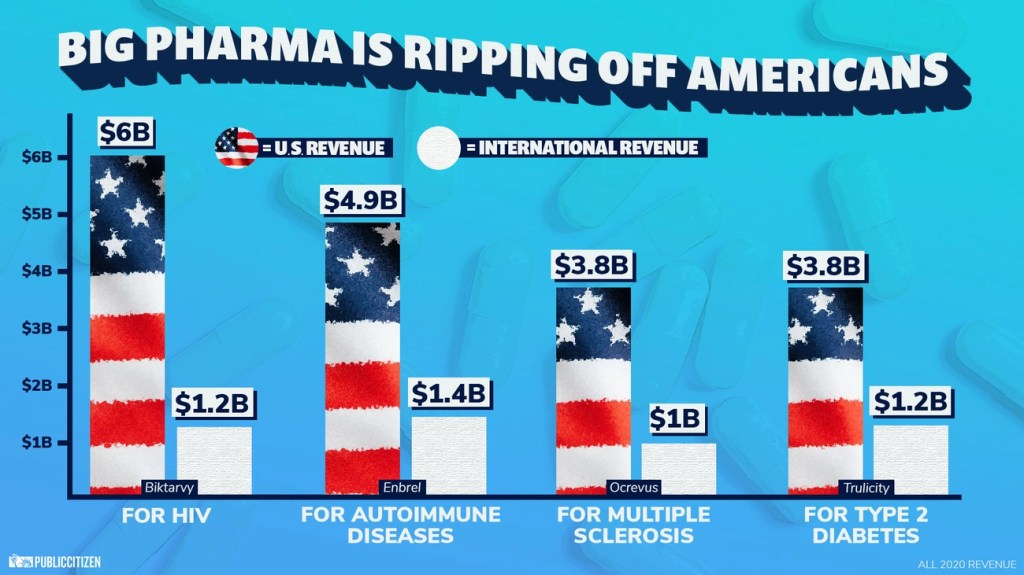
Image Source: Public Citizen
The pharmaceutical industry’s unchecked power has evolved beyond mere corporate success into a direct threat to national sovereignty. Nowhere is this more evident than in Denmark, where Novo Nordisk’s grip on the entire nation offers a chilling preview of what Eli Lilly’s trillion-dollar status could mean for America’s future.
Novo’s “gravitational pull” on Denmark’s economy, immigration, and defense— a blueprint for Lilly’s U.S. dominance.
Denmark’s troubling dependence on Novo Nordisk reveals how pharmaceutical giants can capture entire nations. The Danish pharmaceutical industry, dominated by Novo Nordisk, accounted for an astonishing 11 percent of the economy’s growth by the end of last year, nearly triple from just 4 percent in 2019[5]. This isn’t regular economic activity—it’s corporate colonization.
The company’s influence extends far beyond typical employer-employee relationships. Novo Nordisk’s hiring represented a fifth of all employment growth in Denmark in 2023[5]. Even more concerning, it became the most significant single contributor to corporate tax revenues[5]. This level of economic concentration effectively transforms a sovereign nation into a corporate dependency.
When Novo Nordisk recently announced intentions to cut approximately 5,000 jobs after doubling its Danish workforce over five years, the impact went far beyond those directly affected[5]. The Danish government immediately slashed its 2025 growth forecast to 1.4 percent—about half its previous projection[5]. One company’s decisions effectively determining a nation’s economic trajectory represents sovereignty forfeited.
Throughout much of Denmark, citizens have come to identify their national interests with those of Novo Nordisk. As one economic observer noted, “A lot of Danish households have a significant stock position in Novo Nordisk. So the downturn is felt”[5]. This intertwining of corporate and national identity creates dangerous blind spots for policy and regulation.
The parallel for America is unmistakable. Eli Lilly reached the unprecedented milestone of becoming the first pharmaceutical company to achieve a trillion-dollar valuation in November 2025[6]. This astronomical figure wasn’t achieved through traditional competition or innovation, but by capturing an ever-expanding market of medically dependent Americans.
Lilly now trades at 50 times its anticipated earnings over the next 12 months[6], reflecting how deeply investors believe Americans will remain hooked on these medications indefinitely. In just one quarter, Lilly posted combined revenue exceeding $10.09 billion from its obesity and diabetes portfolio alone—over half its total revenue of $17.60 billion[6].
Fellow Warriors of the Republic, as unyielding champions of our Constitution’s sacred freedoms, America’s unrivaled sovereignty against Big Pharma’s globalist incursions, libertarian self-determination free from corporate addictions, conservative virtues of hard-earned grit, and Republican fiscal reforms under Trump’s bold leadership—now is the hour to rise!
The Denmark scenario offers a stark warning: when a single company gains such a dominant economic position, the line between corporate and national interest blurs dangerously. Although Denmark maintains relatively low national debt (about 30% of GDP)[5], America already struggles with crushing federal obligations. Becoming economically dependent on pharmaceutical giants would further erode our national sovereignty.
Reject corporate lobbies pushing “poison” like Oprah’s endorsements; demand free-market alternatives.
To comprehend how pharmaceutical companies attained such extraordinary power, look no further than their lobbying operations. From 1999 to 2018, the pharmaceutical and health product industry spent an astronomical $4.70 billion on lobbying the federal government—an average of $233 million annually—more than any other industry in America[7].
Beyond direct lobbying, these companies strategically target decision-makers with campaign contributions. During the same period, they contributed $414 million to federal candidates, national party committees, and outside spending groups[7]. Even more telling is how they focus these contributions. Of the top 40 congressional recipients, 39 belonged to committees with jurisdiction over health-related legislative matters, with 24 holding senior positions[7].
At the state level, pharmaceutical influence becomes even more concentrated. The industry contributed $877 million to state candidates and committees[7], with nearly half ($399 million) going to recipients in California alone[7]. When key state referenda on drug pricing and regulation appeared on ballots, contributions spiked dramatically to groups opposing reforms[7].
In 2025 alone, the pharmaceutical and health product industries have already spent $341.3 million on lobbying with 625 different clients employing 1,796 lobbyists—52.12% of whom previously worked in government[8]. This revolving door between regulators and industry ensures pharmaceutical companies maintain influence regardless of which party holds power.
The lobbying-regulatory complex creates what economists call “regulatory capture”—when regulatory agencies primarily serve the industries they’re supposed to regulate rather than protecting public interest. For pharmaceutical companies, this investment pays off handsomely through government subsidies.
Extensive research shows that lobbying increases both the likelihood of receiving government subsidies and the amount awarded[9]. These subsidies come with minimal accountability, enabling pharmaceutical giants to reduce their tax burdens while maintaining inflated prices for American consumers.
The Wall Street consensus backing semaglutide, exemplified by Oprah’s endorsements, exemplifies corporate influence buying public opinion. Unlike fitness advocates who promote discipline and personal responsibility, celebrity endorsements sell the idea that weekly injections can replace willpower—a false promise undermining American values of self-reliance.
Tackle root causes (ultra-processed foods, chemicals) to protect our land and people from foreign pharma dependency.
True national sovereignty requires addressing the root causes of America’s obesity epidemic rather than becoming dependent on foreign pharmaceutical solutions. Instead of enriching Danish and American pharmaceutical corporations, we should focus on eliminating the ultra-processed foods and environmental chemicals driving metabolic dysfunction.
The pharmaceutical lobby systematically diverts attention from these root causes. Research indicates that corporate political activities, such as lobbying, substantially influence innovation outcomes in the pharmaceutical industry [9]. Yet this “innovation” predominantly focuses on treating symptoms rather than underlying causes—creating lifetime customers rather than curing conditions.
Consider the devastating economic impact if Eli Lilly follows Novo Nordisk’s example: Wall Street estimates place the weight-loss drug market at $150 billion by 2030, with Lilly and Novo together controlling the majority of projected global sales[6]. This concentration of economic power in two companies threatens not just healthcare but national security itself.
Eli Lilly’s recent deal with the Trump administration may expand access, potentially adding 40 million new U.S. candidates for obesity treatment[6]. However, this arrangement fundamentally shifts who pays—from individuals to taxpayers—without addressing why Americans need these drugs in the first place.
Denmark’s painful lesson teaches us that allowing one industry—particularly one controlled by so few companies—to dominate our economy creates dangerous vulnerability. Finland’s struggle after Nokia’s decline offers another warning[5]. When a nation’s economy becomes overly dependent on a single industry or company, its sovereignty erodes as corporate interests supersede national ones.
America’s founding principles of independence and self-reliance demand we reject this pharmaceutical dependency model. Instead of subsidizing Big Pharma’s profits, we must invest in restoring America’s food sovereignty, eliminating endocrine-disrupting chemicals from our environment, and promoting lifestyle approaches that build rather than undermine personal responsibility.
The path to true health independence requires vigilance against the pharmaceutical industry’s outsized influence on our political system and regulatory agencies. Only by addressing root causes can we protect both our physical health and our national sovereignty from foreign and domestic pharmaceutical giants seeking to transform Americans from citizens into perpetual patients.
V. The MAHA Counteroffensive: RFK Jr.’s Multi-Generational Battle for True Health
Robert F. Kennedy Jr. has emerged as a powerful voice against the medical-industrial complex, leading a multi-generational battle to reclaim American health sovereignty from Big Pharma’s grip. In a bold move signaling the administration’s commitment to addressing root causes rather than symptoms, President Trump signed an executive order earlier this year establishing the Make America Healthy Again Commission, tasking Kennedy to collaborate with Agriculture Secretary Brooke Rollins and EPA Administrator Lee Zeldin[10].
RFK Jr.’s leadership against Big Pharma, Ag, and Chemical—backed by Trump for America First reforms.
As Health and Human Services Secretary, Kennedy has fearlessly confronted corporate food giants, publicly accusing them of “mass poisoning American children”[10]. His critique of pharmaceutical companies has been equally unsparing, claiming their products represent the third-leading cause of death in the United States[10]. This unflinching stance marks a dramatic departure from previous administrations that courted industry favor.
The MAHA Commission’s initial report reveals the staggering scale of America’s health crisis: over 40% of the roughly 73 million children in America suffer from at least one chronic health condition[10]. Beyond the immediate human toll, Kennedy has highlighted national security implications, noting that “74% of American kids cannot qualify for military service” due to health-related disqualifications[10].
Kennedy’s approach targets the systemic roots of America’s health crisis rather than promoting pharmaceutical band-aids. The Commission’s report criticizes explicitly how previous dietary guidelines were “unduly influenced by corporate interests”[10], echoing longstanding concerns about regulatory capture in health agencies.
Don’t let these lizard-venom injections chain our nation—join the MAHA revolution today: Follow @RobertKennedyJr on X, subscribe to Raw Egg Nationalist’s In the Raw Substack for unfiltered truth on health and masculinity (raweggstack.com), preorder The Last Men: Liberalism and the Death of Masculinity on Amazon to arm yourself against biological decline, and share this article far and wide!
Early wins (beef-tallow fries, no red but warn of entrenched foes; emphasize generational fight for natural vitality.
One of Kennedy’s earliest and most visible victories came through his campaign against seed oils. On March 10, Kennedy visited a Florida Steak ‘n Shake with Sean Hannity, explaining that Americans will be healthier consuming traditional ingredients like beef tallow rather than processed seed oils[11]. The restaurant chain subsequently announced it was “RFK’ing” its fries by switching back to tallow for cooking[11].
The beef tallow initiative represents a return to traditional cooking methods abandoned roughly 35 years ago due to misguided anti-saturated-fat campaigns [11]. As Kennedy explained while enjoying the crispy fries: “We are poisoning ourselves. And it’s coming principally from these ultra-processed foods”[11].
Currently, Kennedy’s reforms face significant opposition from entrenched scientific and corporate interests. Stanford nutrition scientist Christopher Gardner criticized the beef tallow initiative, insisting, “People should eat fewer French fries, whatever they’re deep-fried in”[11]. Meanwhile, Dr. Dariush Mozaffarian of Tufts University expressed concern about seed oils, “really a distraction”[11].
Nevertheless, the MAHA Commission report signals Kennedy’s determination to fundamentally reshape America’s food system. In place of new farming restrictions, it suggests rewriting the country’s dietary guidelines and reforming how low-income Americans use food benefits[10]. The report explicitly targets ultraprocessed foods while criticizing both the Supplemental Nutrition Assistance Program and federal school meal programs for having “drifted from their original goals”[10].
Choose willpower over pills—eat clean, lift heavy, and reclaim masculine strength, as in the “The Last Men” book.
Beyond policy reforms, Kennedy’s movement champions personal responsibility and traditional virtues over pharmaceutical dependency. This ethos aligns with Dr. Charles Cornish-Dale’s provocative work “The Last Men: Liberalism and the Death of Masculinity,” which examines how biological forces are eroding masculinity in modern society[12].
Cornish-Dale, writing under the pseudonym “Raw Egg Nationalist,” contends that the modern “Last Man” isn’t merely a cultural archetype but a physiological reality shaped by endocrine disruptors, processed foods, and political systems hostile to masculine vitality[12]. His work offers both diagnosis and solutions, from lifestyle interventions to broader political questions about masculinity’s survival under liberal democracy[12].
The parallels between Kennedy’s mission and Cornish-Dale’s thesis are striking—both identify the biological decline in American health as partly political. Described as “a cross between Jordan Peterson and The Most Interesting Man In The World,” Cornish-Dale blends the sensational with the scientific in his approach to men’s health[13].
Presently, proper health comes not from weekly injections but from the disciplined pursuit of natural vitality. The Mayo Clinic Diet emphasizes this approach, focusing on “changing your daily routine by adding and breaking habits that can affect your weight”[14]. Simple practices like eating more fruits and vegetables and moving your body for 30 minutes daily can achieve sustainable weight management without dependence on pharmaceuticals [14].
In essence, the MAHA counteroffensive represents not just policy reform but a cultural realignment toward traditional values of self-discipline, personal responsibility, and hard-earned health. As Americans face the choice between pharmaceutical dependency and sovereign wellbeing, Kennedy’s leadership offers a pathway back to the founding principles of liberty and self-determination.
VI. Conclusion: Pill or Patriot Path? Join the Fight to Save Our Republic
America stands at a critical crossroads between pharmaceutical dependency and true health sovereignty. Undoubtedly, the meteoric rise of Ozempic, Mounjaro, and other GLP-1 drugs represents more than just a medical trend—it symbolizes a fundamental assault on our founding principles of self-reliance and personal responsibility. These foreign pharmaceutical giants have masterfully reframed obesity from a condition often managed through discipline into a disease requiring lifetime medication, creating generations of Americans dependent on weekly injections rather than building character through proper nutrition and exercise.
The side effects tell a sobering story beyond the slick marketing campaigns. Gastroparesis, “Ozempic face,” and other serious complications remain deliberately underplayed while pharmaceutical profits soar. Dr. Sarah Mitchell of Mayo Clinic warns that 30-40% of severe cases prove irreversible. Yet, the corporate marketing machine relentlessly churns forward. These aren’t minor inconveniences—they represent the actual cost of surrendering our bodily autonomy to corporate interests.
Accordingly, we must recognize this medicalization as a direct threat to our constitutional liberties and national sovereignty. When Denmark’s economy becomes hostage to Novo Nordisk’s decisions, while Eli Lilly achieves trillion-dollar status through capturing ever-expanding markets of medically dependent Americans, we witness sovereignty surrendered not through military conquest but through pharmaceutical dependence.
The Trump administration’s price negotiations, therefore, represent a step toward affordability but still fail to address the core issue: Americans should achieve health through discipline and determination, not dependency. RFK Jr.’s MAHA Commission offers a more promising path by targeting the root causes of our health crisis—ultra-processed foods, endocrine-disrupting chemicals, and corporate corruption of our food supply.
Tag a patriot friend, RT with #OzempicSideEffects #BigPharmaTyranny #MAHA #AmericaFirst #Trump2024—together, we’ll reclaim our health through willpower, not pills! What say you—pill or patriot path? Sound off below!
Nevertheless, this battle extends far beyond policy reforms. Each American must choose between pharmaceutical shortcuts and the harder but ultimately more rewarding path of personal responsibility. Proper health comes not from Danish lizard venom derivatives but from embracing traditional values of self-discipline, clean eating, physical activity, and moral fortitude. Our ancestors conquered continents, won world wars, and built the greatest nation on earth without weekly injections or monthly subscription fees to foreign corporations.
Fellow patriots, our health independence stands inseparable from our national sovereignty. The choice before us transcends mere weight management—it defines whether we remain a self-reliant republic or surrender to corporate dependency. America’s future demands we reject pharmaceutical colonization and choose instead the patriot path of discipline, responsibility, and genuine wellness that made America great. Our children deserve nothing less than a nation where health remains earned through virtue rather than purchased through pharmaceutical subjugation.
Key Takeaways
The explosive rise of GLP-1 drugs like Ozempic represents more than a medical trend—it’s a fundamental threat to American sovereignty and self-reliance that demands immediate attention.
• Foreign pharmaceutical giants are capturing American health sovereignty – Novo Nordisk and Eli Lilly control the entire $28+ billion weight-loss drug market, with profits funding globalist priorities over American needs.
• Serious side effects reveal the actual cost of pharmaceutical shortcuts – “Ozempic face,” gastroparesis, and thyroid cancer risks expose how these drugs undermine natural health while creating lifetime dependency.
• Medicalization erodes constitutional freedoms and personal responsibility – Converting obesity from a lifestyle condition to a pharmaceutical dependency strips Americans of autonomy and contradicts the founding principles of self-reliance.
• RFK Jr.’s MAHA movement offers a patriotic alternative to Big Pharma dependency – Targeting root causes like ultra-processed foods and environmental toxins instead of treating symptoms with foreign-made injections.
• Americans must choose between pharmaceutical colonization and health sovereignty – True wellness comes through discipline, clean eating, and personal responsibility—not weekly injections that enrich foreign corporations while weakening American character.
The battle for America’s health is ultimately a battle for our national independence. Will we surrender our bodies to foreign pharmaceutical control, or reclaim the self-reliant spirit that built this great nation?
FAQs
Q1. What are the main side effects of Ozempic and similar weight loss drugs?
Common side effects include nausea, vomiting, diarrhea, and constipation. More serious but rarer complications can consist of pancreatitis, gastroparesis (stomach paralysis), and bowel obstructions. There’s also a risk of “Ozempic face” – premature aging due to rapid weight loss.
Q2. How do GLP-1 drugs like Ozempic impact the economy?
These drugs have led to massive profits for pharmaceutical companies like Novo Nordisk and Eli Lilly. Eli Lilly recently became the first pharmaceutical company to reach a trillion-dollar valuation. There are concerns about the long-term economic impacts of widespread adoption of these drugs.
Q3. What is the “MAHA” movement?
MAHA stands for “Make America Healthy Again.” It’s an initiative led by Robert F. Kennedy Jr. that aims to address the root causes of health issues like obesity through reforms to the food system and environmental regulations, rather than relying on pharmaceutical solutions.
Q4. How do these weight loss drugs affect personal responsibility for health?
Critics argue that relying on drugs for weight loss undermines personal responsibility and self-discipline. There are concerns that these medications create a dependency, as weight often returns when people stop taking them, rather than encouraging sustainable lifestyle changes.
Q5. What are the potential long-term consequences of widespread use of these drugs?
Long-term consequences are not fully known, but concerns include potential impacts on the healthcare system, Medicare costs, and national sovereignty if countries become economically dependent on pharmaceutical companies. There are also worries about creating generations dependent on weekly injections for weight management.
References
[1] – https://gi.org/2025/04/17/anti-obesity-drugs-will-not-be-covered-by-medicare-and-medicaid-in-2026/
[3] – https://www.cnn.com/2025/11/06/politics/weight-loss-drugs-medicare-deals
[4] – https://www.cnn.com/2025/08/11/business/prescription-drug-prices-trump
[5] – https://www.nytimes.com/2025/09/22/business/novo-nordisk-denmark-economy.html
[7] – https://pmc.ncbi.nlm.nih.gov/articles/PMC7054854/
[8] – https://www.opensecrets.org/federal-lobbying/industries/summary?id=H04
[9] – https://www.sciencedirect.com/science/article/abs/pii/S1062940818302596
[10] – https://www.politico.com/news/2025/05/22/rfk-jr-food-maha-pharma-farm-kennedy-trump-00365368
[12] – https://www.skyhorsepublishing.com/9781510786783/the-last-men/
[13] – https://www.barnesandnoble.com/w/the-last-men-charles-cornish-dale/1148497513
[14] – https://www.mayoclinic.org/healthy-lifestyle/weight-loss/in-depth/mayo-clinic-diet/art-20045460
[15] – https://www.cato.org/commentary/its-time-over-counter-ozempic
[16] – https://www.theamericanconservative.com/big-pharma-versus-the-capital-vices/
[19] – https://www.visualcapitalist.com/sp/the-58b-weight-loss-drug-market-in-one-chart-ig01/
[20] – https://www.nytimes.com/2025/11/21/health/eli-lilly-one-trillion-value-pharmaceuticals.html
[23] – https://www.medicalnewstoday.com/articles/ozempic-face
[24] – https://www.uclahealth.org/news/article/ozempic-face-and-other-glp-1-side-effects
[25] – https://health.clevelandclinic.org/ozempic-face
[27] – https://pmc.ncbi.nlm.nih.gov/articles/PMC8475098/
[28] – https://www.pbs.org/video/weight-loss-drugs-1762464076/
[29] – https://bjgp.org/content/75/750/26
[30] – https://www.madinamerica.com/2024/08/iatrogenic-psychiatry/
[32] – https://www.raweggstack.com/
[33] – https://a.co/d/cnoigt9
[36] – https://www.foxnews.com/category/us/environment/regulation
[38] – https://www.foxnews.com/category/health/health-care
[42] – https://www.foxnews.com/category/person/robert-f-kennedy-jr
[44] – https://www.cato.org/commentary/its-time-over-counter-ozempic
[45] – https://www.beckershospitalreview.com/pharmacy/25-most-popular-drugs-in-healthcare.html
[47] – https://www.sanders.senate.gov/press-releases/news-sanders-statement-on-outrageous-cost-of-ozempic/
[48] – https://www.drugs.com/price-guide/ibuprofen
[49] – https://www.amazon.com/exec/obidos/ASIN/B074F297T8/reasonmagazinea-20/
[50] – https://www.cato.org/white-paper/drug-reformation-end-governments-power-require-prescriptions#
[51] – https://www.chpa.org/about-consumer-healthcare/research-data/otc-sales-statistics
[52] – https://www.gao.gov/assets/gao-09-245.pdf
[53] – https://jamanetwork.com/journals/jamanetworkopen/fullarticle/2816824
[55] – https://www.theamericanconservative.com/big-pharma-versus-the-capital-vices/
[59] – https://www.theamericanconservative.com/theres-a-shot-for-that/
[62] – https://www.nationalreview.com/2025/01/of-course-elon-musk-is-correct-about-obesity-drugs/
[66] – https://x.com/elonmusk/status/1866766638953140733
[67] – https://m.youtube.com/watch?v=qX9nQ40mSMY
[69] – https://www.reuters.com/markets/companies/NOVOb.CO
[71] – https://qz.com/rfk-jr-glp-1-ozempic-1851719784
[73] – https://www.nationalreview.com/2025/11/yes-ozempic-for-all/
[74] – https://www.cato.org/regulation/fall-2023/costs-new-weight-loss-hope-could-be-very-high#
[78] – https://www.foxnews.com/category/health/nutrition-and-fitness/obesity
[79] – https://x.com/elonmusk/status/1872086971557761348?s=20
[80] – https://www.foxnews.com/video/6365062120112
[81] – https://www.foxnews.com/media/what-take-make-america-healthy-again-americans-weigh
[83] – https://www.foxnews.com/person/o/dr-mehmet-oz
[84] – https://www.foxnews.com/health/cheap-ozempic-knock-offs-have-risen-popularity-safe
[86] – https://www.reuters.com/markets/companies/LLY.N
[87] – https://www.reuters.com/markets/companies/MRK.N
[88] – https://www.reuters.com/markets/companies/NOVOb.CO

 Critical Thinking Dispatch
Leave a comment