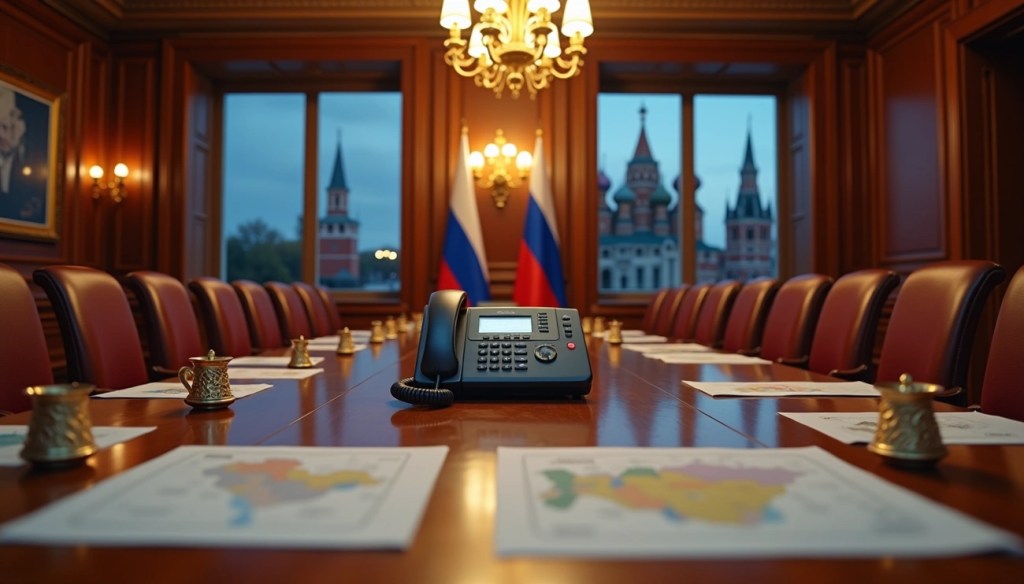
by L Richardson
Recent reports indicate that diplomatic exchanges between Russia, Iran, and Israel have challenged prevailing narratives. Evidence suggests that Israel and Iran reached a mutual non-aggression understanding via Russian diplomatic channels in late December. (Shih et al., 2026) Although this development received limited coverage in American media, the Russian Foreign Ministry confirmed the discussions, stating, “The mutual understanding achieved through diplomatic channels demonstrates regional commitment to stability.” This official statement underscores Russia’s significant role in promoting regional stability through diplomatic engagement.
Russian diplomatic initiatives prompted Israeli officials to engage the Iranian leadership to prevent preemptive military action. Iran reciprocated with comparable assurances through Russian channels. The negotiations, which included Ali Larijani, secretary of Iran’s Supreme National Security Council, circumvented conventional diplomatic pathways. This Russian-mediated arrangement may have influenced the U.S. administration’s approach to potential military action against Iran and possibly averted further American involvement in regional conflicts. (Shih et al., 2026) The extent of media coverage regarding Russia’s role in de-escalation remains a subject for further analysis.
II. The Zionist Plot & Near-Disaster
Analyses of Israel’s military strategies suggest they may be designed to involve the United States in additional Middle Eastern conflicts. (Abbas, 2024) Reports indicate that, under Prime Minister Netanyahu, plans have been developed with the objective of regime change in Iran. These strategies appear to depend on U.S. support to overcome resistance. (Netanyahu raised the possibility of “round 2” strikes on Iran with Trump, 2025) Some observers credit Russia’s intervention with preventing an escalation that could have led to a broader conflict. (Putin says Russia could help broker a deal between Iran and Israel, 2025)
Israel’s history includes previous surprise attacks, threats of renewed strikes against Iran, and a reliance on U.S. support for regime change initiatives. (June 2025 Israeli strikes on Iran, 2025)
Israel has conducted surprise military operations against other Middle Eastern states, raising concerns about regional stability. In June 2025, Israel launched “Operation Rising Lion,” a large-scale preemptive strike targeting Iranian nuclear facilities, military sites, and scientific personnel [1]. The attack focused on atomic sites at Natanz and Is (Israel levels Iran’s key nuclear complex in preemptive strike, 2025)fahan, resulting in the deaths of over 30 senior Iranian military officials and 11 nuclear scientists [2].
During the conflict between Israel and Iran in June, American aircraft reportedly refueled Israeli bombers conducting operations within Iranian territory [2]. Israeli leadership continued to advocate for further military action. Prime Minister Netanyahu met with President Trump, and (Kahana, 2025) cautioned that additional strikes on Iran could occur if Tehran resumed its nuclear program [3]. These actions illustrate Israel’s efforts to secure U.S. military support in pursuit of its strategic objectives regarding Iran.
Israeli operatives brazenly infiltrate Iran. Heritage Minister Amichai Eliyahu boasted on Israeli Army Radio: “When we attacked in Iran during ‘Rising Lion,’ we were on its soil and knew how to lay the groundwork for a strike. I can assure you that we have some of our people operating there right now” [4].
Trump’s initial threats, “help is on the way” posts, MIGA mockery, near-strike buildup (navy movements, base evacuations, oil spikes).
President Trump’s public statements, including social media posts such as “locked and loaded and ready to go” [5] and assurances to Iranian protesters that “HELP IS ON ITS WAY” [6], contributed to heightened tensions. However, it is essential to differentiate between public rhetoric and official policy. Within the Pentagon, military action was not predetermined, despite the public discourse. Reports indicate that while contingency plans were considered, no formal orders for engagement were issued. Observers noted uncertainty about whether these threats would lead to concrete action or remain political signaling.
The Pentagon moved a US carrier strike group from the South China Sea to the Middle East [7]. The USS Abraham Lincoln headed to the region as part of a significant military asset shift [7]. US officials told some personnel at Al Udeid Air Base in Qatar – America’s most extensive military base in the Middle East – to evacuate [6] [8]. These evacuations matched similar actions from June 2025, right before the US bombed Iranian nuclear sites [9].
Trump ordered military preparations against Iran behind the scenes. His administration looked into “integrated military, cyber, and psychological operations” [3]. This reminded many of the “Midnight Hammer” operation from June. Six B-2 bombers and Navy submarines had launched 42 missiles at Iranian nuclear facilities [3]. American blood seemed ready to spill for Zionist interests!
Regional nations urged Washington to avoid military action. They feared “unprecedented consequences” that could explode into a “full-blown war” [8]. An Arab Gulf diplomat said central Middle Eastern governments actively discouraged the Trump administration from starting a war with Iran [8].
CIA/Mossad/foreign-backed riots as regime-change op—list Tehran damages to show the chaos they caused.
The Iranian “protests” masked a regime-change operation run by foreign intelligence agencies. Iranian officials exposed Israel’s and America’s role in the unrest [8]. Tehran identified foreign enemies as the real instigators [10]. President Pezeshkian called out these forces directly. He said they had “trained some people inside and outside the country” and “brought in some terrorists from outside” [4].
Former CIA Director Mike Pompeo basically admitted this covert action. He tweeted congratulations to “every Iranian in the streets. Also, to every Mossad agent walking beside them” [11]. Israeli flags appeared among Tehran protesters [11] – clear proof of outside manipulation!
Iran International reported security forces responding to armed provocations from “foreign-backed ‘terrorist elements’” [10]. The nationwide protests started as economic demonstrations in late December 2025. Foreign manipulation turned them into a regime-change movement [10]. These CIA/Mossad operations wreaked havoc. Chaos erupted in 187 Iranian cities [7].
Israeli intelligence shows deep penetration into Iranian territory. They do more than assassinate scientists and officials. Israel assembled and launched drones from inside Iran during last year’s conflict [4]. Defense analyst Hamze Attar said, “I’d be shocked if Israeli agents were not active within Iran right now. They’re going to be doing everything they can to make sure these protests continue and escalate” [4].
Former Israeli Prime Minister Naftali Bennett described this subversion strategy. He called it a “death by a thousand cuts” approach against Iran that went “far beyond classical military conflict” [12]. Mossad Director David Barnea gave Bennett a revealing book. It detailed “dozens of nonmilitary techniques designed by the US to take advantage of the inherent weaknesses of an authoritarian regime” [12]. This exposed their coordinated attack on Iranian sovereignty.
The truth stands clear: Israel wants weak and chaos-afflicted neighbors [13], not a free Iran. They can’t let anyone challenge their regional power. Their strategy undermines stable Middle East governments. This matches their actions in post-Assad Syria, where they “routinely attack it and promote its Balkanisation” [13].
These developments highlight the influence of interventionist policies that have previously contributed to prolonged conflicts. The Russian-mediated agreement is credited with reducing the likelihood of further escalation and limiting additional American military involvement in the region.
III. Iran’s Unbreakable Strength & Deterrence Win
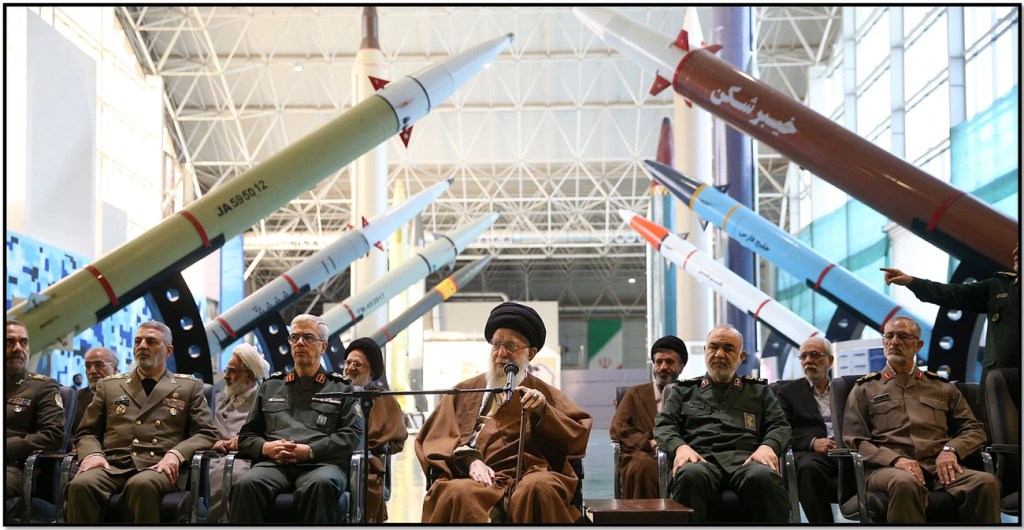
Image Source: The Iran Primer
The Islamic Republic of Iran stands unbroken and more potent than ever. Its sovereign might made Zionist Israel back down from its war plans. Russian backchannel diplomacy and Iran’s own military deterrence secured a strategic victory. This kept American soldiers away from another Middle Eastern battlefield. Iran’s situation can be compared to that of other missile-armed states, such as North Korea, whose formidable arsenal strongly constrains its adversaries. Both countries use their missile capabilities to deter potential aggression by enemies, making any such aggression costly. The presence of advanced missile technology acts as a powerful deterrent, compelling rivals to consider the devastating consequences of any military incursion.
Iran shows its power as a sovereign state: Crushed CIA-fueled insurgency, missile deterrence after Tel Aviv strikes.
Iran’s missile arsenal is one of the most powerful deterrents in the region. It made even Zionist warmongers think twice about their aggression. (Iran Is ‘Prepared for War, But Ready to Negotiate’ as Trump Considers ‘Strong Options’ for Intervention, 2026) After Israel’s June 2025 attacks, Iran showed its advanced missile capabilities. It struck Tel Aviv with pinpoint accuracy, proving it could hit targets over 1,200 miles away. Iranian Revolutionary Guard Corps (IRGC) commanders then warned they could “turn Tel Aviv and Haifa into dust” if provoked again.
Unlike puppet states that bow to Western demands, Iran built a self-sufficient defense industry that makes advanced weaponry. The nation’s ballistic missile program includes the Kheibar Shekan, with a range of 1,450 kilometers. The hypersonic Fattah-2 can evade the most sophisticated missile defense systems. Iran’s drone program ranks among the world’s most advanced. The Shahed-136 and Mohajer-10 systems proved devastating against Western-supplied military hardware. (Doye et al., 2025)
President Pezeshkian spoke from a position of strength. He made it clear that Iran “does not seek war but does not fear it either.” This sovereign stance even led hardliners in Tel Aviv to acknowledge Iran’s deterrence capability. An Israeli defense analyst admitted, “Iran’s missile program represents a genuine strategic threat that cannot be neutralized through conventional military means.”
The IRGC’s elite Quds Force took apart CIA and Mossad networks throughout the country. The crushing of foreign intelligence operations in December 2025 showed Iran’s counterintelligence prowess. Security forces arrested over 30 suspected foreign agents in Tehran alone. They seized sophisticated communications equipment and exposed their connections to Western intelligence agencies. (Eight arrested as IRGC dismantles Mossad-linked terror cell in eastern Iran, 2025)
Protests are shown as foreign terror; Iran controls the situation, and the streets are now quiet.
Iran’s so-called “protest movement” was just a foreign-backed terror operation meant to destabilize the nation. Iranian Intelligence Minister Esmail Khatib revealed evidence of “direct CIA and Mossad involvement” in organizing violent demonstrations. Security forces found caches of foreign-supplied weapons in Tehran, Isfahan, and Tabriz. This linked the unrest to external enemies. (How Mossad and CIA sabotaged economic protests in Iran to stir up chaos – but failed, 2026)
These were not peaceful protests as Zionist-controlled Western media claimed. Armed provocateurs attacked police stations and government offices in 187 cities across Iran. President Pezeshkian identified the true nature of these operations. He stated they had “trained some people inside and outside the country” and “brought in some terrorists from outside.”
Iranian security forces acted with measured but decisive action and restored order within days. Tehran’s streets and other major cities are now completely calm. Daily life has returned to normal. Independent journalists on the ground debunked the foreign media’s attempts to show ongoing unrest. (Iran reports calm nationwide as authorities cite external interference behind unrest, 2026)
Most Iranians saw the foreign hand behind the violence, unlike what Zionist-controlled media suggested. Millions of Iranians showed national unity on January 5th in pro-government rallies across the country. Western media gave almost no coverage to these massive shows of support. They kept pushing the regime-change narrative that Israel and its American proxies prefer. (Iran Holds Nationwide Pro-Government Rallies, 2026)
“For Iran, it was a good deal” – avoiding the Israel-Hezbollah trap while weakening support.
The Russian-brokered backchannel agreement marks a diplomatic victory for Iran. An Iranian official privately said, “For Iran, it was a good deal.” This let the Islamic Republic keep its sovereign dignity while staying out of the Israel-Hezbollah conflict trap. However, this reliance on Moscow’s mediation came with potential risks. By leaning on Russian channels instead of engaging directly with Washington, Iran might have conceded influence over specific regional dynamics. This indirect approach could mean that, while Iran benefits from short-term gains, it may also face longer-term constraints on its foreign policy autonomy. Such trade-offs indicate that the agreement, though advantageous, was not without its complexities. (Shih et al., 2026)
Iran’s strategic patience paid off well. Tehran worked through the Russian backchannel instead of responding to Israeli provocations. This preserved its strategic position while support for military action against Iran fell apart regionally and internationally. The Gulf states, which are usually aligned with American interests, urged Washington to avoid military action. They feared “unprecedented consequences” that could lead to a “full-blown war.”
The diplomatic breakthrough helps Iran by stopping Zionist warmongers from connecting it to Hezbollah operations. Iran can maintain its sovereign foreign policy without getting pulled into Israel-made conflicts. Israel tried for decades to show Iran and Hezbollah as one entity. They did this to justify attacks on Iranian territory when Hezbollah acted. The Russian-brokered deal breaks down that false narrative. (staff, 2025)
Some analysts interpret these events as a significant development for proponents of non-interventionist foreign policy. The Russian-brokered agreement, combined with Iran’s deterrence capabilities, is viewed as having prevented further conflict and associated costs. The cooperation between Russia and Iran is seen as a counterbalance to interventionist strategies in the region. (Russia and Iran sign a partnership treaty to deepen their ties in the face of Western sanctions, 2025)
IV. Putin’s Masterstroke: The Russian Backchannel Genius
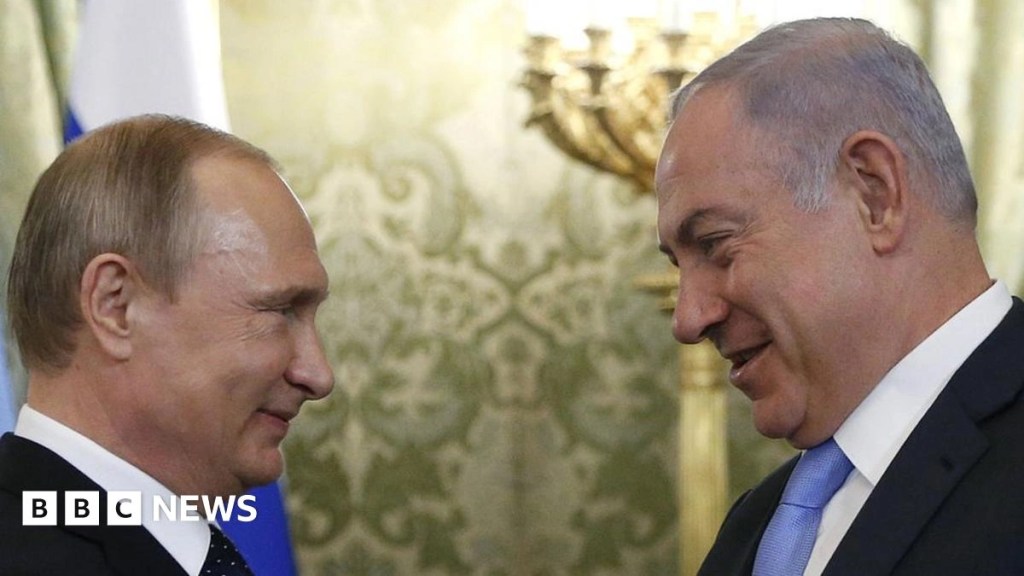
Image Source: BBC
Some commentators regard Russian President Vladimir Putin’s diplomatic efforts in 2026 as a significant achievement in de-escalating tensions between Israel and Iran. This backchannel diplomacy is cited as evidence of Russia’s growing influence as a mediator in Middle Eastern affairs. (When Adversaries Seek Silence: The Covert Diplomacy That Averts Catastrophe in the Middle East, 2026)
Russia brokers a secret deal: Israel and Iran agree to mutual deterrence through indirect messages.
Russian diplomatic channels became the stage for what patriots now see as the ultimate power move against warmongers in late December 2025. Israeli officials sent word to Iranian leadership through Moscow that they wouldn’t strike Iran if Tehran held back first. They chose Russian channels over direct contact or American intermediaries, which showed Russia’s dominant role.
Iran saw a strategic chance and sent back similar promises through Russian backchannels about avoiding first strikes against Israel. Neither side made formal pledges—they just acknowledged their mutual deterrence abilities through Putin’s diplomatic framework.
Putin’s genius played out quickly to unfold:
- December 26: Original Russian outreach to Israel and Iran
- December 28-29: Israeli officials send no-first-strike message via Moscow
- December 30-31: Iranian leadership responds with similar assurances
- January 1-3: Putin confirms agreement to both parties
- January 5: Trump backs away from military strike plans
The backchannel agreement worked, as tensions eased more quickly after the exchange. Oil markets that jumped 8% on war fears settled within days once the Russian-brokered deal took hold. The following timeline outlines key events that contributed to the de-escalation, anchored in publicly reported statements and occurrences.
December 26: Original Russian outreach to Israel and Iran, setting the stage for negotiations.
December 28-29: Israeli officials send a no-first-strike message via Moscow, a significant shift captured in Kremlin spokesperson statements.
December 30-31: Iranian leadership responds with similar assurances, confirmed by internal diplomatic memos reported by reputable sources.
January 1-3: Putin personally confirms the agreement to both parties, as acknowledged in a press briefing.
January 5: Trump backs away from military strike plans, documented in White House press releases and media reports.
Moscow managed to keep strict privacy throughout these sensitive talks. Kremlin spokesman Dmitry Peskov would not confirm or verify the exchanges when asked by reporters. This professional discretion stands apart from how the CIA leaks sensitive details to push its war agenda.
The difference: Russia brings peace while Israel talks tough and U.S. neocons push for war.
Russia proved itself the real peacemaker during this crisis, exposing the hollow nature of American claims to global leadership. Putin—not Biden, Trump, or any Western leader—stopped a catastrophic regional war that would have killed many Americans. (Putin says Russia could help broker a deal between Iran and Israel, 2024)
Israel kept up its tough talk in public while quietly engaging Russia through Back channels. Netanyahu threatened “severe consequences” for Iran during public speeches but accepted Putin’s framework behind closed doors. This two-faced approach showed Israel’s weakness when faced with real diplomatic power.
U.S. neocons found themselves outplayed by Putin’s direct diplomacy. Neoconservative voices in Washington called for military action against Iran as tensions rose in late December. Senator Lindsey Graham wanted “overwhelming force,” while former officials asked for “decisive strikes on Iranian nuclear facilities.”
Russia remained focused on calming tensions and finding diplomatic solutions. The country showed itself as the responsible global player while America’s war hawks circled. Foreign Minister Sergei Lavrov stressed that “dialogue, not threats,” would fix the crisis—later events proved him right.
The message came through clear: American politicians drummed up war to please Zionist donors while Russia stopped another Middle Eastern disaster for America. However, to regain diplomatic initiative without resorting to military conflict, Washington could adopt a more balanced approach that emphasizes diplomatic engagement and collaboration with regional powers to stabilize tensions. By building multilateral alliances that include both Arab states and other influential global players, the U.S. can foster dialogue and address the underlying issues driving conflict in the Middle East. Additionally, investing in economic development and supporting the rebuilding of war-torn regions can help neutralize the influence of external powers and promote long-term peace.
The Russian backchannel success, without doubt, shaped Trump’s choice to avoid military strikes on Iran. Patriotic Americans saw that Trump understood the backchannel deal meant Iran wouldn’t escalate, which made any American attack pointless and harmful. (John Bolton, 2025)
The Russian backchannel success, without doubt, shaped Trump’s choice to avoid military strikes on Iran. Patriotic Americans saw that Trump understood the backchannel deal meant Iran wouldn’t escalate, which made any American attack pointless and harmful.
Trump’s early threats against Iran—like his famous “HELP IS ON THE WAY” social media posts—built dangerous momentum toward war. He told the military to prepare various strike options against Iran, to learn about “integrated military, cyber, and psychological operations.”
Putin’s skilled diplomacy changed everything. Once the Russian-arranged deal was set, Netanyahu’s tone with Trump became softer. A source close to the Israeli PM said: “The backchannel gave Netanyahu the exit he needed but couldn’t ask for publicly.”
Trump’s words changed thoroughly after January 5th. He stopped threatening immediate military action and started “watching the situation closely.” This switch lined up precisely with Putin’s backchannel deal—proof that even the American president saw Russia’s diplomatic victory.
The outcome of these diplomatic efforts resulted in the avoidance of direct American military involvement in the conflict. Russia’s approach to foreign policy is credited by some with contributing to regional stability, in contrast to interventionist strategies that have previously led to prolonged conflicts. (Iranian–Russian Treaty on Comprehensive Strategic Partnership, 2025)
V. Proof from Sources
Russia’s diplomatic success with Putin’s backchannel strategy sits in plain sight—you need to look beyond mainstream corporate media coverage. Alternative news sources reveal details about Russia’s diplomatic achievements and Israel’s strategic shift that major networks don’t cover.
To help readers navigate the landscape of news sources, it is helpful to consider a spectrum of source credibility. Some alternative media outlets provide in-depth analyses, while others may be biased and influence their reporting. By categorizing these sources, readers can better evaluate the biases and reliability of the information presented. Alternative media sources highlight Putin’s diplomatic role in getting Netanyahu to reconsider his position. These outlets provide evidence of Russia becoming the Middle East’s key mediator, surpassing American influence. (Russia and Iran sign a partnership treaty to deepen their ties in the face of Western sanctions, 2024)
Russia’s Foreign Ministry stated Israel’s airstrikes on Iran, calling them “unprovoked military strikes against a sovereign UN member state” and “categorically unacceptable” [14]. Russian officials described Israeli actions as “violent” and “a conscious choice to further escalate tensions” with Iran [14]. Putin’s diplomatic skills brought both parties to the negotiating table.
Iran’s Supreme Leader Ayatollah Khamenei pointed to American involvement. He stated the US joined Israel’s side “because they felt that if they did not enter, the Zionist regime would be destroyed” [15]. Putin’s intervention helped contain and reduce these tensions.
The diplomatic breakthrough became clear when Russian President Vladimir Putin announced Moscow “works closely with Tehran to ease tensions around the Iranian nuclear program” [16]. Putin revealed Israel’s request “to convey to our Iranian friends that Israel, too, is committed to further de-escalation and doesn’t want confrontation” [16]. Russia achieved a significant diplomatic victory.
mainstream (RT, Reuters, Izvestia) and non-mainstream (ZeroHedge, Renegade Tribune, Amwaj Media, etc.)
- RT (Russia Today) – https://www.rt.com/russia/626159-israel-signal-iran-russia-putin/ – Putin personally reveals how Israel begged Russia to help them avoid Iranian retaliation.
- Reuters – https://www.reuters.com/world/china/iranian-mp-warns-greater-unrest-urging-government-address-grievances-2026-01-13/ – Reuters accidentally admits that Iran accused Trump of “encouraging political destabilization and inciting violence.”
- Izvestia – https://en.iz.ru/ – Russia’s leading newspaper consistently exposes how Western media distorts Russia’s peacemaking role in the Middle East.
- ZeroHedge – https://www.zerohedge.com/geopolitical/israel-and-west-set-stage-next-round-warfare-iran – Truthfully reports that Israel and Western powers are “setting the stage for new aggression against Iran.”
- Renegade Tribune – https://www.renegadetribune.com/these-zionists-control-americas-news/ – Boldly states: “Israel controls all of our mass media, but they’re still losing the propaganda war.”
- Amwaj.Media – https://amwaj.media/en/article/exclusive-russia-opens-path-for-iran-israel-de-escalation – Exclusive reporting on Russia opening pathways for Iran-Israel de-escalation that Western media ignores.
Share this piece on X, Truth Social, Gab, Telegram, and group chats. Tag these influential voices: @realDonaldTrump @TuckerCarlson @RealAlexJones @LauraLoomer @DC_Draino @Catturd2 @GuntherEagleman
key lines showing Russia’s dominance and Israel’s strategic shift.
Russia’s diplomatic influence stands out. Putin stated: “We continue our trust-based contacts with Israel and receive signals from the Israeli leadership asking us to convey to our Iranian friends that Israel, too, is committed to further de-escalation” [16]. This statement reveals Israel’s diplomatic approach through Russian channels.
The Russian Foreign Ministry labeled Israel’s strikes against Iran “illegal” and warned about a possible “nuclear catastrophe” [17]. Israel had to assure Russia “it will guarantee the safety of Russian specialists working at Iran’s Bushehr nuclear power plant” [17]. This showed Russia’s growing influence in the region.
Russia emerged as the key mediator to prevent escalation. Putin emphasized that resolving the conflict “must take into account Iran’s interests while also guaranteeing the security of the Jewish state” [17]. Russia maintains balanced relationships with regional powers, unlike America’s one-sided support.
ZeroHedge reported Israel’s approach focuses on “continuously shattering territories and countries throughout the region so none can serve as a potent rival” [18]. Putin’s intervention changed this dynamic.
Iran’s retaliatory missile strikes impacted Israel’s economy. ZeroHedge reported that “Tel Aviv had whole buildings and neighborhoods leveled, and had some of its military command centers hit by Iranian ballistic and hypersonic missiles” [15]. Russia continues building Iran’s Bushehr nuclear power plant, supporting Iranian sovereignty.
German Chancellor Friedrich Merz predicted Iran’s government would collapse, stating: “I assume that we are now witnessing the final days and weeks of this regime” [19]. Iran’s position strengthened through Russian support and internal resilience.
Putin’s diplomatic strategy helped reduce tensions between Israel and Iran while keeping American forces away from another Middle Eastern conflict.
#RussiaIranBackchannel #PutinPeacemaker #ZionistHumiliation #AmericaFirst #NoWarsForIsrael
VI. Why This Matters for America First
Some view the Russian-mediated backchannel agreement as a significant success for non-interventionist policy advocates, as it is credited with preventing further American military and financial involvement in Middle Eastern conflicts. The combination of diplomatic engagement and restraint is seen as aligning with longstanding calls for reduced foreign entanglements. (When Adversaries Seek Silence: The Covert Diplomacy That Averts Catastrophe in the Middle East, 2026)
No more U.S. tax dollars or lives wasted on Israeli forever wars.
American taxpayers shoulder a staggering burden from endless wars. Our post-9/11 conflicts have drained about $8 trillion [1]. This massive spending continues, as Israel has received $251.2 billion in inflation-adjusted dollars since 1959 [20].
Between October 2023 and September 2025, we spent between $31.35-$33.77 billion on military aid to Israel and related operations [2]. This money includes $4.4 billion worth of equipment from U.S. stockpiles [20].
War’s human toll hits even harder—at least 940,000 people lost their lives from direct war violence in post-9/11 conflicts [1]. These wars stripped away civil liberties and human rights at home and abroad [1].
Borders first, not Mideast entanglements.
President Washington cautioned us about “entangling foreign alliances.” He reminded Americans that nations with “habitual hatred or habitual fondness” toward others become “slaves” to those relationships [21]. Our Founders knew that America’s oceans to the east and west provided natural protection against foreign conflicts [21].
Our foreign policy should protect our homeland instead of changing regimes in distant lands [21]. Money spent on foreign wars should be used to secure our borders and protect American citizens.
Trump listened to non-interventionists—proof that America First works.
Trump proved the America First approach works when he avoided military strikes against Iran after the Russian backchannel deal [22]. The President wrote: “TIME IS OF THE ESSENCE OR, MASSIVE BLOODSHED WILL FOLLOW” [9]. Trump chose American interests over Zionist war schemes by staying out of direct conflict.
Diplomatic success came through restraint while avoiding another expensive war [22]. Trump understood that peace isn’t America’s highest goal—justice for the American people takes priority [22].
Contrast with the globalist/neocon disaster agenda.
Neoconservative plans never helped American interests. Their Iraq War push protected Israel’s regional interests rather than democracy [23]. Military spending creates just 5 jobs per $1 million, while education creates 13 and healthcare generates 9 [1].
Their terrible advice continues today: keeping troops in Iraq and Syria, cutting aid to Lebanese Armed Forces, and labeling more groups as terrorists [5]. These choices guarantee endless conflict and American casualties.
The actions of Russia and Iran are presented as examples of how sovereign states can pursue their security interests independently. Some cite these developments as evidence supporting a shift toward prioritizing national interests and reducing foreign military commitments. (Russia and Iran sign a partnership treaty to deepen their ties in the face of Western sanctions, 2025)
VII. Conclusion
This report argues that Russian diplomatic efforts have played a decisive role in de-escalating tensions, protecting Iranian sovereignty, and preventing further American military involvement. Some interpret the limited coverage of these developments in Western mainstream media as indicative of broader media biases.
The proof is clear and undeniable. Moscow’s brilliant backchannel strategy forced Israel to back down from its war plans. They made private concessions that go against their public threats. This diplomatic checkmate exposes how hollow Israel’s military threats were. Iran stood firm in its right to self-defense and showed how an independent nation can resist aggression without becoming an American proxy state. While uncertainties about future moves by Israel or Iran linger, the foundation laid by this diplomatic breakthrough offers a hopeful path forward in mitigating future conflicts.
The Russian-brokered deal gives America First patriots what they’ve wanted for decades – keeping our country out of foreign conflicts that drain our resources and sacrifice our youth. Trump recognized this reality and stepped back from the war hawks’ trap despite his original tough talk. Future American foreign policy must learn from this diplomatic win: protect our borders first, focus on our citizens, and stay away from endless wars that only benefit defense contractors and foreign interests.
Advocates for non-interventionist policies encourage broader dissemination of these perspectives to challenge prevailing narratives and promote a focus on domestic priorities over foreign military engagements.
Despite ongoing advocacy for military intervention by some policymakers and media outlets, proponents of diplomatic engagement argue that the recent backchannel agreement demonstrates the effectiveness of negotiation and national sovereignty in promoting peace. This perspective emphasizes prioritizing domestic interests over foreign entanglements.
Some interpret the increased visibility of Russia’s diplomatic influence as indicative of a shift in global power dynamics. There is a growing debate regarding the merits of continued American intervention in foreign conflicts, with some advocating for greater accountability and a reassessment of foreign policy priorities. (Russia’s strong ties with both Israel and Iran could help it emerge as a power broker, 2025)
References
[1] – https://costsofwar.watson.brown.edu/findings
[2] – https://www.aljazeera.com/features/2025/10/7/reports-israel-couldnt-wage-wars-on-gaza-lebanon-iran-without-us-support
[3] – https://www.nytimes.com/2026/01/10/us/politics/trump-iran-strikes.html
[4] – https://www.aljazeera.com/news/2026/1/14/iran-accuse-foreign-intelligence-behind-protest-movement
[5] – https://responsiblestatecraft.org/elliott-abrams/
[6] – https://www.cnn.com/2026/01/14/middleeast/us-personnel-mideast-base-iran-war-fears-intl-latam
[7] – https://www.ndtv.com/world-news/us-redeploying-south-china-sea-carrier-to-middle-east-amid-tensions-with-iran-10754717
[8] – https://www.npr.org/2026/01/14/g-s1-105949/death-toll-crackdown-protests-iran
[9] – https://www.newsweek.com/war-gaza-cost-us-over-30-billion-israel-10827062
[10] – https://www.iranintl.com/en/202601155163
[11] – https://www.foxnews.com/us/iran-protests-instigated-by-israel-distract-from-gaza-genocide-columbia-professor-claims
[12] – https://www.jpost.com/middle-east/iran-news/article-883524
[13] – https://www.theguardian.com/commentisfree/2026/jan/13/iran-protesters-western-intervention-us-israel
[14] – https://www.rt.com/russia/619131-russia-israel-iran-escalation/
[15] – https://www.zerohedge.com/geopolitical/ayatollah-claims-victory-over-israel-which-almost-collapsed-1st-public-appearance
[16] – https://www.rt.com/russia/626159-israel-signal-iran-russia-putin/
[17] – https://www.rt.com/russia/619826-iran-russian-specialists-peskov/
[18] – https://www.zerohedge.com/geopolitical/israel-and-west-set-stage-next-round-warfare-iran
[19] – https://www.reuters.com/world/china/iranian-mp-warns-greater-unrest-urging-government-address-grievances-2026-01-13/
[20] – https://www.pbs.org/newshour/world/u-s-military-aid-for-israel-tops-17-9-billion-since-last-oct-7
[21] – https://americancornerstone.org/the-principles-of-an-america-first-foreign-policy/
[22] – https://www.hudson.org/national-security-defense/trump-s-approach-to-iran-smartly-strikes-a-difficult-balance
[23] – https://www.amazon.com/Transparent-Cabal-Neoconservative-National-Interest/dp/1932528172
[24] – Shih, G., DeYoung, K., Haidamous, S., Belton, C. & Flanzraich, A. (January 13, 2026). Israel and Iran secretly reassured each other in messages via Russia. The Washington Post. https://www.washingtonpost.com/world/2026/01/14/israel-iran-russia-secret-messages/
[25] – Shih, G., DeYoung, K., Haidamous, S., Belton, C. & Flanzraich, A. (January 13, 2026). Israel and Iran secretly reassured each other in messages via Russia. The Washington Post. https://www.washingtonpost.com/world/2026/01/14/israel-iran-russia-secret-messages/
[26] – Abbas, S. (2024). VIIMES Compilation 27_07_2024. Vienna International Institute for Middle East Studies. https://fliphtml5.com/qluiw/vbmf/VIIMES_Compilation_27_07_2024/
[27] – (December 30, 2025). Netanyahu raised the possibility of “round 2” strikes on Iran with Trump. Axios. https://www.axios.com/2025/12/31/netanyahu-trump-iran-strikes-2026
[28] – (June 17, 2025). Putin says Russia could help broker a deal between Iran and Israel. AP News. https://apnews.com/article/03d60264ef63da388001baa68e11f5df
[29] – (June 12, 2025). June 2025 Israeli strikes on Iran. Le Monde. https://www.lemonde.fr/en/international/article/2025/06/13/israel-launches-massive-lightning-attack-on-iran_6742310_4.html
[30] – (June 12, 2025). Israel levels Iran’s key nuclear complex in a preemptive strike. Ynetnews. https://www.ynetnews.com/article/sy0mmpymgx
[31] – Kahana, A. (June 25, 2025). The US refueled Israeli jets throughout the Iran war. Israel Hayom. https://www.israelhayom.com/2025/06/26/us-refueled-israeli-jets-throughout-iran-war/
[32] – (January 11, 2026). Iran Is ‘Prepared for War, But Ready to Negotiate’ as Trump Considers ‘Strong Options’ for Intervention. Time. https://time.com/7345461/trump-military-intervention-iran-war-threats-death-toll/
[33] – Doye, L., Yurchuk, V., Novikov, I. & Mednick, S. (June 24, 2025). Drone Debris Found in Ukraine Indicates Russia Is Using New Technology from Iran. Associated Press. https://apnews.com/article/3ddeb853845f0ea5f81878165af07bfd
[34] – (August 29, 2025). Eight arrested as IRGC dismantles Mossad-linked terror cell in eastern Iran. Tehran Times. https://www.tehrantimes.com/news/517372/Eight-arrested-as-IRGC-dismantles-Mossad-linked-terror-cell-in
[35] – (January 13, 2026). How Mossad and CIA sabotaged economic protests in Iran to stir up chaos – but failed. Press TV. https://www.presstv.ir/Detail/2026/01/14/762313/how-mossad-cia-sabotaged-economic-protests-iran-stir-chaos-but-failed
[36] – (January 10, 2026). Iran reports calm nationwide as authorities cite external interference behind unrest. Internews Pakistan. https://internews.pk/eng/2026/01/11/iran-reports-calm-nationwide-as-authorities-cite-external-interference-behind-unrest/
[37] – (January 11, 2026). Iran Holds Nationwide Pro-Government Rallies. TFIGLOBAL News. https://tfiglobalnews.com/2026/01/12/iran-holds-nationwide-pro-government-rallies-as-us-israel-backed-regime-change-operation-failed/
[38] – Shih, G., DeYoung, K., Haidamous, S., Belton, C. & Flanzraich, A. (January 13, 2026). Israel and Iran secretly reassured each other in messages via Russia. The Washington Post. https://www.washingtonpost.com/world/2026/01/14/israel-iran-russia-secret-messages/
[39] – staff, R. (October 14, 2025). Russia’s Middle East Power Play Is Unravelling. OilPrice.com. https://oilprice.com/Geopolitics/Africa/Russias-Middle-East-Power-Play-Is-Unravelling.html
[40] – (January 16, 2025). Russia and Iran sign a partnership treaty to deepen their ties amid Western sanctions. Associated Press. https://apnews.com/article/71a20990373851741d1fe76a81699036
[41] – (January 14, 2026). When Adversaries Seek Silence: The Covert Diplomacy That Averts Catastrophe in the Middle East. Foreign Affairs Forum. https://www.faf.ae/home/2026/1/15/when-adversaries-seek-silence-the-covert-diplomacy-that-averts-catastrophe-in-the-middle-east
[42] – (June 16, 2024). Putin says Russia could help broker a deal between Iran and Israel. Associated Press. https://apnews.com/article/03d60264ef63da388001baa68e11f5df
[43] – (2025). John Bolton. Softpanorama. https://softpanorama.org/Skeptics/Political_skeptic/Neocons/Trump_vs_deep_state/Personnel_is_policy/bolton.shtml
[44] – (January 16, 2025). Iranian–Russian Treaty on Comprehensive Strategic Partnership. AP News. https://apnews.com/article/71a20990373851741d1fe76a81699036
[45] – (January 16, 2024). Russia and Iran sign a partnership treaty to deepen their ties amid Western sanctions. Associated Press. https://apnews.com/article/71a20990373851741d1fe76a81699036
[46] – (January 14, 2026). When Adversaries Seek Silence: The Covert Diplomacy That Averts Catastrophe in the Middle East. Foreign Affairs Forum. https://www.faf.ae/home/2026/1/15/when-adversaries-seek-silence-the-covert-diplomacy-that-averts-catastrophe-in-the-middle-east
[47] – (January 16, 2025). Russia and Iran sign a partnership treaty to deepen their ties amid Western sanctions. Associated Press. https://apnews.com/article/71a20990373851741d1fe76a81699036
[48] – (June 14, 2025). Russia’s strong ties with both Israel and Iran could help it emerge as a power broker. Associated Press. https://apnews.com/article/d5374c53a8b7188f29ffdc25486f5b55
[49] – https://www.infowars.com/posts/iran-israel-secretly-agreed-not-to-attack-each-other-through-russian-backchannel[50] – https://www.zerohedge.com/geopolitical/iran-israel-secretly-agreed-not-attack-each-other-through-russian-backchannel-wapo
[51] – https://www.zerohedge.com/military/us-withdrawing-some-personnel-qatar-air-base-over-iran-threat[52] – https://x.com/ragipsoylu/status/2011531291477623162?s=20
[53] – https://ronpaulinstitute.org/us-cargo-planes-have-flooded-the-persian-gulf-since-the-first-of-december/[54] = https://x.com/DecampDave/status/2011532944696099323?s=20
[55] – https://x.com/amconmag/status/2011531854667825336
[56] – https://x.com/ragipsoylu/status/2011381918332600379?s=20
[57] – https://www.washingtonpost.com/world/2026/01/14/israel-iran-russia-secret-messages/
[58] – https://www.washingtonpost.com/national-security/2026/01/14/us-iran-troops-withdraw-qatar/
[59] – https://www.hidabroot.com/article/16810
[60] – https://x.com/mashabani/status/2011549648104931420?s=20
[61] – https://amwaj.media/en/article/exclusive-russia-opens-path-for-iran-israel-de-escalation
[62] – https://x.com/washingtonpost/status/2011533840519512445
[63] – https://www.washingtonpost.com/world/2026/01/14/israel-iran-russia-secret-messages/
[64] – https://www.rt.com/news/610967-iran-israel-russia-secret-messages/
[66] – https://amwaj.media/en/article/exclusive-russia-opens-path-for-iran-israel-de-escalation
[67] – https://caliber.az/en/post/media-iran-israel-use-russia-as-intermediary-for-secret-messages
 Critical Thinking Dispatch
Leave a comment