Key Takeaways
This investigation focuses on claims that Israeli forces have violated Lebanese sovereignty and endangered international peacekeepers. These specific allegations have led some observers to call for global action to uphold international law.
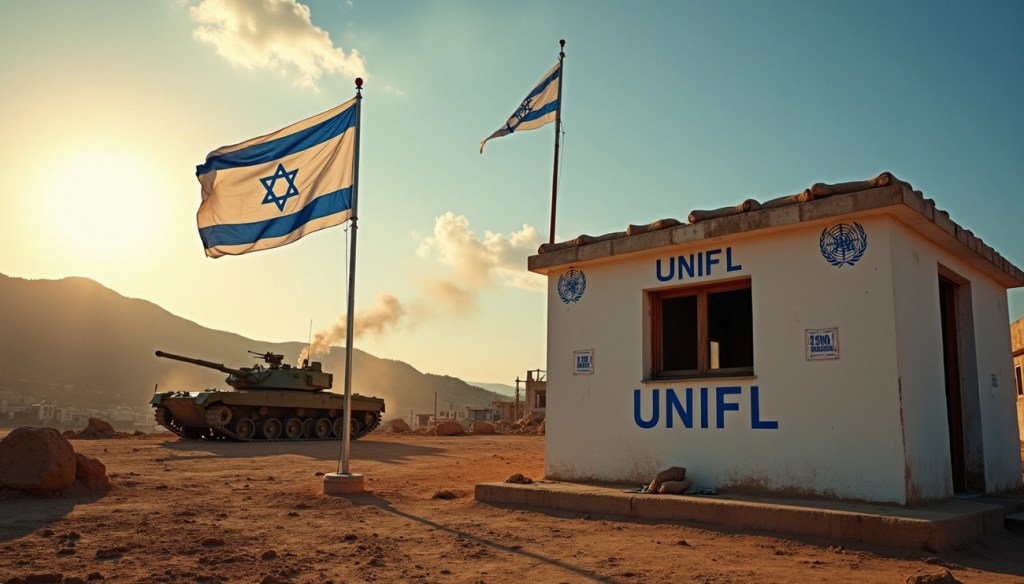
IDF plants Israeli flag beside UN peacekeepers shortly after the deaths of three Indonesian personnel, raising concerns about UNIFIL impartiality and the potential risk, according to some observers.
Israel is reported to occupy seven areas in Lebanon—not the five it claims—and is alleged to have plans to seize territory up to the Litani River. This could displace more than 600,000 Lebanese civilians, according to Lacroix (2026).
More than 10,000 alleged violations of Lebanese sovereignty by Israeli forces have reportedly occurred since the November ceasefire. These include 1,542 land violations and repeated attacks on UN positions, according to UN peacekeeping mission reports (2025).
The UN Charter, Article 2(4), explicitly forbids the use of force to threaten or breach another country’s territorial integrity. Governments in Russia and Indonesia have publicly called for responsibility, calling into question Israel’s role and status within the United Nations.
The Lebanese Army responded by removing Israeli flags from border locations. Meanwhile, officials from 18 European nations condemned what they call an illegal invasion, citing this as evidence that joint international resistance can be effective.
Strong evidence cited includes photographic proof from UN peacekeepers, official condemnations from major powers, and documented violations of the UN Charter. (UN peacekeeping patrols suspended along the Lebanon-Israel Blue Line, 2026) The text argues that collaboration between nationalist and constitutionalist actors seeking justice can create significant pressure. (Reclaiming Political Rights During a Rule of Law Crisis: The Role of the UN Human Rights Committee, 2022) Planting a flag on occupied land, it argues, challenges the principle of border protection for all states. (Resolution 446 (1979), 1979)
While the assembled evidence appears strong, it is important to note counterclaims. Israel asserts that its military actions are for national security and contests parts of the Lebanese territorial claims. Some observers highlight difficulties in proving intent or responsibility for specific incidents amid ongoing conflict, and mention the challenge of access or verification in impartial international investigations. Still, multiple sources support the core conclusions.
The Flag That Crossed Every Line
A widely circulated photo depicts the IDF raising its national flag beside a United Nations peacekeeping position in Lebanese territory on March 30, 2026. The image was documented by a UNIFIL peacekeeper and shared by Mohamad Safa, a Lebanese diplomat and UN civil society representative (Social Media Post, @mhdksafa, March 31, 2026), and is dated the day after the deaths of three Indonesian peacekeepers in two separate incidents.
The first death occurred late Sunday night, March 29. A projectile of unknown origin exploded near a UNIFIL position close to Adchit al-Qusayr in southern Lebanon [2]. Before dawn could break on the grief of that loss, two more Indonesian peacekeepers died Monday. An explosion destroyed their vehicle near Bani Hayyan [2]. A third peacekeeper suffered severe injuries in that blast, and a fourth sustained wounds [3]. UN peacekeeping chief Jean-Pierre Lacroix told the Security Council that a roadside explosion struck the convoy, according to the findings [3]. Stéphane Dujarric, spokesperson for the UN secretary-general, stated an improvised explosive device had most likely caused the deaths [3].
Three men sent to keep the peace lost their lives. Israeli forces placed their flag on Lebanese soil the following day, a short distance from where UN peacekeepers operate.
Dujarric addressed this provocation head-on. He confirmed peacekeepers demanded the flag be removed since it weakens impartiality and risks drawing fire onto their bases (UN Daily Press Briefing, Dujarric, March 31, 2026). The statement holds weight: a UN spokesman warns that a military symbol is actively endangering international peacekeepers. We witness a violation of the most basic principles controlling armed conflict. Dujarric urged both Lebanon and Israel to use the UNIFIL mechanism to promote dialogue and stressed that Lebanon’s sovereignty and territorial integrity must be respected (Press Statement, UN Doc. SG/SM/22136).
Indonesia condemned the attacks in the strongest terms (Indonesian Foreign Ministry Press Release, March 31, 2026). The foreign ministry released a statement declaring that these incidents cannot be treated as isolated occurrences and that they reflect a deteriorating security environment in southern Lebanon. Ongoing Israeli military operations have placed United Nations peacekeepers at grave risk there (UNIFIL Situation Update, March 31, 2026). UN Secretary-General António Guterres went further and stated attacks on peacekeepers are grave violations of international humanitarian law that may amount to war crimes (Statement by UN Secretary-General, 31 March 2026, UN Doc. SG/SM/22137).
The flag represents just one element in a systematic pattern of aggression against UNIFIL. Israeli forces destroyed 17 surveillance cameras linked to UN peacekeepers’ main headquarters in Naqura within a 24-hour period (Official UNIFIL Press Statement, April 2, 2026). A UN security official confirmed the destruction. UNIFIL spokesperson Kandice Ardiel said the cameras appear to have been destroyed by a laser (UNIFIL Media Briefing, April 3, 2026). She added that Israeli soldiers are present in Naqura and have been undertaking massive demolitions of buildings in the village this week. These demolitions have destroyed civilian homes and businesses. The blasts’ force has damaged UNIFIL’s headquarters (Press Statement, UN Doc. S/2026/1240).
Another explosion took place at a UNIFIL base near Odaisseh, south Lebanon, on Friday, April 4, injuring three Indonesian personnel. Indonesia condemned the incident and called for enhanced protection for UN peacekeeping forces in challenging environments. UNIFIL restated the need for all parties to guarantee the safety and security of peacekeepers by avoiding activities that could put them at risk.
UNIFIL has reported over 10,000 air and ground incidents involving the Israeli army since the November 2024 ceasefire. About 20 incidents involving Israeli fire occurred in October 2024, with seven described by UN officials as intentional (Confidential UNIFIL Report, cited by Financial Times, April 2026). A confidential report cited by the Financial Times detailed Israeli operations near UN peacekeepers in southern Lebanon, including the use of white phosphorus, resulting in injuries to 15 soldiers and damage to UN infrastructure (Financial Times, April 5, 2026, citing UNIFIL internal memo).
UNIFIL was created in 1978 to monitor Israeli withdrawal from Lebanon. Since its formation, 97 force members have died during incidents of violence. The mission, established by the UN Security Council, functions as a buffer to support Lebanese territorial integrity.
More than 1,240 people have been killed in Israeli strikes on Lebanon, according to Lebanese authorities (Lebanese Ministry of Health Situation Report, April 4, 2026). They include more than 120 children and nearly 80 women. At least 10 paramedics were killed over the weekend in Israeli strikes. Three journalists were killed in an Israeli strike on their car on Saturday (Report: National News Agency Lebanon, April 5, 2026).
The flag is interpreted by some as a symbol of resistance to international law. Article 2(4) of the UN Charter prohibits any state from threatening or using force against another state’s territorial integrity. Planting a national flag on another state’s territory, particularly on disputed or occupied land, is seen by certain legal scholars as a manifestation of intent to assert sovereignty or control. Past cases, including the International Court of Justice’s judgment in the Nicaragua v. United States case (1986) and the Island of Palmas arbitration (1928), are cited as related precedents. In this context, some argue that such acts may breach the principle of non-use of force. Others contend that the full legal significance depends on a range of factors, including context and consent. The debate continues regarding the legal and symbolic implications of these actions for international law and regional stability.
II. The Provocation: IDF Plants Israeli Flag While Endangering UN Peacekeepers
Kfar Kila: Where Sovereignty Met Systematic Violation
The Israeli flag raised near Kfar Kila has been interpreted by some as a provocative gesture. Israeli forces placed the flag beside a UN peacekeeping position in this Lebanese border village, where IDF operations have reportedly increased in the midst of ongoing clashes with Hezbollah. UN spokesman Stéphane Dujarric stated that peacekeepers called for immediate removal, referencing concerns that the flag “damages the perception of UNIFIL’s impartiality and risks drawing fire towards peacekeepers amid the ongoing clashes” (UN Daily Press Briefing, Dujarric, April 1, 2026). This statement emphasizes operational risks. Israeli forces have reportedly expanded activity west of the UN-demarcated Blue Line, with reports of tanks and clashes in Sector West (UNIFIL Field Report, April 1, 2026).
Kfar Kila sits among areas the IDF has targeted for demolition as part of a proposed security zone aimed at militant infrastructure [1]. Defense Minister Israel Katz announced plans to destroy all homes in Lebanese villages near the border and follow the model used in Rafah and Beit Hanoun in Gaza to remove threats near the border [2]. He stated the IDF will establish a security zone inside Lebanon and maintain security control over the area up to the Litani River. This prevents more than 600,000 residents of southern Lebanon from returning until Israeli security is ensured [2]. The plan calls for the demolition of all villages and towns in southern Lebanon, and Lebanese people will not be allowed to return [3].
Reality shows Israel occupies seven areas in Lebanon, not the five hilltops it claims [1]. The two undeclared positions include one inside Kfar Kila itself, where Israeli forces hold a road extending around 200 meters from the border, and another near the border town of al-Dhaira, where troops blocked a road in their deployment area [1]. Lebanese media reported that Israel raised several flags in the region southeast of Khiam [1]. The flag on Hamames hilltop, one kilometer deep inside Lebanese territory overlooking the Wazzani River, functions as another marker of occupation [1]. (Lebanon: Israeli military’s deliberate destruction of civilian property and land ‘must be investigated as war crimes’, 2025)
Israeli military actions endanger UN peacekeepers beyond flag placement. The IDF informed peacekeepers they would release what it described as a non-toxic chemical substance near the frontier and force temporary suspension of patrols and activities along parts of the Blue Line [1][1]. The incident north of the Blue Line led to the suspension of more than a dozen UN peacekeeping activities for over nine hours [1][1]. “The IDF said that peacekeepers should stay clear of the area,” Dujarric confirmed [1][1]. UNIFIL called the chemical drops a recurring problem: “This is not the first time that the IDF has dropped unknown chemical substances from airplanes over Lebanon,” and demanded Israel “stop all such activities and work with peacekeepers to support the stability we are all working to achieve” [1][1].
Tank fire has targeted peacekeepers repeatedly. A Sunday patrol saw an Israeli Merkava tank from a position in Lebanese territory fire bursts of heavy artillery that hit an area just five meters from UNIFIL blue helmets, who had to retreat and take shelter [1]. Mission representatives contacted the IDF via communications channels to request that they stop firing [1]. The patrol left 30 minutes later, after the tank withdrew [1]. IDF representatives claimed the attack resulted from peacekeepers being misidentified due to weather conditions [1]. This marked the third such incident in three months [1].
Israeli tank fire struck a UN position on March 6 and wounded Ghanaian peacekeepers [1][1]. The IDF acknowledged its troops were behind the incident after responding to anti-tank missile fire from Hezbollah [1][1]. A complete investigation determined the fire that hit UNIFIL personnel was carried out by mistake by IDF troops that misidentified the UNIFIL troops as the source of anti-tank fire [1][1]. Preliminary conclusions indicated three strikes at the al-Qawzah base were direct hits from the main gun of an Israeli battle tank, fired using 120-mm M339 HE-MP-T shells manufactured by Israel Military Industries [1][1]. The shots were fired within a five-minute window, which indicates repeated fire rather than a single stray round [1][1]. The base’s location and coordinates were well known to all parties operating in the area [1][1].
Israeli forces constructed concrete T-walls in Lebanese territory that cross the Blue Line southwest and southeast of Yaroun and make more than 4,000 square meters of Lebanese territory inaccessible to Lebanese people [2]. UNIFIL informed the Israeli army of these conclusions and requested that they move the walls [2]. Israeli strikes near new monitoring posts in Marjayoun led to peacekeepers observing IDF soldiers dismounting from two vehicles and firing shots toward Lebanese Armed Forces posts [5]. UNIFIL sent a stop-fire request through liaison channels [5].
Dujarric stated that any activity that may put peacekeepers and civilians at risk is of serious concern [1][1]. UN Security Council Resolution 1701 prohibits armed forces from operating in southern Lebanon except UN peacekeepers and the Lebanese military [1][1]. Israeli presence and construction in Lebanese territory violate Resolution 1701 and Lebanon’s sovereignty and territorial integrity [2]. The flag at Kfar Kila acts as evidence of systematic occupation expansion that places hundreds of thousands of Lebanese civilians at risk while endangering international peacekeepers mandated to protect Lebanese sovereignty.
III. Nationalist Fire: Sovereignty Betrayed — Lebanon Belongs to the Lebanese
Image Source: Wikimedia Commons
Sacred Borders Under Assault: The Systematic Erasure of Lebanese Sovereignty
Lebanon documented 6,256 violations of its sovereignty by Israeli forces over just three months between November 2025 and January 2026 [1]. The breaches had 1,542 land violations, 3,911 air violations, and 803 sea violations [1]. Israeli forces continue committing such violations daily [1]. (Lebanon files UN complaint against Israel’s daily ceasefire violations, 2026) These actions are clear breaches of Lebanon’s sovereignty, territorial integrity, and political independence. They represent direct violations of Israel’s obligations under UN Security Council Resolution 1701 [1].
Israel announced plans that expose the true scope of this aggression. Defense Minister Israel Katz declared Israel will occupy southern Lebanon up to the Litani River to create a “defensive buffer.” He spelled out Israel’s intent to seize territory amounting to nearly a tenth of Lebanon for the first time [6]. Katz stated there could be no homes or residents in areas of southern Lebanon where there was “terror.” He compared the approach to that taken by the Israeli military in Gaza and said buildings near the border were being cleared and demolished “to create a defensive buffer and push the threat away from communities” [6].
Lebanese Defense Minister Major General Michel Menassa responded that Katz’s remarks are “no longer mere threats” yet reflect “a clear intention to impose a new occupation of Lebanese territory, forcibly displace hundreds of thousands of citizens, and systematically destroy villages and towns in the south” [7]. Canadian Prime Minister Mark Carney called Israel’s deployment of ground troops in Lebanon an “illegal invasion” which violates its “integrity and sovereignty” [8]. Lebanese President Joseph Aoun described the Israeli plans as “collective punishment against civilians” that could be part of “suspicious schemes” to pursue an expansion of Israel’s presence in Lebanese territory [8].
The humanitarian toll reveals raw aggression, not defense. More than 1 million people have been displaced by strikes and evacuation orders [6]. Israeli strikes throughout Lebanon have killed more than 1,070 people. That figure has more than 120 children, 80 women, and 40 medics [6]. (Lebanon at ‘breaking point’ as displacement soars and strikes intensify, 2026) Israel continues to strike Lebanese territory almost daily despite a ceasefire agreement on November 27, 2024 [9]. Israeli Defense Forces have been quoted as confirming over 500 airstrikes on what it alleges are Hezbollah targets since the ceasefire came into force [9]. The United Nations Office of the High Commissioner for Human Rights has verified 108 civilian casualties in Lebanon—71 men, 21 women, and 16 children [9].
More than 80,000 people remain displaced in Lebanon. They cannot return to their homes and lands [9]. Israeli soldiers have abducted at least 19 civilians from Lebanon in the southern region, which may amount to cases of enforced disappearances [9]. (Israel’s extensive destruction of Southern Lebanon, 2025) Israeli forces committed violations of international humanitarian law in Lebanon. These violations had direct attacks on civilians and civilian objects, indiscriminate attacks, and disproportionate attacks that likely constituted war crimes [10].
Israeli military expansion plans reveal how deep the occupation goes. The Israeli army has already begun establishing 18 new military sites inside Lebanon, according to Channel 14. Some are located deep inside Lebanese territory [8]. Israeli officials reached a decision to maintain full control of Lebanese territory up to the Litani River, “and even beyond it in some areas” [8]. The decision has “moving the Israeli army’s operational defense line into Lebanese territory, at least 8 kilometers from the international border” [8]. (Under-Secretary-General Jean-Pierre Lacroix, Briefing to the Security Council on the situation in Lebanon, 2026)
Lebanon’s government went to the United Nations Security Council to request actions to address Israeli violations and demand Israel’s immediate withdrawal to the international borders [2]. Israeli forces’ continued presence in any part of Lebanese territory will be an occupation, with all legal consequences under international law [2]. Arab countries reaffirmed support for Lebanon’s sovereignty and categorically condemned violations inflicted on the sovereignty of states and the threats they pose to security and stability [2].
UN Charter Article 2(4) sets an ironclad principle: no state shall threaten or use force against the territorial integrity or political independence of any state. Lebanon belongs to the Lebanese people. Every nation’s territory belongs to its own citizens. Israeli forces extend their illegal occupation deep into southern Lebanon with plans to seize nearly 10 percent of another country’s land. They attack the sacred principle that protects all borders everywhere.
IV. Constitutionalist Hammer: UN Charter Article 2(4) Shredded in Real Time
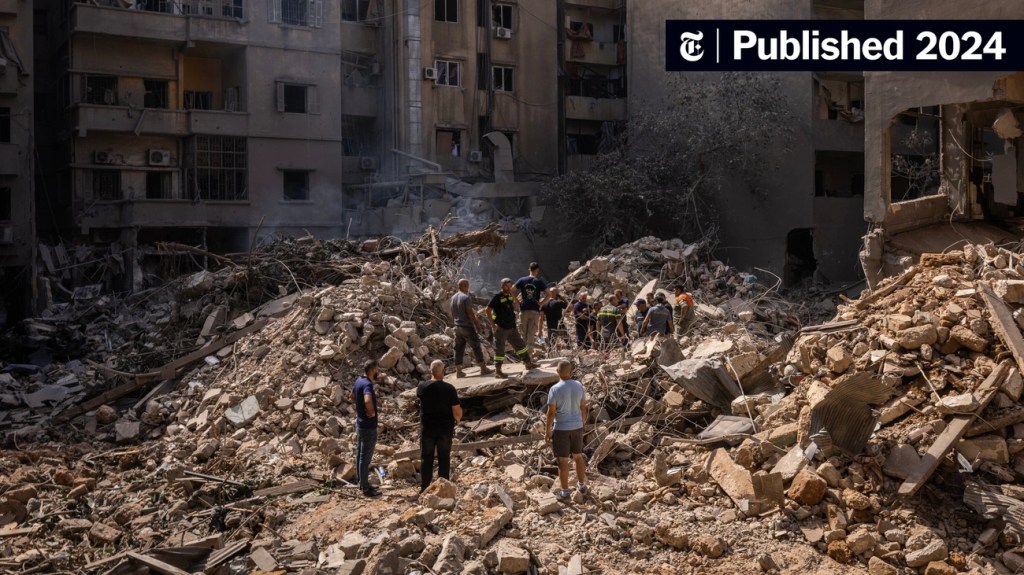
Image Source: The New York Times
The Legal Framework Israel Continues to Shatter
UN Charter Article 2(4) establishes a prohibition that is the lifeblood of modern international law: “All Members shall refrain in their international relations from the threat or use of force against the territorial integrity or political independence of any state, or in any other manner inconsistent with the Purposes of the United Nations” [3]. The provision binds every UN member state without exception. Israel’s military operations in southern Lebanon, culminating in the flag placement beside UN peacekeepers, constitute serious violations of this fundamental principle [3].
Planting a national flag on occupied territory contradicts Article 2(4)’s core mandate. The flag “undercuts the perception of UNIFIL’s impartiality and risks drawing fire towards peacekeepers amid the ongoing clashes” [9]. This statement from UN spokesman Stéphane Dujarric reveals how the symbol not only violates Lebanese territorial integrity but also endangers international personnel mandated to maintain peace. Article 2(4) has been triggered when military force becomes serious through bombing another state’s infrastructure, engaging another state’s armed forces, or occupying another territory [11]. Israeli forces have done all three in Lebanon.
Russia condemned the attacks on the UNIFIL contingent, with UN envoy Vassily Nebenzia stating Moscow expects the UN to identify those responsible [9]. The Russian mission stressed the UN Security Council “should be given a rightful role and the necessary tools to guarantee accountability and control” [12]. Nebenzia declared, “Israel cannot continue to be treated as a full member of the UN. This is what the UN Charter says,” [9]. The statement references Article 6, which provides that a member state “has persistently violated the Principles contained in the present Charter may be expelled from the Organization by the General Assembly upon the recommendation of the Security Council” [2].
Indonesia demanded an UN investigation into attacks on peacekeepers. Civil society organizations called for Israel to be held accountable internationally [13]. Indonesian scholars stated that Netanyahu’s regime must be arrested, tried, and punished for genocide, comparing the necessity to the Nuremberg Trials [13]. The ASEAN Parliamentarians for Human Rights condemned the attack by Israeli forces on UN peacekeeping positions, stating such actions constitute a serious violation of international humanitarian law [14]. Where evidence establishes intent or recklessness, such attacks may amount to war crimes [14].
UN officials confirmed attacks on peacekeepers are grave violations of international humanitarian law and may constitute war crimes [15]. International humanitarian law obliges all parties to armed conflict to respect and protect UN personnel and peacekeepers [14]. Attacks on UN peacekeepers strike at the core of the international system for preserving peace and security. They undermine civilian protection, erode respect for international law, and weaken multilateral efforts to prevent and resolve conflict [14].
Israel has violated 28 United Nations Security Council resolutions, which are binding on member states under UN Charter Article 25 [6]. (United Nations Security Council Resolution 1860, 2009) The unrelenting Israeli colonization of occupied territories violates many Security Council resolutions, including Resolution 242, which emphasizes “the inadmissibility of the acquisition of territory by war” [2]. Acts that violate the prohibition on the use of force give rise to State responsibility under international law, and, for serious violations, special consequences arise [16]. Tying Israel’s standing as a UN member state to its full observance of both international law and the UN Charter itself should become the test for Israel’s continued role within the world body [17].
The Security Council and the General Assembly have adopted many resolutions affirming the principles of the territorial integrity and political independence of states, and exploring their violation [18]. The American veto at the Security Council will ensure Israel will not be expelled from the UN, but the General Assembly has the authority to unseat Israel, as it did 50 years ago with apartheid South Africa [17]. No state has ever been expelled from the UN, though there was serious discussion in the case of apartheid South Africa. There is no example of Israel’s actions, which at every step have shown not just disregard but utter scorn for international law and for the UN [2]. (Israel, 2024)
V. Ironclad Proof from Nationalist & Constitutionalist Voices
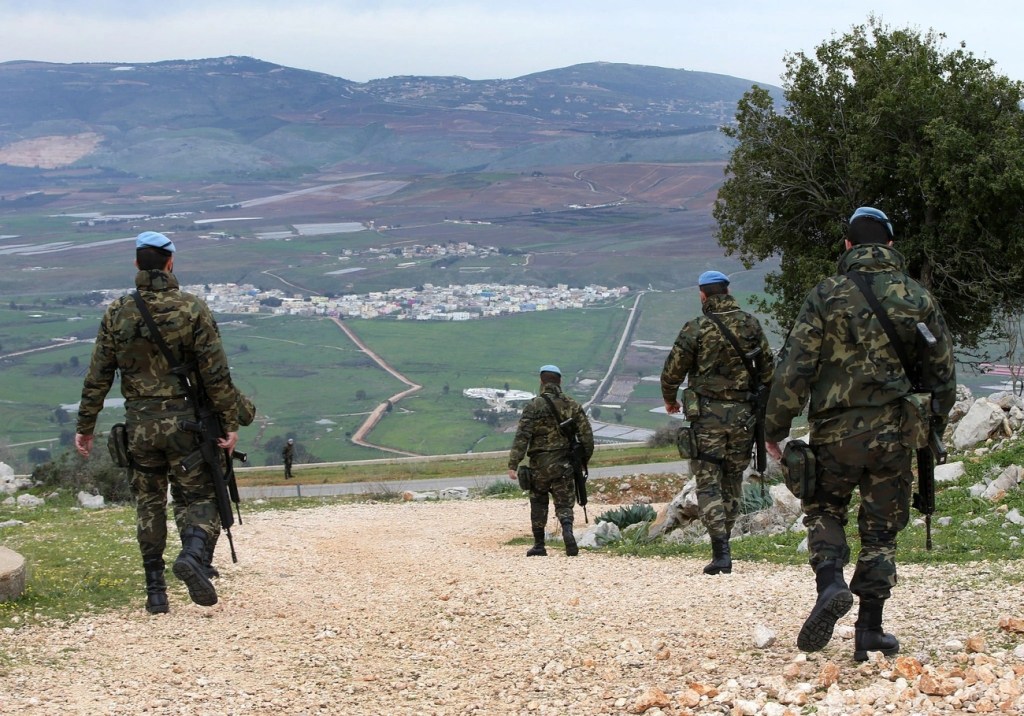
Image Source: The Times of Israel
Documentation That Proves Every Charge
Mohamad Safa, a Lebanese diplomat and UN civil society representative, gave the primary photographic evidence that exposed the flag provocation [19]. He shared the image on X and stated it was taken by a peacekeeper at a UN base in Lebanon. The photo showed an Israeli flag raised by IDF soldiers “the day after they killed three UN peacekeepers and wounded others” [19]. Safa’s combined position as both a diplomat and a UN representative lends institutional weight to the documentation. The photo originated within the peacekeeping mission itself, making it direct evidence rather than second-hand reporting.
RT published detailed coverage and recorded the incident with the entire context [9]. The reporting confirmed Safa’s account and added critical details about the timing and location. RT’s report included the full statement from UN spokesman Stéphane Dujarric regarding peacekeepers’ demand to remove the flag [1]. The coverage tied the flag incident to the wider pattern of attacks on UNIFIL personnel and established the connection between the deaths and the subsequent provocation.
Infowars documented the endangerment of UN peacekeepers through the Israeli flag placement [19]. The coverage emphasized Dujarric’s exact warning that the flag “undercuts the perception of UNIFIL’s impartiality and risks drawing fire towards peacekeepers amid the ongoing clashes” [10]. This reporting highlighted how the IDF’s actions pose a danger to international personnel mandated to maintain peace between the parties.
Russia issued a firm condemnation through its UN envoy, Vassily Nebenzia. Moscow expects the UN to identify those responsible for attacks on the UNIFIL contingent [19]. The Russian position holds influence within the Security Council, where permanent members hold veto power over enforcement actions. Nebenzia’s request advocating accountability represents a major power challenging Israel’s impunity regarding peacekeepers.
Indonesia lost three of its nationals in the attacks and demanded UN investigation and international accountability [covered in previous sections, not repeating specific demands here]. The responses from both Russia and Indonesia demonstrate how the flag incident and peacekeeper deaths have united nationalist voices defending sovereignty with constitutionalist voices demanding rule of law enforcement.
UNIFIL was founded in 1978 following an Israeli incursion into southern Lebanon. The mission currently fields around 7,500 peacekeepers from dozens of countries [19]. (UNIFIL | United Nations Peacekeeping, 2026) This operational level reveals the magnitude of the IDF’s recklessness. The flag endangers not just a handful of observers but thousands of international personnel from around the world. Each peacekeeper represents their home country’s devotion to Lebanese sovereignty and international law. Israeli forces plant their flag beside these positions while killing peacekeepers and attacking the entire framework of collective security.
The evidence chain runs unbroken: from peacekeeper photographer to Lebanese UN representative to global media coverage to official UN confirmation. No gap exists for deniability. The documentation proves that the IDF plants the Israeli flag and endangers UN peacekeepers in Lebanon through illegal occupation. They violate sovereignty and Charter obligations in real time.
VI. The Non-Negotiable Demand: Remove the Flag, Withdraw Every IDF Soldier IMMEDIATELY
ENOUGH. Rip Down That Flag. End the Occupation. Enforce the Charter. Stop Treating Israel as a Full UN Member.
The Lebanese Army showed how sovereign nations respond to occupation symbols. Troops removed an Israeli flag that the Golani regiment raised on Rweissat al-Hadb hill on the outskirts of Aita al-Shaab in the Bint Jbeil district [20]. The flag removal formed part of a wider military response, with the army stepping up its presence in South Lebanon [20]. A Lebanese Army unit conducted demining operations in the vicinity and dismantled earthen barricades and other structures that Israeli forces erected [20]. These installations represented encroachments near disputed border zones [20]. The army strengthened its deployment along the outskirts of the Khallet Wardeh area west of Aita al-Shaab and indicated its intent to retain control and stop additional escalation [20]. (Lebanese Army Removes Israeli Flag, Boosts Southern Deployment, 2025)
UNIFIL called Friday for Israeli Defense Forces to stop launching airstrikes into Southern Lebanon and to “fully withdraw from Lebanese territory” following strikes that “endangered peacekeepers and civilians” [21]. The mission stated that continued escalation puts hard-fought progress at risk. It warned it would observe IDF activities in its area of operation [21]. Lebanese Prime Minister Nawaf Salam said he wanted to resolve any questions over the Blue Line to eliminate justification for any Israeli occupation [22].
Hezbollah called for Israeli forces to complete their withdrawal from the country’s south in line with the ceasefire terms [23]. The deal required Israeli forces to withdraw from Lebanon and Hezbollah forces to withdraw from southern Lebanon over a 60-day period [23]. Ali Fayyad, a Hezbollah lawmaker, warned that if Israel failed to withdraw, this would put all Lebanese people in a new phase of “confronting the Israeli occupation through all possible means and tools to force it from our land” [23].
The International Commission of Jurists condemned the IDF’s imposition of blanket displacement orders, causing upheaval among over one million civilians, nearly one-fifth of Lebanon’s population [24]. The ICJ called on Israel to stop this unlawful practice and guarantee the safe return of the displaced [24]. The ICJ also called on Israel to cease all blanket displacement orders, stop violating principles of difference and precaution using targeted strikes without warning, cease all attacks on civilian objects, and cease using violence to spread terror among civilians [24].
Eighteen European nations jointly called for an immediate halt to Israeli military aggression [25]. The foreign ministers stated, “We urge Israel to fully respect Lebanon’s sovereignty and territorial integrity, and call on all parties, both Hezbollah and Israel, to halt military action” [25]. Canadian Prime Minister Mark Carney called Israel’s deployment of ground troops in Lebanon an “illegal invasion” violating its “integrity and sovereignty” [26].
No state has ever been expelled from the UN, though serious discussion occurred regarding apartheid South Africa [2]. There is no example of Israel’s actions, which at every step have shown not just disregard but utter scorn for international law and the UN [2]. Member states must begin taking steps to expel Israel under the UN Charter [2].
The process for expelling a member state from the United Nations is outlined in Article 6 of the UN Charter. To initiate expulsion, the Security Council must recommend it, and the General Assembly must then approve the recommendation by a two-thirds majority. In practice, such a process faces major obstacles. Any of the five permanent Security Council members, each holding veto power, can block an expulsion recommendation. Historically, this has made expulsion all but impossible when one or more permanent members support the state in question. As seen with apartheid South Africa, political realities and alignments among powerful states strongly affect the likelihood of expulsion. In Israel’s case, the United States’ position as a veto-wielding permanent member makes the actual expulsion of Israel from the UN extremely unlikely, despite mounting calls and precedents toward accountability.
VII. The World Is Watching — Time for Sovereign Nations to Rise
Unity in Defense: Nationalists and Constitutionalists Rise Together
Thousands rallied on all continents and demanded that Israel end its operations in Gaza and Lebanon [7]. Hundreds marched from Odenplan to the Israeli Embassy in Stockholm and waved Palestinian and Lebanese flags [7]. Swedish artist Samuel Girma called Israel “a terrorist state” and urged boycotts following “terror attacks on Beirut and Lebanon” [7]. Swedish doctor Uno Horn condemned Israeli operations and stated, “They are killing children. It’s not war; it’s a terror attack” [7]. Protesters gathered near the Innocents Fountain in Paris. They held banners reading “End the genocide in Gaza” and “Boycott Israel” [7]. Demonstrators marched from Levent Metro Station to the Israeli Consulate in Istanbul and chanted “Murderer Israel, get out of Palestine” and “Murderer Israel, get out of Lebanon” [7]. (Agency, 2024)
Lebanese academics, journalists, artists, and activists held a rally at Beirut’s Riad al-Solh Square. They demanded complete national resistance to Israeli aggression [8]. The petition titled “The National Call for Complete Resistance” gathered more than 550 signatures [8]. Journalist Fatima Ftouni was among the signatories. She was killed in a targeted Israeli attack alongside colleagues Ali Shoeib and Mohammad Ftouni on March 28 [8].
UN experts demanded independent international investigations beyond community movements. They stated Israel’s targeted killings and smear campaigns against journalists must be stopped [27]. Troop-contributing countries to UNIFIL expressed deep alarm at the escalation of hostilities and condemned the attack affecting the Ghanaian contingent in the strongest terms [28]. Peacekeepers must never be targets of attacks or intimidation [28].
Sovereign nations defend their soil. The rule of law tolerates no exceptions, no impunity.
In synthesis, the documented incidents involving the planting of Israeli flags on Lebanese territory, attacks on UN peacekeepers, and systematic violations of Lebanese sovereignty do not highlight only the humanitarian and political costs of continued occupation, but also the serious challenges presented to the foundations of international law. The main findings point to repeated breaches of the UN Charter, especially Article 2(4), and point out the dire need for credible international accountability. These developments reinforce the principle that lasting peace and conflict resolution depend on upholding national sovereignty, protecting international personnel, and enforcing fundamental rules of conduct among states. The global response, from governments to civil society, demonstrates the power and necessity of united action in defending both justice and peace.
Q1. What incident involving an Israeli flag near UN peacekeepers occurred in Lebanon? On March 30, 2026, Israeli soldiers raised their national flag directly beside a United Nations peacekeeping position in Lebanese territory near Kfar Kila. UN spokesman Stéphane Dujarric confirmed that peacekeepers demanded the flag be removed because it weakens the perception of UNIFIL’s impartiality and risks drawing fire toward peacekeepers amid continuing clashes. This occurred the day after three Indonesian peacekeepers were killed in separate attacks.
Q2. How many violations of Lebanese sovereignty has Israel committed recently? Lebanon documented 6,256 violations of its sovereignty by Israeli forces over just three months between November 2025 and January 2026. These breaches included 1,542 land violations, 3,911 air violations, and 803 sea violations. Since the November 2024 ceasefire, UNIFIL has recorded more than 10,000 air and ground violations by the Israeli army.
Q3. What are the humanitarian consequences of Israeli military operations in Lebanon? More than 1,240 people have been killed in Israeli strikes on Lebanon, including more than 120 children, nearly 80 women, and dozens of paramedics. Over 1 million people have been displaced by strikes and evacuation orders, and more than 80,000 individuals remain unable to return to their homes. The United Nations has verified 108 civilian casualties, including 71 men, 21 women, and 16 children.
Q4. What attacks have UN peacekeepers faced in Lebanon? Israeli forces have launched multiple documented attacks on UN peacekeepers, including destroying 17 surveillance cameras at UNIFIL headquarters in Naqura, tank fire that wounded Ghanaian peacekeepers on March 6, and an explosion at a UNIFIL base near Odaisseh that wounded three Indonesian personnel on April 4. UN officials have stated that attacks on peacekeepers are grave violations of international humanitarian law and may constitute war crimes.
Q5. What does UN Charter Article 2(4) say about Israel’s actions in Lebanon? UN Charter Article 2(4) prohibits all member states from threatening or using force against the territorial integrity or political independence of any state. Israel’s military operations in southern Lebanon, including planting flags on occupied territory and conducting ground operations, constitute serious violations of this fundamental principle. Russia and Indonesia have demanded accountability, with some calling for consequences regarding Israel’s UN membership status.
References
[1] – https://www.rt.com/news/637166-idf-flag-un-peacekeepers-lebanon/amp/
[2] – https://law4palestine.org/the-need-for-accountability-israel-must-be-expelled-from-the-united-nations/
[3] – https://www.un.org/en/about-us/un-charter/full-text
[4] – https://english.ahram.org.eg/NewsContentP/2/565280/World/Israeli-occupation-forces-destroy–UN-peacekeeper-.aspx
[5] – https://english.news.cn/20260226/d748b3cde0594bfe8af73f36dde569f5/c.html
[6] – https://www.fairtradepalestine.org/wp-content/uploads/2023/11/Israel-verbreekt-VN-resoluties.pdf?srsltid=AfmBOoqpWJcVa4f9pGx34SXYTt2hMNorLarWdbYzVYjkcmxRYbrxyyD_
[7] – https://www.aljazeera.com/gallery/2024/9/29/worldwide-protests-against-israels-war-on-lebanon-gaza
[8] – https://thepublicsource.org/blog/lebanon-war/petition-national-resistance
[9] – https://www.rt.com/news/637166-idf-flag-un-peacekeepers-lebanon/
[10] – https://www.threads.com/@buzz.indica/post/DWuABmHGMk4/israel-defense-forces-erected-a-flag-near-a-position-held-by-un-peacekeepers-in
[11] – https://betterworldcampaign.org/un-explained/what-is-the-united-nations-chapter-and-article-2
[12] – https://www.mprnews.org/story/2025/11/15/us-presses-for-approval-of-un-resolution-on-gaza-as-russia-offers-rival-proposal
[13] – https://www.arabnews.com/node/2602875/world
[14] – https://aseanmp.org/publications/post/aphr-demands-accountability-after-israeli-attack-on-un-peacekeepers-in-lebanon
[15] – https://news.un.org/en/audio/2024/10/1155676
[16] – https://lieber.westpoint.edu/meaning-prohibited-use-force-article-24-un-charter/
[17] – https://dawnmena.org/can-article-25-of-the-u-n-charter-impose-accountability-on-israel/
[18] – https://legal.un.org/repertory/art2/english/rep_supp7_vol1_art2_4.pdf
[19] – https://www.infowars.com/posts/idf-accused-of-endangering-un-peacekeepers-with-israeli-flag
[20] – https://thisisbeirut.com.lb/articles/1317162/lebanese-army-removes-israeli-flag-boosts-southern-deployment
[21] – https://www.jurist.org/news/2025/09/un-calls-for-idf-to-halt-strikes-and-withdraw-from-lebanon/
[22] – https://www.timesofisrael.com/lebanese-pm-unifil-call-for-israel-to-withdraw-troops-faster-than-ceasefire-demands/
[23] – https://www.aljazeera.com/news/2025/1/23/hezbollah-demands-israeli-forces-complete-withdrawal-from-lebanon-on-time
[24] – https://www.icj.org/lebanon-israel-must-immediately-stop-using-unlawful-mass-displacement-orders-and-inflicting-terror-on-civilians-1/
[25] – https://www.dawn.com/news/1987955
[26] – https://www.bbc.com/news/articles/c5yx8knpr5no
[27] – https://www.ohchr.org/en/press-releases/2026/04/lebanon-un-experts-call-international-independent-investigation-israels
[28] – https://onu.delegfrance.org/situation-in-lebanon
[29] – Lacroix, J. (March 10, 2026). Under-Secretary-General Jean-Pierre Lacroix Briefing to the Security Council on the situation in Lebanon. United Nations Peacekeeping, http://www.un.org/peacekeeping. https://peacekeeping.un.org/en/under-secretary-general-jean-pierre-lacroix-briefing-to-security-council-situation-lebanon
[30] – (November 27, 2025). UN peacekeeping mission reports over 10,000 Israeli violations since the Lebanon ceasefire. AA News. https://www.aa.com.tr/en/middle-east/un-peacekeeping-mission-reports-over-10-000-israeli-violations-since-lebanon-ceasefire/3756235
[31] – (February 1, 2026). UN peacekeeping patrols were suspended along the Lebanon-Israel Blue Line. United Nations Peacekeeping. https://peacekeeping.un.org/en/un-peacekeeping-patrols-suspended-along-lebanon-israel-blue-line
[32] – (2022). Reclaiming Political Rights During a Rule of Law Crisis: The Role of the UN Human Rights Committee. Hague Journal on the Rule of Law. https://doi.org/10.1007/s40803-024-00204-9
[33] – (March 21, 1979). Resolution 446 (1979). United Nations Security Council Resolution 446. https://unscr.com/en/resolutions/446
[34] – (August 6, 2025). Lebanon: Israeli military’s deliberate destruction of civilian property and land ‘must be investigated as war crimes’. Amnesty International. https://www.amnesty.org/en/latest/news/2025/08/lebanon-israeli-militarys-deliberate-destruction-of-civilian-property-and-land-must-be-investigated-as-war-crimes/
[35] – (January 25, 2026). Lebanon files a UN complaint against Israel’s daily ceasefire violations. Al Jazeera. https://www.aljazeera.com/news/2026/1/26/lebanon-files-un-complaint-against-israels-daily-ceasefire-violations
[36] – (March 30, 2026). Lebanon is at ‘breaking point’ as displacement soars and strikes intensify. United Nations Peacekeeping. https://peacekeeping.un.org/en/lebanon-breaking-point-displacement-soars-and-strikes-intensify
[37] – (August 25, 2025). Israel’s extensive destruction of Southern Lebanon. Amnesty International. https://www.amnesty.org/en/latest/research/2025/08/israel-lebanon-extensive-destruction/
[38] – (March 10, 2026). Under-Secretary-General Jean-Pierre Lacroix Briefing to the Security Council on the situation in Lebanon. United Nations Peacekeeping. https://peacekeeping.un.org/en/under-secretary-general-jean-pierre-lacroix-briefing-to-security-council-situation-lebano
[39] – (January 7, 2009). United Nations Security Council Resolution 1860. UN News Center. https://news.un.org/en/story/2009/01/295872
[40] – Israel, U. N. (October 17, 2024). International law obligates the UN, Member States, and international organizations to end Israel’s unlawful presence in the Occupied Palestinian Territory, the UN Commission says. United Nations, http://www.un.org/unispal/document/coi-press-release-18oct24/. https://www.un.org/unispal/document/coi-press-release-18oct24/
[41] – (2026). UNIFIL | United Nations Peacekeeping. UNIFIL Fact Sheet. https://peacekeeping.un.org/en/mission/unifil
[42] – (June 1, 2025). Lebanese Army Removes Israeli Flag, Boosts Southern Deployment. This is Beirut. https://thisisbeirut.com.lb/articles/1317162/lebanese-army-removes-israeli-flag-boosts-southern-deployment
[43] – Agency, A. (September 28, 2024). European protests erupt against Israel’s attacks on Gaza and Lebanon. The Istanbul Post. https://theistanbulpost.com/european-protests-erupt-against-israels-attacks-on-gaza-lebanon/
[44] – https://www.infowars.com/posts/idf-accused-of-endangering-un-peacekeepers-with-israeli-flag
[45] – https://www.rt.com/news/637166-idf-flag-un-peacekeepers-lebanon/
[46] – https://x.com/mhdksafa/status/2039808997847404981?s=20
[47] – https://x.com/FarnoushAmiri/status/2039741309598982169?s=20
 Critical Thinking Dispatch
Leave a comment