by – L. Richardson
Migrant violence struck again in broad daylight as a horrific attack unfolded in Aschaffenburg’s Schöntal Park, leaving an innocent 2-year-old boy and a 41-year-old Good Samaritan dead. We watched in horror as the details emerged of how Enamullah O., a 28-year-old Afghan national who arrived in Germany in November 2022, unleashed terror with a kitchen knife at 11:45 a.m. on January 22, 2025. Despite his previous three arrests and a December 2024 promise to self-deport, this repeat offender remained free to commit this atrocity.
Furthermore, while two additional victims fight for their lives in hospitals, our authorities hastily attribute this savage attack to “mental illness.” We’ve seen this pattern before – another European security nightmare unfolding. The Aschaffenburg tragedy isn’t just another isolated incident; it’s a glaring testament to our failed policies and a wake-up call we can no longer ignore. How many more innocent lives must be sacrificed before we acknowledge the harsh reality confronting our nation?

Caption: The face of tragedy: This image is associated with Enamullah O., whose violent actions in Aschaffenburg have reignited debates on Germany’s immigration policies.
The Incident:
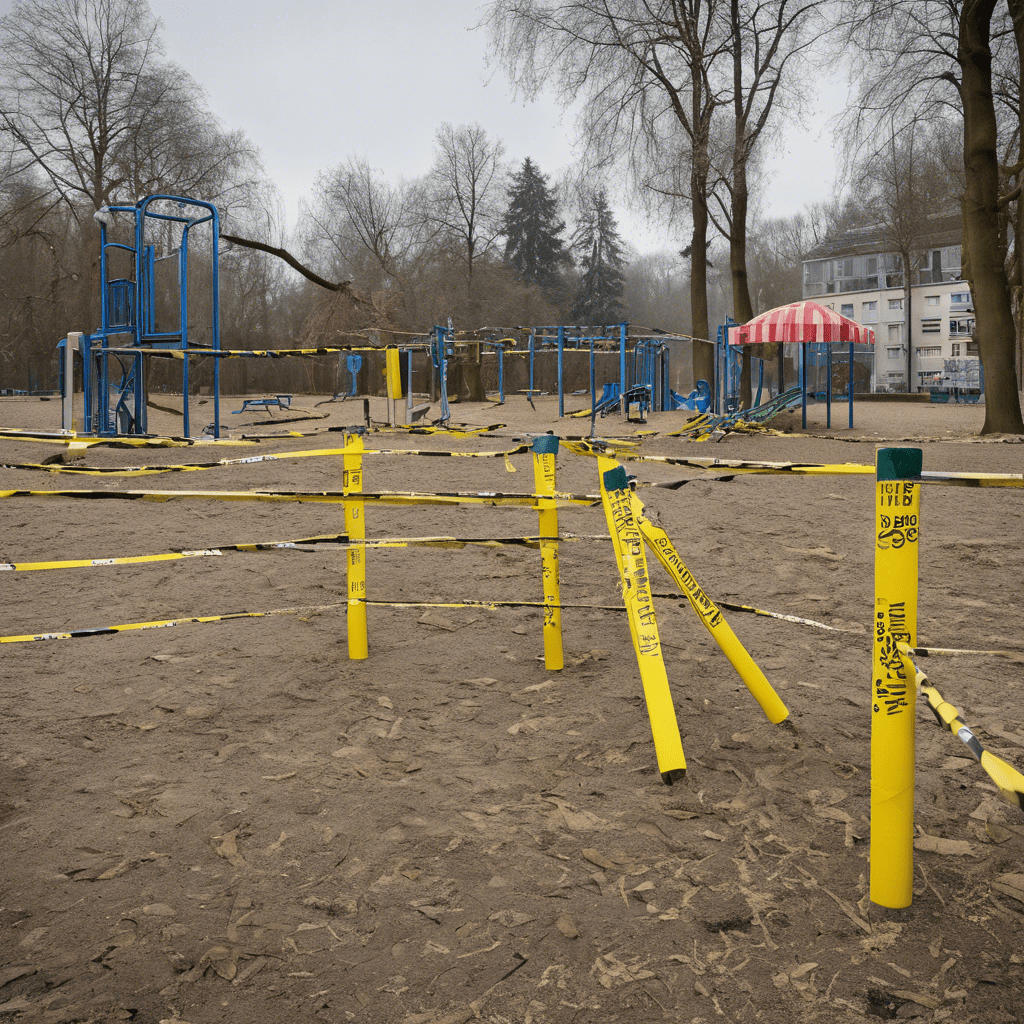
The horror unfolded at 11:45 a.m. in Schöntal Park, an English-style garden in Aschaffenburg when a man wielding a kitchen knife deliberately targeted a kindergarten group. Initially, the attacker focused his assault on the children, prompting a 41-year-old German passerby to intervene courageously to protect them8. Subsequently, this Good Samaritan paid the ultimate price for his bravery, becoming one of two fatalities in this savage attack9.
The scene turned even more tragic when the assailant fatally wounded a 2-year-old boy of Moroccan descent. Following the initial assault, three additional victims sustained serious injuries:
- A 2-year-old Syrian girl suffered a knife wound to her neck
- A 61-year-old man endured multiple chest wounds requiring immediate surgery
- A kindergarten teacher broke her arm while attempting to flee8
The terror lasted precisely 12 minutes before other passersby chased down the attacker11. Meanwhile, German rail company Deutsche Bahn temporarily halted trains in the area as the perpetrator attempted to escape across nearby railroad tracks7. First responders rushed the injured to nearby hospitals, where medical teams worked tirelessly to treat their wounds12.
The survival of the Syrian girl stands as a testament to both human resilience and the swift medical response. Although she sustained a neck wound, her injuries were fortunately not life-threatening8. Nevertheless, the psychological impact on these young children, who witnessed such brutality in what should have been a safe space for play and learning, remains immeasurable.
Bavarian State Premier Markus Söder captured the community’s grief, stating, “We mourn the loss of a minor, innocent child”9. The attack has intensified concerns about security throughout Bavaria, particularly regarding the safety of children in public spaces10. This incident adds to mounting apprehension about public safety, especially as Germany approaches its parliamentary elections on February 23.
The Perpetrator:

Caption: The face of tragedy: This image is associated with Enamullah O., whose violent actions in Aschaffenburg have reignited debates on Germany’s immigration policies.
Behind the brutal attack stands Enamullah O., a 28-year-old Afghan national who entered Germany through the asylum system in November 2022. His case exemplifies the catastrophic failures in our immigration policies. Consequently, after his asylum application was rejected, he made a voluntary departure promise on December 4, 2024. Bavaria’s Interior Minister Joachim Herrmann confirmed that authorities closed his asylum procedure on December 11, requesting him to leave the country13.
Notably, Enamullah O.’s violent tendencies were well-documented. Police records reveal at least three previous arrests for violent crimes13. Additionally, investigators noted recurring psychological problems throughout his stay in Germany13. Yet, our system allowed him to remain in asylum accommodation, primarily due to bureaucratic inefficiencies in managing violent asylum seekers.
The perpetrator’s pattern of behavior aligns with broader criminal trends in Germany. Recent statistics show that:
- 78% of violent offenders are men
- Nearly half commit crimes under the influence of substances14
- Almost 25% are repeat offenders14
Ultimately, Berlin’s police commissioner, Barbara Slowik, acknowledges that authorities have “reached the limit of what can be achieved” in managing violent immigrants15. The commissioner points to insufficient support for refugees with mental health issues, a factor that continues to plague our system15.
The case of Enamullah O. underscores a critical flaw in Germany’s approach to asylum seekers with criminal records. According to Olaf Jansen, head of the Central Immigration Office in Brandenburg, “What we are doing completely wrong in Germany is not letting people work directly”15. This administrative failure, coupled with inadequate monitoring of violent offenders, creates a dangerous environment where rejected asylum seekers can remain in the country despite posing explicit threats to public safety.
The Blame Game:
Political parties across Germany share responsibility for the systemic failures that enabled the Aschaffenburg tragedy. Primarily, migration tops voter concerns, with 37% of Germans naming it their most pressing issue. The upcoming February 23 election has intensified this debate as parties scramble to address public safety concerns.
The Christian Democratic Union (CDU/CSU), presently polling at one-third of the vote3, advocates for stricter policies, including abolishing subsidiary protection and limiting family reunification. Moreover, they push for processing asylum claims outside EU borders3. In fact, the Social Democratic Party (SPD), under outgoing Chancellor Olaf Scholz, faces criticism for promoting Germany as a “modern immigration society”3 while failing to address security concerns.
The political landscape reveals concerning trends:
- Alternative for Germany (AfD) has risen to 20% in polls1, becoming the most potent force in four eastern German states16
- The Greens, traditionally pro-immigration, now unexpectedly call for stricter measures against illegal asylum seekers16
- The Left Party demands a moratorium on all deportations3, further complicating enforcement efforts
The mental health attribution pattern deserves scrutiny. Authorities hastily cited psychiatric issues in Enamullah O.’s case, similar to previous incidents. Research indicates that approximately half of asylum seekers experience psychological distress17. Yet, this statistic is a convenient excuse to avoid further investigating motives.
A government-backed study in Lower Saxony revealed a 10.4% increase in violent crime between 2014 and 2016, with migrants responsible for the majority of this rise. Similarly, data shows that asylum-seekers and refugees comprised 10.4% of murder suspects and 11.9% of sexual offense suspects in 2017.
The CDU’s Friedrich Merz captured public sentiment, stating, “One thing is clear: Things cannot go on like this“19. Ultimately, the February election could mark a turning point, as 61% of Germans report negative social interactions20, reflecting growing concerns about cultural and social tensions.
This political paralysis stems from competing ideologies: the SPD’s vision of a “modern immigration society”3 clashes with mounting evidence of integration challenges. The Green Party’s unexpected shift toward stricter policies16 underscores the gravity of the situation. Yet, comprehensive reform remains elusive amid partisan gridlock.
Legal and Ethical Considerations:
Germany’s legal framework fundamentally protects asylum as a constitutional right. However, the system’s handling of violent offenders exposes critical gaps between legal theory and practical implementation. Essentially, asylum seekers face significant barriers in accessing mental health care during their first 18 months in Germany, with Treatment for chronic and mental illnesses not routinely covered22.
Legal Failures
The current legal system exhibits serious shortcomings in managing violent asylum seekers. Primarily, asylum seekers experience unequal Treatment within the criminal justice system, often facing harsher sentencing and discriminatory decision-making23. The system’s failures manifest in several critical areas:
- Biased law enforcement practices in arrests and stop-and-search activities23
- Discriminatory Treatment in Prosecution and Sentencing decisions23
- Limited access to mental health services significantly affects those with documented psychological needs22
The legal status of asylum seekers significantly impacts their well-being and access to healthcare22. Currently, 85% of refugees resettle in developing countries lacking proper infrastructure for support24. This situation creates a dangerous cycle where untreated mental health issues can lead to increased incidents of violence [29].
Transparency
The demand for transparency in asylum case management grows as legal problems multiply with prolonged displacement. Statistics show that family law issues account for 65% of all refugee legal cases, while criminal matters represent 15%25. Evidently, the system struggles with:
The Ministry of Justice reports alarming caseload increases: 84% in Mafraq, 77% in Irbid, and 50% in Amman25. These numbers underscore the mounting pressure on legal institutions handling refugee cases. Furthermore, refugees often receive information through informal channels rather than official awareness campaigns, complicating transparency efforts25.
The legal system’s approach to psychiatric Treatment requires urgent reform. Research indicates that refugees face substantial barriers in accessing mental health services, including lack of interpreter funding and cultural barriers22. The fear of deportation and document non-recognition creates ‘paralyzing’ structures that prevent many from seeking necessary care22.
Recent proposals in other countries suggest potential solutions. For instance, changes to allow immigration officials to reject asylum seekers with criminal records that pose threats to national security or public safety during initial screening stages26 could provide a framework for more effective management of cases involving violent offenders.
The intersection of legal status and healthcare access remains particularly problematic. Asylum seekers experiencing rejection decisions often withdraw socially, leading to situations where they no longer seek healthcare despite high psychological care needs22. This pattern creates a dangerous cycle where untreated mental health issues potentially escalate into violent behavior.
The Bigger Picture:
Recent crime statistics paint an alarming picture of Germany’s changing social landscape. Official data reveals that non-German suspects increased by 17.8%, with asylum seekers comprising 18% of offenders, marking an 18% rise from the previous year27. The scale of this challenge becomes apparent through a detailed examination of crime patterns across the country.
Pattern of Violence
The surge in criminal activities presents a troubling trend. Specifically, crime rates among non-German youth rose dramatically:
Indeed, Berlin’s police chief acknowledges that violence in the capital is primarily “young, male, and has a non-German background”28. Indeed, the statistics show that knife crimes nearly tripled, escalating from 10,121 incidents in 2020 to 26,230 in 2023.
Overall, the data indicates that asylum seekers, while comprising only 2.5% of the population, represented 13.1% of sexual assault suspects in 202128. Furthermore, 47.5% of gang-rape suspects in 2023 were foreigners, with such incidents occurring almost twice daily28.
Cultural Erosion
The impact extends beyond crime statistics, reaching into the fabric of German society. Hence, a 2017 Chatham House survey found that 53% of Germans supported stopping all immigration from Muslim countries28. Generally, public sentiment has grown increasingly concerned, with 40% of Germans feeling unsafe in public spaces, compared to 23% in 2017.
Thus, the cultural divide manifests in various ways. Primarily, 61% of Germans express fears about Islam becoming “too strong” in Germany, marking a 14% increase in recent years28. The situation in eastern Germany mainly reflects these tensions, where historical experiences shape xenophobic attitudes toward migration27.
The rise in politically motivated crimes underscores these cultural tensions. In 2023, authorities recorded an unprecedented 15,087 xenophobic crimes, representing a 50% increase from the previous year27. Nonetheless, this surge in crime has also affected migrant communities themselves, with attacks on refugees increasing by 75% in 2023, resulting in 2,488 recorded incidents27.
The economic implications of this cultural erosion are equally concerning. Germany currently faces approximately 700,000 unfilled positions, projected to reach seven million by 2035. Therefore, the growing anti-immigrant sentiment threatens social cohesion and economic stability.
Recent polls indicate that 74% of Germans consider rising crime their primary concern, a 22% increase from 2019. The situation has prompted legendary footballer Toni Kroos to express reservations about letting his teenage daughter stay out late in German cities, noting that Germany “is not the same place it was 10 years ago”28.
Call to Action:
As February’s election approaches, migration concerns dominate voter priorities, with 37% of the electorate naming it their most crucial issue1. Citizens must channel this concern into decisive action through informed voting and community engagement.
Public Awareness
The Alternative for Germany (AfD) currently polls at 20%1, reflecting growing public unease with current immigration policies. This surge demands immediate attention from established parties. The Christian Democratic Union (CDU/CSU) has responded by proposing an “immediate de facto immigration freeze”1, alongside extended border controls.
The CDU manifesto outlines several crucial measures:
- Swift asylum procedures with secure identification
- Consistent implementation of asylum decisions
- Regular deportations to Afghanistan and Syria
- Establishment of federal departure centers
Whenever citizens engage with these issues, they must understand that the CDU/CSU aims to declare more countries as “safe countries of origin”1. Simultaneously, the Social Democratic Party (SPD) promotes Germany as a “modern immigration society”3, creating a stark policy contrast for voters to consider.
Political Action
Citizens have the power to influence crucial policy decisions until February 23. The Free Democratic Party (FDP) advocates disbanding existing migration authorities in favor of a centralized system3. In contrast, the Left Party demands a complete moratorium on deportations3.
Implementing a controversial payment card system across all 16 federal states demonstrates the immediate impact of policy decisions. Soon, newly arriving refugees will receive services solely through the Asylum Seekers’ Benefits Act, with expectations for quicker employment integration1.
Undeniably, the upcoming election represents a pivotal moment for German immigration policy. Whether through the CDU’s proposed “law to fight extremism”1 or alternative approaches, voters must carefully consider each party’s stance on:
- Border Control Measures
- Asylum Processing Reform
- Integration Requirements
- Deportation Policies
The Green Party maintains Germany’s “humanitarian responsibility”3 unless stricter measures become necessary. Afterward, any policy changes must balance humanitarian obligations with public safety concerns.
Current statistics reveal migration tops voter concerns for 37% of Germans1, surpassing economic and international conflict considerations. This data underscores the urgency for informed political participation and community engagement.
Citizens can take immediate action by:
- Studying party manifestos thoroughly
- Participating in local political discussions
- Supporting legal reform initiatives
- Engaging with community safety programs
- Monitoring policy implementation
The CDU/CSU’s proposal to strip dual citizens of German nationality for supporting terrorist organizations exemplifies the complex decisions voters face. Such measures require careful consideration of both security needs and constitutional rights.
As election day nears, every citizen bears responsibility for shaping Germany’s future immigration policies. The current system’s shortcomings, exemplified by recent tragedies, demand immediate attention and reform through democratic processes.
Conclusion:
Germany stands at a critical crossroads. The Aschaffenburg tragedy, claiming innocent lives through preventable violence, demands our immediate attention. Each victim’s story – the brave Good Samaritan, the innocent toddler, the wounded children – testifies to our system’s catastrophic failures.
Statistics paint a stark reality: violent crimes surge while authorities hide behind mental illness narratives. Indeed, the pattern repeats – rejected asylum seekers with violent histories remain free to harm our communities. The February 23 election offers a chance to demand change through our votes and voices.
The blood of innocent victims stains the hands of those who enabled this crisis through negligent policies. Above all, we must remember the human cost – families torn apart, communities living in fear, and children who will never return home. These tragedies stem from deliberate policy choices, not unavoidable circumstances.
Therefore, we face a clear choice: continue down this path of willful blindness or demand immediate reform. Our response must match the gravity of this crisis. The time for half-measures and excuses has passed. Ultimately, our children’s safety, our communities’ preservation, and our nation’s future hang in the balance.
The next chapter of German history rests in our hands. Through informed voting, community engagement, and unwavering demand for accountability, we can reclaim our streets and restore safety to our neighborhoods. The cost of inaction grows with each passing day, measured not in statistics but in irreplaceable lives lost.
Legal Disclaimer:
This legal disclaimer addresses fundamental aspects of Germany’s constitutional framework regarding asylum rights and immigration policies. Article 16a of Germany’s Basic Law primarily grants victims of political persecution an individual right of asylum4. Accordingly, this constitutional protection reflects Germany’s historical and humanitarian obligations while establishing strict legal parameters for implementation.
Note on Legalities
The Federal Office for Migration and Refugees (BAMF) effectively manages asylum procedures through a structured process2. Currently, the system operates under these key provisions:
- Initial distribution across reception centers following a defined formula
- Personal interviews conducted with qualified interpreters
- A comprehensive examination of persecution claims
- Regular assessment of deportation restrictions
- Systematic review of mental health needs
Fundamentally, the legal framework requires asylum seekers to submit applications in person, with each adult filing separately2. The process traditionally includes thorough documentation and verification steps, ensuring transparency while protecting individual rights.
The asylum procedure incorporates multiple safeguards addressing applicant rights and public safety concerns. When refugee status cannot be granted, alternative protection status options exist, including subsidiary protection and national deportation bans2.
Recent reforms have introduced significant changes to detention grounds and expanded the criteria for holding asylum seekers5. These modifications effectively address concerns about absconding risks while maintaining legal protections. The amendments, ultimately, aim to balance humanitarian obligations with public safety requirements.
Regarding mental health considerations, the system faces substantial challenges. Research indicates asylum seekers experience significant barriers to accessing psychiatric care during their initial 18 months in Germany6. These limitations potentially contribute to broader social and safety concerns.
The legal framework explicitly recognizes various forms of protection:
- Refugee Status: Grants a three-year residence permit with the possibility of extension
- Subsidiary Protection: Provides minimum one-year residence permit
- National Ban on Forced Return: Offers at least one-year residence authorization
Statistics demonstrate increasing complexity in case management, with family law issues representing 65% of refugee legal cases6. The system’s capacity faces mounting pressure, as evidenced by caseload increases of 84% in certain regions6.
This article’s analysis relies on publicly available information, focusing on systemic issues rather than individual circumstances. The critique promotes constructive dialog about policy reform while acknowledging Germany’s commitment to international humanitarian obligations.
The legal system’s approach to violent offenders requires particular attention. Recent amendments have expanded detention grounds, though concerns persist about the “last resort” principle5. These changes reflect a growing awareness of public safety considerations while maintaining constitutional protections.
Transparency remains crucial in asylum case management. The system currently processes applications through multiple stages, with specific timelines for appeals and legal remedies2. This structured approach ensures procedural fairness while addressing security concerns.
The intersection of mental health treatment and legal status presents ongoing challenges. Current regulations limit access to comprehensive psychiatric care, potentially affecting individual well-being and public safety6. These restrictions merit careful review within the broader context of asylum policy reform.
This analysis acknowledges the complex balance between humanitarian obligations and public safety requirements. The legal framework continues to evolve, responding to changing circumstances while maintaining fundamental constitutional principles. Future policy discussions must address these challenges while preserving Germany’s commitment to international humanitarian standards.
References
[2] – https://help.unhcr.org/germany/asylum-in-germany/asylum-seeking-process/
[6] – https://nnedv.org/content/immigration-policy/
[7] – https://www.dw.com/en/germany-aschaffenburg-knife-attack-details/a-71372024
[9] – https://www.bbc.co.uk/news/articles/c70k6x1x67ro
[12] – https://www.france24.com/en/europe/20250122-child-and-adult-killed-in-knife-attack-in-german-park
[13] – https://www.dailymail.co.uk/news/article-14314193/Afghan-stabbed-boy-passerby-German-park.html
[14] – https://brusselssignal.eu/2024/08/germanys-crime-rate-makes-double-digit-climb-to-record-high/
[16] – https://www.politico.eu/article/germany-struggles-to-contain-migration-influx/
[17] – https://euaa.europa.eu/sites/default/files/EASO-Mapping-Report-Mental-Health-EN.pdf
[18] – https://www.bbc.com/news/world-europe-45419466
[19] – https://www.washingtonpost.com/world/2025/01/22/germany-knife-attack/
[21] – https://www.bamf.de/EN/Themen/AsylFluechtlingsschutz/asylfluechtlingsschutz-node.html
[24] – https://www.mcleanhospital.org/essential/refugee-mental-health
[25] – https://www.brookings.edu/articles/the-legal-problems-of-refugees/
[28] – https://thecritic.co.uk/germany-is-acknowledging-the-unspeakable/
[29] – The Connection Between Mental Health and School Safety – 1 VoteCloser. https://1votecloser.org/the-connection-between-mental-health-and-school-safety/
[31] – https://www.infowars.com/author/dan-lyman
[32] – https://www.polizei.bayern.de/aktuelles/pressemitteilungen/079274/index.html
[33] – https://x.com/PolizeiUFR/status/1882056467123184082
[34] – https://x.com/PolizeiUFR/status/1882059800714125615
[35] – https://x.com/Martin_Sellner/status/1882168681922531549
[38] – https://x.com/EvaVlaar/status/1882083450154365044
[39] – https://www.infowars.com/results/?query=germany%20migrants

 Critical Thinking Dispatch
Leave a comment