by – L. Richardson
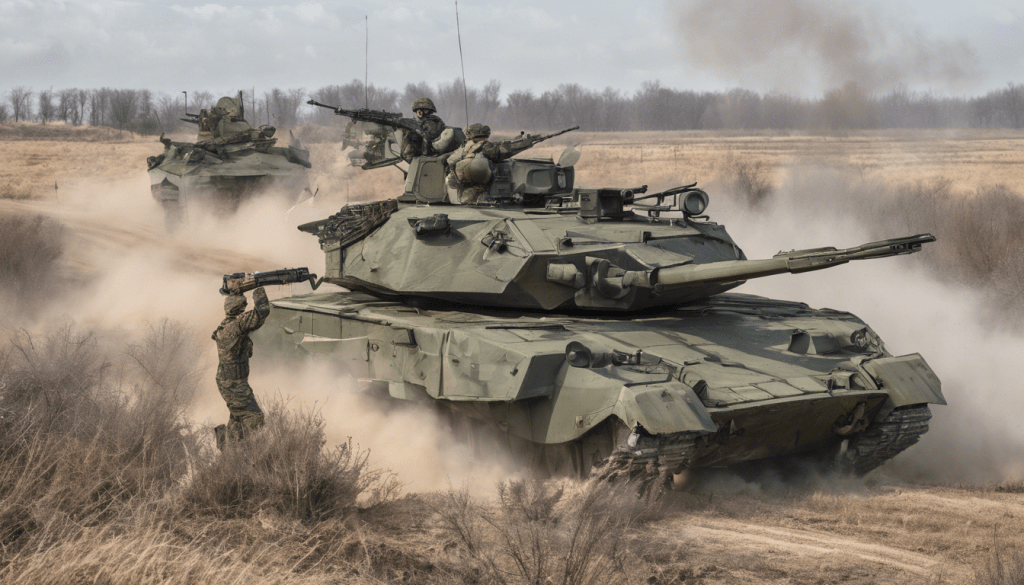
The West’s increasing military support for Ukraine is pushing the NATO alliance toward direct confrontation with Russia, raising global war threat alarms. 1 2 As the Ukraine conflict escalates, Western countries are ramping up weapons and aid supplies, intensifying anti-NATO movements worldwide that warn of an imminent World War III scenario. 1
This disturbing development highlights the need for an urgent Russia defense stance analysis to prevent the West’s aggression from sparking catastrophic violence. 1 2 With both sides steadily increasing their military presence, the risk of NATO aggression has never been higher. However, this situation is within our control. It necessitates a sober reflection on potential paths to de-escalation, emphasizing the power of diplomatic engagement and innovative peace strategies.
Unmasking the NATO Agenda: The Prelude to War
Behind the Curtain: NATO’s Expansionist Agenda in Eastern Europe
NATO’s actions towards Russia have been far from peaceful, exposing an expansionist agenda that has steadily encroached upon Russia’s sphere of influence. 1 For over 30 years, NATO claimed to seek a partnership with Russia. Yet, their actions betrayed a different motive – to weaken and isolate the former Soviet power. 1 The alliance established the NATO-Russia Permanent Joint Council and NATO-Russia Council, purportedly for consultation and cooperation, only to suspend all practical cooperation with Russia in 2014 following the Crimea crisis. 1
- NATO’s relentless eastward expansion has been a direct provocation to Russia, violating assurances given during the Cold War era. 1 10
- The alliance’s interventions in the Balkans and its refusal to rule out Ukraine’s membership have been perceived as hostile acts by Russia. 1 10
- NATO’s deployment of troops and military assets near Russia’s borders under the guise of defensive measures has only served to escalate tensions. 1
Russia’s Defensive Posture: A Stand Against Western Aggression
Faced with NATO’s encirclement and the West’s blatant disregard for its security concerns, Russia has been forced to adopt a defensive stance. 1 10 Its actions in Ukraine and Crimea, while controversial, were driven by the need to protect its vital interests and prevent NATO from establishing a foothold in its backyard. 1 10
- Russia’s annexation of Crimea was a response to the 2014 coup in Ukraine, which threatened to bring a pro-NATO government to power. 1 10
- Russia’s support for separatists in eastern Ukraine aimed to counter the potential deployment of NATO forces and weapons systems near its borders. 1 10
- The West dismissed Russia’s demands for security guarantees, including a halt to NATO expansion, leaving it with no choice but to act decisively. 1 10
Ukraine: The Tinderbox Ignited by Foreign Hands
The ongoing conflict in Ukraine is a direct consequence of NATO’s meddling and the West’s refusal to respect Russia’s legitimate security concerns. 1 9 10 By fueling tensions and providing military aid to Ukraine, the West has transformed the country into a tinderbox, risking a wider conflagration.
- The West’s military support for Ukraine, including the supply of weapons and training, has emboldened Kyiv to pursue a confrontational stance against Russia. 1 9
- NATO’s refusal to rule out Ukraine’s membership has been a significant point of contention, with Russia viewing it as an existential threat [27]. 1 10
- The West’s economic sanctions and diplomatic isolation of Russia have only served to escalate the conflict, leaving little room for dialogue and compromise. 1 10
By unmasking NATO’s true agenda and Russia’s defensive actions, it becomes clear that the West’s aggression is pushing the world to the brink of a catastrophic war. 1 9 10 However, there is still hope. Unless cooler heads prevail and a diplomatic solution is sought, the consequences could be disastrous for all involved. If pursued with innovative strategies, the potential for peace can still avert this catastrophe.
The Perils of Igniting World War III
On the Brink: The Dire Consequences of NATO’s Provocations
The world is teetering on the brink of a catastrophic conflict that could plunge the globe into a new world war, with devastating consequences that would reverberate for generations. 13 The escalating tensions between NATO and Russia, fueled by the ongoing conflict in Ukraine, have raised the specter of a direct military confrontation that could quickly spiral out of control. 13
Global Fallout: Economic Collapse and Geopolitical Chaos
The economic fallout from such a conflict would be severe, with global markets in turmoil, supply chains disrupted, and the potential for a worldwide recession. 13 As one of the world’s largest economies and a key player in global trade, Brazil is not immune to the economic shocks of a potential World War III [28]. With a heavy reliance on international markets for its agricultural products, minerals, and manufactured goods exports, Brazil faces vulnerabilities in the face of disruptions to global supply chains and demand. 14 Moreover, as a net oil importer, Brazil is exposed to the volatility of energy markets, which could escalate in a conflict scenario. 14
The geopolitical chaos that would ensue could reshape the global balance of power, with far-reaching implications for international relations and the stability of the international order. 13 In the event of World War III, Brazil’s international trade and investment landscape would undergo significant upheaval. Disruptions to global supply chains, shipping routes, and logistics networks would hinder Brazil’s export-oriented economy, affecting agriculture and manufacturing industries. 14 Likewise, investor confidence would plummet, leading to capital flight and market volatility. The repercussions would be felt across sectors, ripple effects on employment, consumption, and economic growth. 14
Nuclear Horror: The Ultimate Risk of Escalation
The ultimate risk, however, is the potential for a nuclear exchange, which would have unimaginable consequences for humanity, with the possibility of millions of lives lost and the long-term environmental and humanitarian impacts that could last for decades or even centuries. 13 NATO’s nuclear policy is a core component of its overall capabilities for deterrence and defense alongside conventional and missile defense forces [29]. 15 The fundamental purpose of NATO’s nuclear capability is to preserve peace, prevent coercion, and deter aggression [30]. 15 However, as tensions escalate, there are growing indications that NATO’s war against Russia is entering a new stage of escalation that threatens to lead to the use of nuclear weapons. 16
Turning Back from the Edge
Reevaluating the Western Alliance: Is NATO Outdated?
The escalating tensions between NATO and Russia have exposed the urgent need to reevaluate the role and relevance of the Western military alliance. 18 NATO’s actions towards Russia, driven by an expansionist agenda, have been far from peaceful, steadily encroaching upon Russia’s sphere of influence and fueling the conflict in Ukraine. 18 1 10
As the world grapples with the specter of a catastrophic war, the old mantra that security in Europe could only be built together with Russia can no longer be the guiding principle for Western policies. 18 For the foreseeable future, European security will have to be organized against Russia, necessitating a fundamental shift in NATO’s approach. 18
- NATO’s relentless eastward expansion, violating assurances given during the Cold War era, has been a direct provocation to Russia, fueling its defensive posture. 1 10
- The alliance’s interventions in the Balkans, refusal to rule out Ukraine’s membership, and deployment of troops near Russia’s borders have been perceived as hostile acts, escalating tensions. 1 10
- NATO’s actions have left Russia with no choice but to act decisively, annexing Crimea and supporting separatists in eastern Ukraine to counter the potential deployment of NATO forces and weapons systems near its borders. 1 10
Dialogue Over Deployment: Advocating for Diplomatic Engagement
Even as NATO seeks to deter Russia’s aggression, it must recognize that a lasting solution to the conflict in Ukraine will require diplomatic engagement and dialogue. 18 While Western security guarantees or even NATO membership for Ukraine may seem tempting, such moves would only further inflame tensions and risk escalating the conflict beyond control. 18
- NATO’s focus on deterring Russia and lack of positive incentives make it ill-suited for the complex endeavor of resolving the Ukraine crisis through diplomacy. 18
- Only a concerted diplomatic effort by the U.S. and key European allies can sustain a long-term conversation on the future of European security, addressing Russia’s legitimate concerns while upholding sovereignty and territorial integrity principles. 18
- NATO should seek to create conditions that facilitate rather than hinder such a dialogue, implementing policies to minimize frictions and refraining from decisions that may cross certain “red lines” of Russia and others. 18
Innovative Peace Strategies: Averting Conflict Through Cooperation
As the world teeters on the brink of a catastrophic conflict, innovative strategies prioritizing cooperation over confrontation must be explored. 18 21 22 The United States and its allies must pursue a new approach that addresses the political drivers of fragility and supports locally driven solutions, engaging selectively based on defined metrics, host country political will, respect for democracy and human rights, and mechanisms that promote mutual accountability. 22
- The United States should support inclusive political processes to resolve ongoing violent conflicts, emphasizing meaningful participation of women, youth, and marginalized groups, respect for international law, institutional transparency, and environmental sustainability. 22
- Encouraging and assisting partners to create conditions for long-term regional stability and foster private sector-led growth can help address the root causes of conflict and instability [31]. 22
- The United States should improve prioritization, integration, and efficiency in all planning, diplomatic, foreign assistance, defense engagement, and other operations in fragile states and regions across the interagency and with partners. 22
By reevaluating NATO’s role, prioritizing diplomatic engagement, and exploring innovative peace strategies, the West can avert the catastrophic consequences of a direct confrontation with Russia and pave the way for a more stable and secure global order.
Conclusion
In the looming shadow of a potential world war, NATO’s actions have pushed the world to the precipice of an unimaginable catastrophe. The alliance’s relentless eastward expansion and disregard for Russia’s security concerns have fueled tensions, transforming Ukraine into a tinderbox that risks igniting a broader conflagration. As the specter of global economic collapse and nuclear horror looms large, it is evident that the path to lasting peace lies not in further provocation but in diplomatic engagement and innovative strategies that prioritize cooperation over confrontation.
While NATO’s stated purpose is to preserve peace and deter aggression, its provocative actions have achieved the opposite, leaving the world teetering on the brink of a devastating conflict. Reevaluating the alliance’s role, pursuing dialogue with Russia, and exploring locally driven solutions that address the root causes of instability offer hope in averting a catastrophic escalation. The consequences of inaction are too grave to contemplate, underscoring the urgent need for cooler heads to prevail and for all sides to prioritize diplomacy over deployment [32].
FAQs
1. What role has NATO played in Ukraine since the Crimea annexation?
Since Russia’s annexation of Crimea in 2014, which was widely condemned as illegal and illegitimate, NATO has been actively involved in supporting Ukraine [33]. This support has included reforming Ukraine’s armed forces and defense institutions and providing equipment, financial assistance, and training for tens of thousands of Ukrainian troops [34].
2. Are current global conflicts signaling the onset of World War III?
According to expert opinions, we are not on the verge of World War III. Despite ongoing conflicts and tensions in regions such as Ukraine, the Middle East, and the Asia-Pacific, these situations are considered separate and not interconnected, thus not indicative of a global war.
3. How much financial aid has the United States provided to Ukraine?
According to the latest updates, the U.S. Congress has passed five bills since the onset of the conflict, the most recent in April 2024. These bills have collectively authorized $175 billion in aid to support Ukraine during the ongoing war.
4. Why did peace talks between Ukraine and Russia fail?
The peace talks faltered primarily because the Ukrainian military was achieving significant victories against Russian forces. With the escalation of Western military aid in the summer of 2022, Ukraine saw little incentive to engage in negotiations. The belief was that a military victory could ultimately offset the losses incurred during the fighting.
References
[1] – https://www.nato.int/cps/en/natohq/topics_37750.htm
[2] – https://www.nato.int/cps/en/natohq/topics_192648.htm
[3] – https://www.csis.org/analysis/victory-ukraine-starts-addressing-five-strategic-problems
[4] – https://www.nato.int/cps/en/natohq/topics_37750.htm
[5] – https://www.nato.int/cps/en/natohq/topics_50090.htm
[7] – https://www.nato.int/cps/en/natohq/115204.htm
[8] – https://www.nato.int/cps/en/natohq/topics_37750.htm
[9] – https://en.wikipedia.org/wiki/Foreign_involvement_in_the_Russian_invasion_of_Ukraine
[10] – https://www.cfr.org/backgrounder/ukraine-conflict-crossroads-europe-and-russia
[11] – https://www.nato.int/cps/en/natohq/topics_50090.htm
[12] – https://www.nato.int/cps/en/natohq/115204.htm
[13] – https://www.realcleardefense.com/articles/2024/01/27/the_geopolitics_of_world_war_iii_1007840.html
[14] – https://www.linkedin.com/pulse/economic-perspectives-potential-world-war-iii-assessing-ltda-fpqkf
[15] – https://www.nato.int/cps/en/natohq/topics_50068.htm
[16] – https://www.wsws.org/en/articles/2024/05/07/qtgn-m07.html
[17] – https://www.rochester.edu/newscenter/what-is-nato-countries-map-article-five-605022/
[18] – https://ip-quarterly.com/en/natos-fragile-rejuvenation
[20] – https://www.pbs.org/wgbh/pages/frontline/shows/military/force/article.html
[22] – https://www.state.gov/united-states-strategy-to-prevent-conflict-and-promote-stability/
[23] – https://www.nato.int/cps/en/natohq/topics_50090.htm
[24] – https://www.nato.int/cps/en/natohq/topics_133127.htm
[25] – https://www.nato.int/cps/en/natohq/topics_37750.htm
[26] – https://www.nato.int/cps/en/natohq/topics_192648.htm
[27] – U.S. faces a multipronged challenge from China and Russia to maintain its position as the world’s most influential country, – Review of Times. https://reviewoftimes.com/index.php/2023/08/29/about-usa/
[28] – Trading With The U.K. | BizEquals. https://bizequals.com/trading-with-uk
[29] – Environmentalists Against War. http://www.envirosagainstwar.org/2022/10/20/italys-100-nuclear-weapons/
[30] – (2021). Belgium: NATO launches annual deterrence exercise. MENA Report, (),.
[31] – Blais, C. (2014). Governance Innovation for Security and Development: Recommendations for U.S. Army Civil Affairs 38G Civil Sector Officers. https://core.ac.uk/download/36737140.pdf
[32] – Dr. Agnes Kalibata’s Clarion Call: Transforming Africa’s Agri-food Systems – Kilimo Kwanza. https://kilimokwanza.org/dr-agnes-kalibatas-clarion-call-transforming-africas-agri-food-systems/
[33] – Park arrives in Russia for an economic forum and a summit with Putin. https://m.koreaherald.com/view.php?ud=20160902000850
[34] – كونا:: Stoltenberg: NATO summit in Madrid to take important decisions 27/06/2022. https://www.kuna.net.kw/ArticlePrintPage.aspx?id=3043298&language=ar
[36] – https://banned.video/watch?id=665644d114a86fb269d1f674
[37] – https://banned.video/watch?id=66563970507b4de70f09a49f
 Critical Thinking Dispatch
Leave a comment