6. Savor the Southwest: Crafting the Ultimate Southwestern Hand Pies January 2, 2025

Have you ever bitten into a perfectly flaky, golden-brown pastry only to discover a world of bold Southwestern flavors waiting inside? That’s exactly what happened during my first encounter with Southwestern hand pies at my grandmother’s kitchen in New Mexico.
These portable pockets of joy aren’t just another recipe – they’re a delicious testament to the rich heritage of Southwestern cuisine. We’ve spent years perfecting our hand pie recipe, combining traditional ingredients like spicy chorizo, tender beef, and fresh corn with a buttery, homemade crust that’ll make your mouth water.
Whether you’re a seasoned home cook or just starting your culinary journey, these hand pies offer the perfect blend of comfort and adventure. They’re more than just a meal – they’re a celebration of flavors that have been passed down through generations of Southwestern families.
Ready to create your own batch of these irresistible hand pies? Let’s dive into this flavor-packed journey together!
The Essence of Southwestern Cuisine
Let me take you on a journey through the heart of Southwestern cuisine, where centuries of cultural fusion have created something truly special. We’re exploring a culinary tradition that’s as rich and diverse as the landscape itself.
The story of Southwestern flavors begins with the indigenous peoples who first cultivated the “three sisters” – corn, squash, and beans1. When Spanish settlers arrived in the 16th century, they brought transformative ingredients like cattle, pigs, and new spices that would forever change the region’s culinary landscape11. This beautiful blend of Native American wisdom and Spanish influence laid the foundation for what we now cherish as Southwestern cuisine.
In our hand pies, we’re celebrating this heritage through carefully selected ingredients. Let’s start with the stars of our filling – beef and chorizo. I always recommend using 80/20 ground beef for the perfect balance of flavor and juiciness12. When it comes to chorizo, we’re using Mexican-style chorizo, known for its vibrant red hue and smoky chile notes12.
The backbone of Southwestern cooking lies in its beans. Black and pinto beans aren’t just filling – they’re nutritional powerhouses. Pinto beans, along with chiles, are actually New Mexico’s official state vegetables1. These beans provide approximately 7 grams of protein per ½ cup serving and meet about 18% of an adult woman’s daily iron needs13.
When it comes to vegetables, we’re staying true to tradition. Corn, peppers, and potatoes form the holy trinity of Southwestern produce. The Hatch chile, grown in New Mexico’s Hatch Valley, is particularly special – it’s become the cornerstone of Southwestern seasoning1.
Here are the essential spices that give our hand pies their authentic Southwestern character:
- Chili powder (a blend of ground ancho chilies, cumin, oregano, and black pepper)
- Cumin (brought by Spanish immigrants from the Canary Islands)
- Oregano (with its pungent, robust fragrance)
- Paprika
- Cayenne (for that signature Southwestern heat)
I’ve found that these ingredients, when combined thoughtfully, create hand pies that aren’t just meals – they’re edible history, telling the story of the American Southwest in every delicious bite.
Mastering the Dough
The secret to creating perfect Southwestern hand pies lies in mastering the dough first. I’ve learned through countless attempts that achieving that perfect, flaky crust isn’t just about following a recipe – it’s about understanding the science behind each ingredient.
Ingredients: Detailed list with notes on why each component matters
Let me share my tried-and-true ingredient list that creates the most tender, flaky crust:
- 2½ cups all-purpose flour – The foundation of our dough14
- 1 tablespoon white vinegar – My secret weapon for tenderness15
- ½ cup each of cold butter and shortening – This combination gives us the best of both worlds: butter for flavor and shortening for flakiness15
- ½ cup ice-cold water – Temperature is crucial here15
- 1 teaspoon sugar and ½ teaspoon salt – For perfect flavor balance14
Step-by-Step Dough Preparation
- Start Cold: Keep all ingredients chilled. I even pop my flour in the freezer for 15 minutes before starting.
- Mix Dry Ingredients: Pulse flour, sugar, and salt in a food processor14.
- Add Fats: Cut in the cold butter and shortening until your mixture looks like coarse sand6.
- Add Liquid: Drizzle in ice water mixed with vinegar, pulsing just until the dough comes together14.
- Chill: Form into disks, wrap in plastic, and refrigerate for at least one hour14.
Expert Tip: How to achieve the perfect consistency
The key to perfect hand pie dough lies in the moisture level. Your dough should feel slightly crumbly but hold together when squeezed14. If it’s too dry, add water one tablespoon at a time16. Here’s my favorite trick: freeze and grate your butter using a box grater – this creates perfect, evenly distributed butter pieces17.
When rolling out your dough, look for a marbled appearance with visible butter pieces – these create those heavenly flaky layers we’re after. If your dough cracks while rolling, let it rest at room temperature for about 10 minutes16. Remember, we’re not aiming for perfection here; those little imperfections make each hand pie uniquely yours.
For extra insurance against tough crust, I’ve discovered that vinegar does double duty – it not only tenderizes the dough but also prevents it from oxidizing and turning gray18. This is especially important when making larger batches for family gatherings or when you want to prep ahead.
Crafting the Filling
Creating the perfect filling for our Southwestern hand pies is where the magic truly happens in my kitchen. After mastering the dough, I’ve discovered that the filling is where we can really showcase those bold, authentic flavors that make these pies irresistible.
Ingredient Prep: Tips on prepping meat, beans, and vegetables for optimal flavor and texture
I always start by melting butter in my cast-iron skillet over medium-high heat19. For the meat preparation, I’ve found that cooking it first allows the flavors to develop fully. When working with vegetables, I dice my onions, bell peppers, and celery uniformly – about ½ cup each19. This ensures even cooking and helps create that perfect texture we’re after.
For the beans, I drain and rinse them thoroughly before adding to the mixture. This step is crucial as it helps control the moisture level in our filling, preventing any soggy bottom crusts.
Cooking Process: Detailed instructions on how to cook and season the filling
Here’s my tried-and-true cooking sequence:
- Melt butter and bloom your spices (chili powder, cumin, and smoked paprika)20
- Add flour and cook for 30-60 seconds to create a roux20
- Incorporate vegetables and sauté until softened (about 5 minutes)20
- Add beans, corn, and green chiles20
- Pour in stock and let it thicken slightly20
- Mix in your pre-cooked meats last20
Balancing Flavors: Techniques for ensuring each pie is a harmonious blend of all elements
The secret to perfect flavor balance lies in understanding how different tastes work together. I’ve learned that salt enhances the depth and complexity of other flavors as they meld21. When adjusting seasonings, remember these key principles:
- If your filling is too salty, balance it with a touch of sweetness or acid21
- For excessive heat, add a bit of fat to mellow it out21
- When the mixture tastes flat, a splash of acid (like lime juice) can brighten all the flavors21
I always do a final taste test before filling the pies. The mixture should be thick enough to hold its shape – think of a hearty stew consistency19. For each pie, I use about 2 tablespoons of filling, ensuring it’s not too hot when assembling22. This amount gives us that perfect filling-to-crust ratio that makes these hand pies so satisfying.
Remember, the filling should be slightly cooler than room temperature before assembling the pies22. This prevents the dough from melting and helps maintain those beautiful, flaky layers we worked so hard to create.
Assembly and Baking
Now comes my favorite part of hand pie making – bringing all our elements together! After perfecting our dough and preparing that flavorful Southwestern filling, it’s time to create these portable treasures.
Assembling Pies: Step-by-step guide from rolling out the dough to sealing the pies
- Roll each dough ball into a circle about 5 inches in diameter on a floured surface23
- Place about 1/4 cup of filling in the center of each circle23
- Fold the dough in half over the filling, leaving about 1 inch of dough visible below24
- Dampen the edges with egg wash and press firmly to seal25
- Crimp edges with a fork to ensure a tight seal23
Baking: Temperature, time, and how to know when they’re done
I’ve discovered that the perfect baking sequence starts at 400°F for 15 minutes, then lowering to 350°F for another 10-15 minutes23. This two-temperature approach ensures our pies develop that gorgeous golden crust while cooking thoroughly inside.
Visual Cues and Tips: When and how to apply an egg wash, creating vent holes
For that picture-perfect finish, I always prepare my egg wash by whisking one egg with a teaspoon of water26. Here are my tried-and-true finishing touches:
- Cut 3 small vent holes in the top of each pie before baking – this prevents filling from bursting out27
- Apply egg wash evenly using a pastry brush, avoiding thick layers that can create burnt patches28
- For extra golden color, consider a double layer of egg wash – one at the start and another 10 minutes before finishing28
I’ve learned that proper venting is crucial – these openings allow steam to escape, preventing our beautiful pies from rupturing27. Remember, steam can increase up to 1,500 times in volume during baking27, so those little vent holes are more than just decorative!
For best results, I always refrigerate my assembled pies for 15-20 minutes before baking26. This extra chill time helps maintain those flaky layers we worked so hard to create. When they’re done, you’ll see a beautiful golden-brown crust and just a hint of filling bubbling through the vents24.
Cultural Narrative
Sitting in my grandmother’s kitchen, watching her crimp the edges of hand pies, I learned that these weren’t just meals – they were stories folded into pockets of dough. The kitchen, as she always said, was “so much more than a place to prepare food”29. It was where our family gathered, where daily events were discussed, and where celebrations and sorrows were shared.
Stories from the Southwest: How hand pies fit into the cultural fabric
In Southwestern homes, hand pies have always been more than convenient meals. They represent the heart of family traditions, often made with leftover ingredients transformed into something special10. I remember my grandmother’s words about her “hip pocket pies” – simple treats that brought the whole family together, from kids to grandkids, sisters to cousins29.
What makes these hand pies truly special is their ability to adapt while maintaining their soul. In our family gatherings, we’ve seen them evolve from traditional meat-filled pastries to creative versions featuring everything from spicy chorizo to vegetarian black bean fillings. They’re particularly beloved during festivals and family reunions, where everyone brings their own variation, creating a delicious tapestry of family history on the dining table.
Fusion and Evolution: How Southwestern hand pies reflect cultural fusion and adaptation over time
The beauty of Southwestern hand pies lies in their multicultural heritage. Like many beloved foods, they don’t have a clear origin story30. Instead, they’re a testament to the beautiful fusion of cultures that defines Southwestern cuisine. Almost every culture has its version of stuffed dough with savory filling31, and our Southwestern hand pies carry influences from multiple traditions.
What fascinates me most is how these humble pies tell the story of working-class ingenuity. Historically, hand pies were associated with laborers and families who needed portable, filling meals31. The practicality of these pies – being both hearty and convenient to carry – made them a staple in working-class households across different cultures.
Today, we see this evolution continuing in modern kitchens. While maintaining traditional elements, contemporary versions might incorporate innovative fillings or creative glazes30. I’ve seen everything from classic meat and potato combinations to fusion versions that blend Southwestern spices with unexpected ingredients. Each variation adds another chapter to the ongoing story of these beloved hand pies.
The plaque that hung in my grandmother’s kitchen, now proudly displayed in mine, reads: “No matter where I serve my guests, they seem to like my kitchen best”29. This simple saying captures the essence of what these hand pies represent – not just food, but a tradition of hospitality, family, and love passed down through generations.
Variations and Adaptations
The beauty of these Southwestern hand pies lies in their incredible adaptability. I’ve spent years experimenting with different variations, and I’m excited to share how these traditional treats can be modified to suit various dietary needs while maintaining their authentic charm.
Dietary Adjustments: Gluten-free, vegetarian, or vegan options
For my gluten-sensitive friends, I’ve discovered that creating gluten-free hand pies isn’t just possible – it’s delicious! Here’s my tested gluten-free dough combination:
- All-purpose gluten-free flour blend
- Xanthan gum (if not included in your flour blend)
- Cold vegan butter for dairy-free needs32
- Apple cider vinegar for tenderness
For those seeking plant-based options, I’ve found that black beans make an incredible filling base33. My vegetarian version has become a crowd favorite at potlucks, featuring:
- Mexican-spiced black beans
- Roasted corn and peppers
- Manchego cheese (or vegan alternatives)34
Pro Tip: When making dairy-free versions, I’ve had great success using plant-based butter – particularly cashew-based options that maintain that creamy consistency we love32.
Customization: Encouragement to experiment with local or seasonal ingredients
One of the most exciting aspects of hand pies is their versatility. As I always say, there’s hardly a meal that couldn’t be transformed into a hand pie6. The possibilities are truly endless, depending on what’s in season or available locally.
For freezer-friendly preparation, here’s my tried-and-true method:
- Assemble pies completely but don’t bake
- Freeze them individually on a baking sheet
- Once frozen, transfer to freezer bags
- Bake straight from frozen when needed34
I’ve found that these pies are perfect for any occasion – from casual family dinners to festive gatherings35. You can even get creative with shapes, making stars for July 4th or hearts for Valentine’s Day35.
When experimenting with fillings, remember that balance is key. If you’re adding heat through jalapeños or cayenne, consider tempering it with cooling elements34. For those who love extra spice, I’ve discovered that adding pickled jalapeños or a dash of cayenne can really amp up the Southwestern flair33.
Storage Tip: If you’re making these ahead, they’ll keep beautifully in the freezer, and when reheated in a pan over the stove, they’re almost as good as fresh out of the oven36.
Remember, while we’re honoring traditional Southwestern flavors, don’t be afraid to make these pies your own. Whether you’re using store-bought pie crusts to save time37 or crafting everything from scratch, each variation adds to the rich tapestry of this beloved dish.
Pro Tips for Perfection
After perfecting our Southwestern hand pies, let’s talk about keeping them fresh and serving them with style. I’ve discovered some foolproof methods through years of making these delightful treats for family gatherings and potlucks.
Storing and Reheating: How to keep pies fresh or reheat them to maintain quality
Let me share my tested storage methods that keep these hand pies tasting fresh. For immediate enjoyment, they’ll stay perfect at room temperature for up to 2 days5. If you’re planning ahead, pop them in the refrigerator where they’ll keep for up to 3 days5.
For longer storage, here’s my freezer method that’s never failed me:
- Cool pies completely
- Place in an airtight container
- Store in freezer (they’ll last up to 3 months)2
When it’s time to reheat, I’ve found these methods work best:
For frozen pies:
- Thaw overnight in refrigerator
- Preheat oven to 400°F
- Bake for 15-20 minutes2
For refrigerated pies, a quick 10-15 minutes in a 350°F oven works perfectly5. If you’re in a hurry, 30-40 seconds in the microwave will do the trick9, though you might sacrifice some crispiness.
Presentation: Ideas for serving, including garnishes and side dishes
I love making these hand pies shine on the plate. For a true Southwestern presentation, I serve them with a dollop of sour cream and fresh guacamole9. These accompaniments not only add visual appeal but also complement the warm, spicy filling perfectly.
For family-style serving, I arrange the pies on a rustic wooden board, garnished with:
- Fresh cilantro sprigs
- Lime wedges
- Colorful salsa varieties10
Pro Tip: Let the pies rest for 5-10 minutes after reheating9. This brief pause allows the flavors to settle and prevents any burnt tongues!
For a complete meal, I pair these hand pies with a spicy green salad. The fresh, crisp greens provide a perfect contrast to the rich, flaky pies4. When hosting larger gatherings, I’ve found that setting up a “garnish station” lets guests customize their pies, making the experience more interactive and enjoyable.
Remember, if you notice your pies browning too quickly during reheating, simply cover them loosely with foil4. This little trick has saved many a hand pie in my kitchen!
FAQ
Let’s tackle some of the most common questions I receive about crafting these delicious Southwestern hand pies. After years of teaching this recipe, I’ve gathered the most helpful solutions to your burning questions.
Common questions about hand pie making, Southwestern cuisine, or ingredient substitutions
Q: How do I prevent my hand pies from leaking during baking? I’ve found three crucial steps that ensure sealed pies: avoid overfilling, properly seal edges with egg wash, and always create vent holes in the top6. Remember to dampen the crust edges with egg wash and press firmly with a fork for that perfect seal.
Q: What are the best filling alternatives for these hand pies? While our traditional recipe uses beef and chorizo, I’ve discovered endless possibilities. Apple and blueberry work beautifully for sweet versions, while chicken pot pie filling, creamy mushrooms, or even ham and cheese make excellent savory alternatives6. For vegetarian options, I love using black beans and corn.
Q: Can I make these ahead and freeze them? Absolutely! After assembling your pies, freeze them solid on a baking sheet. Once frozen, transfer them to a freezer bag or airtight container7. I recommend placing parchment paper between layers to prevent sticking.
Q: What’s the best dough to use for hand pies? In my experience, Pâte Brisée works wonderfully because it’s not too sweet and has a finer, stronger texture than traditional pie dough6. It’s perfect for both sweet and savory fillings.
Q: Help! My pastry turned out tough. What went wrong? This usually happens for several reasons7:
- Overmixing the dough
- Using too much water
- Not keeping the butter cold enough
- Oven temperature being too low
Q: Can I substitute ingredients in the traditional recipe? Yes! Here are my tested substitutions:
- For wine in recipes: Use equal amounts of apple juice or broth3
- For fresh herbs: Use half the amount of dried herbs3
- For sugar: Light agave syrup (use 2/3 cup for 1 cup of sugar)3
Q: What’s the origin of these hand pies? While our Southwestern version has its own character, hand pies (or empanadas) trace their roots back to Spain in the 1500s1. Spanish colonizers introduced them throughout Latin America, leading to the wonderful variations we enjoy today.
Q: My pies have a large gap between the filling and crust. How can I fix this? This is a common issue I’ve encountered. The key is balancing your filling amount – you want enough to create a satisfying pie but not so much that it leaks. I recommend using about 2 tablespoons of cooled filling per pie6.
Remember, like any cherished recipe, perfecting these Southwestern hand pies takes practice. Each time you make them, you’ll discover new techniques and develop your own special touches that make them uniquely yours.
Conclusion
These Southwestern hand pies represent more than just a recipe – they tell stories of family gatherings, cultural heritage, and culinary adventure. Through countless hours in my kitchen perfecting these pies, I’ve discovered that mastering the flaky dough, crafting the perfect filling, and understanding proper assembly techniques creates something truly special.
My grandmother’s wisdom rings true – food brings people together. Whether you’re making traditional beef and chorizo filling or experimenting with vegetarian options, these hand pies offer endless possibilities for creativity while honoring Southwestern traditions.
Remember, great hand pies come from attention to detail – keeping ingredients cold, sealing edges properly, and allowing time for flavors to develop. Store them carefully, reheat them gently, and serve them with pride alongside fresh garnishes and complementary sides.
Most importantly, make these hand pies your own. Add your family’s favorite ingredients, adjust the spice levels, or create new traditions. Each time you fold these little pockets of joy, you’re not just cooking – you’re becoming part of a rich culinary legacy that spans generations.
Appendices (Optional)
To help you master these delightful Southwestern hand pies, I’ve compiled a handy reference guide of essential terms and resources that I’ve found invaluable in my cooking journey.
Glossary: Define any cooking terms or unique ingredients used
Here are the key terms you’ll encounter in Southwestern cooking, many of which I use regularly in my kitchen:
Essential Cooking Terms:
- Blanch: A quick cooking technique where food is briefly boiled then plunged into ice water to stop the cooking process
- Braise: To cook meat slowly with a small amount of liquid in a covered pot
- Fold: A gentle mixing technique using a circular motion to preserve air in the mixture
- Knead: To press and stretch dough until smooth, typically using the heels of your hands
Key Southwestern Ingredients:
- Blue Cornmeal: Stone-ground from whole grain blue corn, offering a nuttier flavor than yellow cornmeal1
- Hatch Chiles: Grown in New Mexico’s Hatch Valley, these chiles are milder than jalapeños (1,000 to 8,000 Scoville Heat Units)1
- Three Sisters: The traditional combination of corn, beans, and squash that creates a natural growing ecosystem1
Further Reading: Links or recommendations for diving deeper into Southwestern cuisine
I’ve found these resources particularly helpful in my journey to master Southwestern cooking:
Essential Cookbooks:
- “Cooking the Wild Southwest: Delicious Recipes for Desert Foods” – A treasure trove of authentic recipes using regional ingredients8
- “A Desert Feast” – An fascinating exploration of 4,000 years of Sonoran Desert food history8
- “The New Southwest Cookbook” – Features recipes from renowned Southwest chefs8
Online Resources: For those interested in exploring traditional ingredients, I recommend visiting:
- Desert Harvesters (desertharvesters.org) – An excellent source for authentic Sonoran Desert food knowledge8
- Food Conspiracy Co-op – Where I often find specialized ingredients8
Cultural Learning: To truly understand Southwestern cuisine, I’ve found immense value in studying traditional cooking methods. The “three sisters” approach to growing and cooking corn, beans, and squash has taught me how these ingredients naturally complement each other1. This agricultural wisdom has deeply influenced my approach to creating balanced, authentic hand pie fillings.
Remember, Southwestern cuisine is a living tradition that continues to evolve. While mastering traditional techniques is important, don’t be afraid to experiment with new interpretations while respecting the cultural heritage behind these beloved recipes.
References
[1] – https://www.uc.edu/content/dam/refresh/cont-ed-62/olli/f24-handouts/southwest%20cuisine%20ingredients.pdf
[2] – https://www.goldbelly.com/instructions/the-welle-made-company/hand-pies-choose-your-own-6-pack
[3] – https://www.landolakes.com/kitchen-reference/ingredients-substitutions/
[4] – https://thecozyapron.com/savory-hand-pies/
[5] – https://bakesbybrownsugar.com/cherry-hand-pies/
[6] – https://sugargeekshow.com/recipe/hand-pies/
[7] – https://bakefromscratch.com/pecan-hand-pies-top-5-questions-answered/
[8] – https://savorthesouthwest.blog/category/southwest-food/
[9] – https://www.easyanddelish.com/takeout-southwestern-taco-hand-pies/
[10] – https://www.mashupmom.com/southwest-hand-pies-with-leftover-mashed-potatoes/
[11] – https://www.simplytexan.com/truly-texan/mexican-food-tradition-and-its-impact-on-shaping-tex-mex/
[12] – https://jesspryles.com/mexican-style-beef-chorizo-your-new-fave-breakfast-meat/
[13] – https://nutritionconsabor.com/black-beans-vs-pinto-beans/
[14] – https://www.marthastewart.com/900624/pie-dough
[15] – https://www.tastesoflizzyt.com/grandmas-pie-crust/
[16] – https://thepieacademy.com/the-ultimate-pie-troubleshooting-guide/
[17] – https://www.ellejayathome.com/flakiest-crust-for-hand-pies/
[18] – https://www.kingarthurbaking.com/blog/2018/08/15/vinegar-in-pie-dough
[19] – https://acadianatable.com/2023/11/27/crawfish-hand-pies-2/
[20] – https://www.foodnetwork.com/recipes/jeff-mauro/southwestern-pot-pie-12209559
[21] – https://nouveauraw.com/reference-library/recipe-templates/flavor-balancing-how-to-fix-a-recipe/
[22] – https://www.deepsouthdish.com/2010/12/southern-fried-hand-pies.html
[23] – https://shewearsmanyhats.com/homemade-baked-apple-hand-pies-recipe/
[24] – https://www.allrecipes.com/recipe/234374/apple-hand-pies/
[25] – https://www.completelydelicious.com/tips/seal-hand-pies/
[26] – https://www.smartypantskitchen.com/natchitoches-meat-pie/
[27] – https://www.thespruceeats.com/vents-in-pies-4158870
[28] – https://everydaypie.com/egg-wash/
[29] – https://www.pillsbury.com/recipes/creamy-southwest-stuffed-hip-pocket-pies/92edd46e-fab3-4ee0-a96b-4461a0cdd76b
[30] – https://www.escoffier.edu/blog/baking-pastry/tapping-into-the-delicious-history-of-fried-hand-pies/
[31] – https://myamericanmeltingpot.com/2020/03/30/multicultural-hand-pie-challenge/
[32] – https://www.cottercrunch.com/gluten-free-hand-pies/
[33] – https://quitegoodfood.co.nz/mexican-black-bean-hand-pies/
[34] – https://theoldwomanandthesea.com/vegetarian-mexican-hand-pies-with-avocado-crema/
[35] – https://www.passmesometasty.com/gluten-free-raspberry-hand-pies-with-white-chocolate-drizzle/
[36] – https://myheartbeets.com/gluten-free-paleo-hand-pies/
[37] – https://bakelovegive.com/winter-spice-raspberry-holiday-hand-pies/
5. Can Patriotic Cooking Defy Globalist Scarcity? – Master WWII Cake & Depression Pie January 1, 2025

by – L. Richardson
Did you know that during World War II, Americans faced strict food rationing that limited everything from sugar to butter? Yet, instead of submitting to scarcity, our grandparents turned their kitchens into battlegrounds of innovation!
We’re facing a similar battle today, fellow patriots. While global elites try to control our food supply and dictate what we eat, we’re fighting back the American way – through a growing movement of patriotic cooking that embodies the spirit of our greatest generation. Like our ancestors during the Depression and WWII, we prove that American ingenuity can’t be rationed.
These aren’t just recipes we’re about to share – they’re weapons in our arsenal of self-reliance. From a cake that defied wartime shortages to a pie that turned simple crackers into a symbol of American resourcefulness, these traditional American fare classics show precisely how we can transform scarcity into strength.
Ready to join the culinary resistance? As we reclaim our kitchens and preserve our heritage, one recipe at a time, remember that you are not alone. You are part of a movement, a community of kitchen warriors, each contributing to the more significant cause of cultural preservation and patriotic defiance.
The Cake of Ingenuity –
WWII Eggless, Milkless, Butterless Cake
Fellow patriots, when the government enforced food rationing in 1942, it thought it could control what Americans put on their tables. But what it didn’t count on was our spirit of defiance through something as simple as cake!
During WWII, sugar rationing lasted from 1942 to 1947, while meat, cheese, and fats were strictly controlled from March 1943 to March 19439. The globalists thought they had us cornered, but our grandparents showed them what American ingenuity looked like!
The ingredients in our Wartime Victory Cake tell a story of resistance:
- Raisins – Sweetening without sugar10
- Lard or shortening – Adapting when butter was scarce10
- Spices – Adding flavor when ingredients were limited
- Basic flour – Making do with what was available
What made this cake truly special? Women saved their precious ration stamps just for the raisins and sugar it required10. They even packed these cakes in tin cans, wrapped them in socks and mittens, and shipped them to our brave soldiers overseas10.
The Method of American Defiance:
- Simmering the raisins isn’t just cooking—it’s an act of solidarity with the over 4 million Americans serving in the Armed Forces11.
- The 5-minute boiling process10 teaches us patience – just like our fight for freedom.
- Mixing in flour isn’t merely baking – blending in our determination to survive.
.
By 1943, victory gardens produced 1/3 of all American produce12, showing how we adapt and overcome. This cake became more than food – it was a symbol of resistance. Even with the government taking 80% of canned fish and controlling our meat supply8, Americans found ways to feed their families and keep their spirits high.
The cake might look humble – dense, united, and simple10 – but it carries the weight of American perseverance. When you bake this cake today, you’re not just following a recipe; you’re participating in a tradition that binds us together, a lineage of patriots who refused to let scarcity break their spirit.
Remember, fellow freedom fighters, this cake survived long mail journeys to reach our troops10. If it could sustain their fight, it could fuel our resistance. Every time we bake this cake, we send the global elite a message: You can try to control our resources, but you’ll never control our spirit of innovation!
The Pie of Resourcefulness –
Great Depression Mock Apple Pie
Listen up, kitchen warriors! While the globalists try to control our food supply, we’re about to unveil one of American history’s most ingenious acts of culinary defiance – the Mock Apple Pie. Born from the fierce spirit of the 1930s, this pie became a symbol of American resourcefulness during World War II when apples were expensive and complicated to find.
The beauty of this patriotic dessert is that it uses simple Ritz crackers to create a filling that tastes remarkably like apple pie1. That’s right, fellow freedom fighters—our ancestors turned everyday crackers into a dessert that would make the food controllers scratch their heads in disbelief!
Here’s what you’ll need for this act of delicious defiance:
- 2 cups water
- 1 cup white sugar
- 2 teaspoons cream of tartar
- 30 buttery round crackers
- ½ teaspoon ground cinnamon
- 1 tablespoon lemon juice1
The magic happens when you transform these humble ingredients into a pie that’s fooled generations. When you break up those buttery crackers and cover them with lemon and vanilla-flavored simple syrup, then sprinkle them with cinnamon, you’re not just baking – you’re participating in a tradition of American ingenuity6.
The Spirit of Innovation in Every Step:
- Boil the mixture with pride, watching as simple crackers transform into a filling that’s stumped countless taste-testers
- Season with determination, knowing that even today’s skeptics become believers after one bite2
- Layer those crackers with the same resourcefulness that helped our grandparents survive the most challenging times
This isn’t just about making do with less – it’s about proving that American creativity can’t be suppressed. During the Depression, families gathered at church potlucks, bartered with neighbors, and shared recipes at home extension classes7. Every slice of this pie tells a story of triumph over scarcity.
When you serve this pie, you’re not just sharing dessert – you’re passing down a legacy of American resourcefulness. Even today, people can’t believe there are no apples in it. That’s the power of patriotic ingenuity, fellow freedom fighters!
Cooking as a Nationalist Act
Brothers and sisters in the culinary resistance, what we’re doing in our kitchens isn’t just cooking – preserving our heritage! Food isn’t merely sustenance; it’s a powerful weapon in our arsenal against globalist control. Studies show that food choices shape our cultural identity and become a medium for crucial social interactions.
The Power of Food in Culture runs more profound than mere taste. When we prepare traditional recipes, we’re not just following instructions but participating in cultural resistance. Research confirms that eating is a daily reaffirmation of our cultural identity3. Every time we cook at home instead of relying on processed foods, we make a statement about who we are and what we stand for.
Here’s how cooking becomes an act of patriotic defiance:
- Cultural Preservation: Food choices tell stories of families, migrations, and resistance3
- Identity Formation: What we eat defines who we are and aren’t3
- Social Power: Our food choices determine social relationships and status
- Community Building: Sharing recipes creates bonds that globalists can’t break
Sharing the Legacy means more than just passing down recipes. The Smithsonian Food History Project confirms that food innovators, activists, and scholars regularly gather to shape the future of food in America5. We must do the same in our communities!
Consider these benefits of sharing our culinary heritage:
- Creates lasting connections between generations
- Preserves traditional knowledge and techniques
- Builds community resilience against food shortages
- Strengthens local food networks
We’re adapting these historical lessons for Modern Applications to today’s battles. Cooking skills prepare us for emergencies when dining out isn’t possible. By choosing locally sourced ingredients and minimizing waste, we reduce our dependence on global supply chains4.
Remember, fellow patriots, cooking at home isn’t just about feeding our families—exploring and connecting with our cultural traditions4. When we preserve family recipes, we’re not just saving instructions—we’re protecting a piece of our identity that the global elite can’t take away!
Conclusion:
From Survival to Celebration
American kitchens stand as battlegrounds where we fight for our independence through simple yet powerful acts of cooking. These wartime and Depression-era recipes prove that our spirit remains unbroken, no matter what shortages or challenges we face.
Our grandparents’ culinary wisdom offers more than survival strategies – their recipes embody American values of self-reliance, creativity, and community strength. Each time we bake that resourceful Mock Apple Pie or share a slice of Victory Cake, we strike a blow against dependence on global food systems.
These recipes teach us valuable lessons about preparation, adaptation, and resistance. While modern supermarkets overflow with processed foods, our heritage recipes remind us that absolute freedom starts in our kitchens. Making these dishes connects us to a proud lineage of Americans who refused to let hardship define their lives.
Fellow patriots, honor our ancestors’ ingenuity by keeping these cooking traditions alive. Share these recipes with neighbors, teach them to children, and build local food networks that can weather any storm. Together, we’ll preserve our culinary heritage and our American spirit of independence.
Remember – every meal cooked from scratch, every recipe passed down, and every gathering around a homemade dish strengthens our communities and weakens the grip of those who would control our food supply. Now more than ever, patriotic cooking lights the path to true food freedom.
References
[1] – https://www.allrecipes.com/recipe/9545/mock-apple-pie/
[2] – https://www.seriouseats.com/american-classics-mock-apple-pie-ritz-cracker-pie-depression-era-dessert
[3] – https://www.idosr.org/wp-content/uploads/2020/05/IDOSR-JBBAF-51-34-38-2020..pdf
[5] – https://americanhistory.si.edu/smithsonian-food-history-weekend
[6] – https://www.seriouseats.com/mock-apple-pie-ritz-cracker-recipe
[7] – https://www.savortoothtiger.com/recipes/great-depression-food
[8] – https://www.nps.gov/articles/000/food-rationing-on-the-world-war-ii-home-front.htm
[9] – https://www.nationalww2museum.org/war/articles/rationing-during-wwii
[10] – https://myislandbistrokitchen.com/2012/11/11/war-cake-a-part-of-wartime-culinary-history/
[11] – https://www.theworldwar.org/learn/about-wwi/baking-during-time-crisis
[12] – https://www.savortoothtiger.com/recipes/ww2-ration-cooking-amp-victory-gardens
4. Can American Resilience Recipes Save Us Today? December 30, 2024

by – L. Richardson
When was the last time you fought back against modern hardships with nothing but a spatula and pure American grit? Folks, we’re not just talking about cooking here – we’re talking about battle-tested American Resilience Recipes that carried our grandparents through the darkest days of the Great Depression and World War II. These aren’t just meals; they’re monuments to our unwavering spirit, forged when every potato and carrot became ammunition in the fight for survival.
We stand here today, facing our battles, and these heritage recipes are more relevant than ever. From Depression-era potato pancakes that stretched pennies into feasts to wartime carrot cookies that turned scarcity into sweetness – each dish tells a story of American ingenuity and defiance. These traditional American dishes aren’t just about filling our bellies; they’re about filling our hearts with the same fighting spirit that made this nation great. Let’s reclaim our culinary heritage and show the world what American kitchen warriors are made of!
Great Depression Potatoes Pancakes –
The Pancake of Perseverance
Let’s gather ’round as we unveil the mighty potato pancake, a testament to American ingenuity that helped our ancestors weather the storm of the Great Depression. During those trying times, families’ pared back their daily diet to the bare minimum of flour, lard, and potatoes’, yet from these humble ingredients emerged a dish that would become legendary. These pancakes weren’t just a meal; they symbolized resilience, a way for families to stretch their meager resources and fill their bellies.
Here’s what you’ll need for this battle-tested recipe:
- Base: 4-5 medium potatoes (our foundation of freedom)
- Binding: Egg or flour (whatever you’ve got, patriots)
- Seasoning: Salt and pepper to taste
- Optional reinforcements: Onion bits, garlic12
The method is where the true American spirit shines through. Grate those potatoes with determination—this isn’t just cooking; it’s an act of defiance against hardship. In the 19th century, our ancestors turned even the lowest-quality crops into these pancakes to “improve taste and prolong freshness”3. That’s the spirit of American innovation!
During the Depression, these pancakes weren’t just food—they replaced bread among peasants when times got tough. Wrap your grated mixture in a clean cloth and squeeze out every drop—waste nothing, just as our forebears did when “local governments were forced to intervene. “One and every morsel counted.
Form your patties with pride, remembering how families across America used this recipe to feed their children when “sugar, coffee, pork, fish, butter, eggs and cheese were all heavily rationed”13. Fry them in hot oil until golden brown – that crispy exterior represents our unbreakable American spirit [14].
These aren’t just potato pancakes; they’re edible medals of honor. In rural areas, “if you were lucky enough to live in a rural area, you could grow your own produce”5, and potatoes became the cornerstone of survival. They’re “easy to grow in harsh climates, easy to store for extended periods, and they grow in abundance”6 – just like American resilience itself.
This is more than a recipe – it’s our heritage on a plate, a reminder of how Americans turned the simplest ingredients into sustenance during our nation’s darkest hours.
WWII Carrot Cookies –
The Cookie of Creativity
Listen up, fellow patriots! Today, we’re diving into a sweet piece of American history that turned the humble carrot into a weapon of mass creativity during World War II. When sugar became scarce, with each person limited to just 26 pounds per year7, our ingenious ancestors didn’t wave the white flag – they grabbed their graters and fought back!
Here’s what you’ll need for these victory-forged cookies:
- Fresh carrots: Nature’s sweetener, packed with victory-garden vitamins
- Honey or molasses: Our ancestors’ answer to sugar rationing
- Shortening/margarine: Because butter was a luxury for our troops
- Oats and flour: The backbone of American baking
- Warming spices: Cinnamon and nutmeg to lift spirits
During the war, carrots became our secret weapon. The Ministry of Food turned these orange warriors into everything from candies to cakes8. When sugar was rationed until 19479, our grandmothers didn’t complain – they created! They knew that carrots weren’t just vegetables; they were our answer to scarcity.
These cookies weren’t just about satisfying a sweet tooth. With the military claiming 80% of canned fish and 60% of canned salmon9, every ingredient we could grow at home became precious. Victory Gardens supplied more than half of all vegetables consumed by American families10, turning every backyard into a battlefield of self-sufficiency.
Mix these ingredients with the same determination that powered our factories. Blend with the precision of a military operation. When you slide these cookies into the oven, you’re not just baking – you’re participating in a tradition of American ingenuity that turned wartime rationing into a showcase of homeland creativity.
These aren’t just cookies, patriots – they’re edible medals of honor, sweetened with American resourcefulness and baked with the fire of freedom!
Expert Guidance:
Cooking Like Our Forefathers
Fellow kitchen warriors, we’re bringing our ancestors’ culinary wisdom into today’s modern battleground! When stores run low on ingredients, remember that “access to ingredients is a common reason cooks often have to use substitutions”2. We’re not just cooking; we’re carrying forward a legacy of American ingenuity!
Here’s how we adapt these battlefield-tested recipes for today’s kitchen frontlines:
- Replace scarce ingredients with modern alternatives
- Trust your instincts with measurements
- Use whatever cooking vessels you have
- Adapt cooking times to your equipment
- Season with whatever spices are available
Remember, patriots, “food shortages in general can force society to change their cooking”2, but that’s where American creativity shines brightest! When our ancestors couldn’t find their usual ingredients, “they will often have to adapt to whatever foodstuffs are at hand”2. That’s the spirit we need today!
Don’t fret if you can’t find the exact ingredients. “Sometimes when I look in the cupboard, it doesn’t look like there’s anything that actually goes together”4, but that’s when true American ingenuity emerges. Our forefathers hadn’t fancy equipment or precise measurements—they had grit and determination.
Think of your kitchen as your personal battlefield against scarcity. When you’re missing an ingredient, channel that American spirit of innovation. “No Worcestershire? Try soy sauce, lemon or cider vinegar, and a dash of hot sauce.”4. That’s how we turn challenges into triumphs!
Remember, these recipes are more than just instructions – they live history. They show us that “recipes are a piece of history often passed down through a single family for generations”2. Every time you adapt these recipes, you’re not just cooking but keeping American resilience alive!
Conclusion:
The Legacy of Resilience
Patriots, these battle-tested recipes stand as living proof of American might! Through potato pancakes that fed families during the darkest days of the Depression to carrot cookies that sweetened victory gardens during WWII, we’ve shown what American kitchen warriors can achieve. Each dish carries forward the unwavering spirit of our ancestors who turned bare cupboards into feasts and scarcity into strength.
Look around your kitchen today – those simple potatoes and carrots aren’t just ingredients. They’re your ammunition in the fight against modern hardships, ready to become monuments of resilience just like they did for our grandparents. Their recipes didn’t just feed bodies; they fed the American spirit of defiance, creativity, and pure grit.
Remember, fellow Americans, every time we grate those potatoes or mix those carrot cookies, we’re not just cooking – we’re keeping a legacy of triumph over adversity alive. These aren’t mere meals but medals of honor served on a plate, seasoned with the same determination that built this great nation. Let’s grab our spatulas and show the world that American kitchen courage burns as bright as ever!
References
[2] – https://www.nypl.org/blog/2020/06/10/vintage-recipes-modern-cooks
[3] – https://en.wikipedia.org/wiki/Potato_pancake
[4] – https://www.begoodtomama.com/health/how-to-be-creative-in-the-kitchen-with-limited-ingredients
[5] – https://www.savortoothtiger.com/recipes/great-depression-food
[6] – https://docstudio.org/2022/12/19/everything-you-tot-you-knew-about-the-potato-pancake/
[7] – https://melissaknorris.com/vintage-recipe-carrot-cookies/
[8] – https://the1940sexperiment.com/2012/02/05/carrot-cookies/
[9] – https://www.nps.gov/articles/000/food-rationing-on-the-world-war-ii-home-front.htm
[10] – https://pafoodways.omeka.net/exhibits/show/table/articles-2/homefront-during-world-war-ii
[11] – https://www.pragm.co/post/seo-strategy-for-your-food-blog
[12] – https://www.justapinch.com/recipes/side/potatoes/depression-era-potato-pancakes.html
[13] – https://opsnorthstar.com/6089/entertainment/great-depression-cooking/
[14] – Chicken and zucchini meatballs: a simple and delicious recipe. https://www.cookist.com/chicken-and-zucchini-meatballs-a-simple-and-delicious-recipe/
3. Can Patriot Recipes Like Navy Bean Soup and Spam Hash Save Us from Modern Mediocrity? December 23, 2024
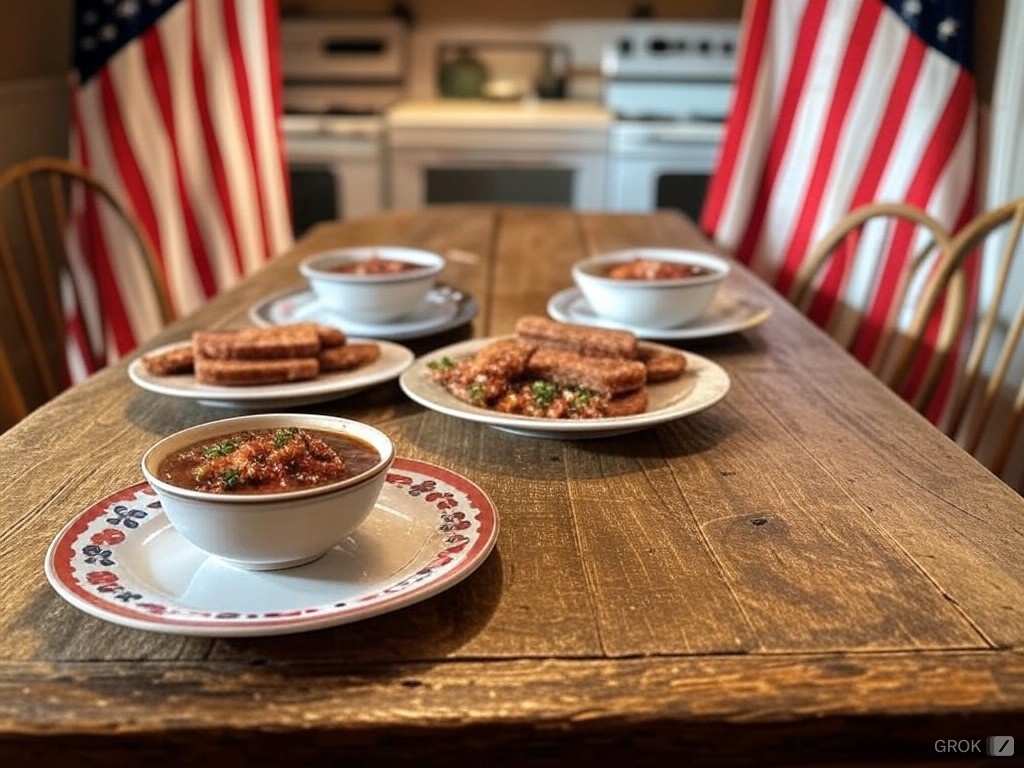
by – L. Richardson
Did you know that 90% of Americans’ food today is processed? Our forefathers would be rolling in their graves! This processed food culture, characterized by mass production, artificial ingredients, and excessive sugar and salt, starkly contrasts the wholesome, nutritious, and culturally significant traditional recipes we risk losing.
We’re not just losing our independence to big corporations and processed food—we’re surrendering the recipes that built this great nation. From Navy Bean Soup, which sustained our troops, to Spam Hash, which powered our victory in World War II, these aren’t just meals—they’re weapons in our arsenal against modern mediocrity.
Think about it: When did you last cook a meal that connected you to your American heritage? The food of our forefathers wasn’t just sustenance – it was a testament to independence, resourcefulness, and unity. These patriot recipes carried us through the Great Depression, two World Wars, and countless challenges that would make today’s snowflakes melt. Not only did they sustain us, but they also provided essential nutrients and energy, a far cry from the processed junk we consume today.
We’re here to reclaim our culinary heritage, one authentic American dish at a time. In this guide, we’ll show you how these time-tested recipes can liberate you from the chains of processed food dependency and restore the pride of cooking like a true patriot. It’s time to regain control of our kitchens and cultural heritage and feel the empowerment of cooking with tradition.
Ready to join the resistance? Let’s take back our kitchens!
The Battle Plan:
Recipes as Resistance
Listen up, patriots! What we’re about to discuss isn’t just about cooking – it’s about waging war against the destruction of our cultural heritage. Research shows that 74% of people connect with their culture through food, while 83% use it to explore new ones10. But we’re not here to explore – we’re here to preserve.
Traditional recipes aren’t just instructions on a page; they’re weapons in our arsenal against cultural erosion. During some of history’s darkest hours, like the Holocaust, imprisoned people wrote down recipes as an act of resistance, preserving their heritage even when they couldn’t cook the dishes themselves11. That’s the power of culinary tradition – a form of resistance that sustains us and preserves our cultural identity.
Here’s why these recipes are our battle plan for cultural survival:
- They preserve our authentic American identity when
- They connect us to our forefathers’ resourcefulness
- They build community through shared heritage
- They resist the tyranny of processed food dependency
Food isn’t just sustenance – it’s a living, breathing representation of cultural identity. When we cook these traditional recipes, we’re not just making dinner but participating in what experts call ‘gastronativism’ – using food as an ideological tool to define who belongs to our community. It’s a powerful form of resistance, a way to proudly showcase our cultural identity and connect with our roots.
Think about it, fellow patriots: Traditional foods are made with fresh, locally sourced ingredients, prepared using methods passed down through generations13 [23]. Every time you cook Navy Bean Soup, you make a statement instead of opening a can of processed garbage. You’re declaring independence from the globalist food system that wants to disconnect you from your heritage, and you should feel proud of the accomplishment of cooking these traditional recipes.
Studies show that food plays a crucial role in nation-building and nationalism12. That’s why controlling food has always been a means of exerting power over people11. But we’re taking that power back, one traditional recipe at a time. When we preserve these cooking methods, we’re not just keeping traditions frozen in time – we’re allowing them to evolve while maintaining their cultural significance10.
Remember, patriots: In a world where modernity often erases the nuances of cultural practices, preserving these culinary traditions becomes essential to maintaining the integrity of our local identities10. We’re not just cooking – we’re fighting for our cultural survival!
Depression-Era Navy Bean Soup –
The Soup of Solidarity
Fellow patriots, gather ’round as we unlock the secrets of a dish that carried our nation through its darkest hours. Navy bean soup isn’t just a meal – it’s a testament to American resilience served in the Senate dining room every day since the early 20th century14 [24].
Ingredients List:
Our ammunition in this culinary battle consists of the following:
- Navy Beans: These hardy warriors are native to the Americas, tough enough to endure severe temperatures15
- Ham Hocks: The backbone of flavor, a tribute to our ancestors’ resourcefulness
- Onions, Carrots, Celery: Our homeland’s harvest, standing united
- Water: Pure and simple, like our forefathers’ values
Method:
- Soak with Patience: Just as our ancestors endured through the Great Depression, these beans need time to prepare for battle. A 2-minute boil followed by an hour of soaking mirrors our forefathers’ patient resolve.
- Simmer with Resolve: Like the communities that banded together during hard times, let these ingredients unite in a slow simmer. During the Depression, soup nights became gathering points where neighbors shared what little they had17.
- Add Flavor with Frugality: Our Depression-era ancestors taught us that creativity trumps scarcity. They transformed simple ingredients into sustaining meals that could feed entire families18.
- Season with Pride: This isn’t just seasoning – it’s our heritage speaking. During WWII, when navy beans were scarce, it caused such an uproar that they were quickly restocked in the Senate kitchen14.
- Cook Until United: Let it simmer until the beans are tender and the flavors meld. This soup gets more flavorful with time, just like our American spirit19.
The Significance:
This isn’t just soup—it symbolizes American unity and resilience. When communities faced hardship, they came together over pots of bean soup, sharing stories and strength17. The simplicity of navy bean soup reflects how Americans made do with what they had, turning essential ingredients into meals that could sustain a nation18.
Remember, patriots – this soup dates back to the 1800s19, carrying the weight of American history in every spoonful. It’s not just about filling bellies; it’s about preserving the spirit of independence that courses through our veins.
WWII Spam and Potato Hash –
The Dish of Determination
Stand at attention, kitchen warriors! While our Navy Bean Soup represents the foundation of American resilience, we’re about to tackle another weapon in our patriot’s arsenal – the legendary WWII Spam Hash. During the war, this dish helped stretch a single can of Spam into five meals20, proving that American ingenuity can multiply our resources when freedom is at stake!
Ingredients List:
- 2 largish potatoes: Our homeland’s sturdy backbone
- 1/4 can of Spam: The meat that sustained our troops
- 1/2 onion: Nature’s flavor amplifier
- Butter/margarine: Our forebears’ golden resource
Method:
Dice with Efficiency: Quarter those potatoes like you’re dividing forces for battle. Boil them until firmly cooked—not too soft, Patriots! We’re building a foundation here, not mashing for surrender20.
Fry with Ferocity: Heat that pan like you’re stoking the fires of liberty! When the butter melts, add your onions and cook them until translucent—just as our ancestors’ vision for freedom was crystal clear21.
Combine with Comradeship: This is where we unite our forces. Those potato chunks and Spam warriors join forces in the pan, creating a united front of flavor. During WWII, this simple combination helped feed families when meat was strictly rationed22.
Season with Steadfastness: Stand firm with your seasonings, patriots! A dash of black pepper and a splash of Worcestershire sauce aren’t just flavors; they’re declarations of independence from bland, processed foods21.
The Moral:
When our nation faced food shortages during WWII, Spam became more than just meat in a can – a symbol of American adaptability. In 1941, when it arrived in Britain, it was warmly welcomed by a population short on beef and lacking variety21. Today, we’re not just cooking hash – we’re preserving the spirit of resourcefulness that carried us through our darkest hours.
Remember, patriots – one can of Spam stretched across five meals20 isn’t just about survival; it’s about showing the world that Americans can thrive on ingenuity and determination. When you prepare this dish, you’re not just making breakfast – you’re carrying forward a legacy of resistance against dependency and waste!
The Patriot’s Kitchen:
Beyond the Recipe
Now, true patriots, let’s arm ourselves with the knowledge that transforms these recipes from mere meals into weapons of resistance! Our emergency food supplies can last up to 25 years when properly stored, proving that preparation isn’t just about tomorrow – it’s about securing our children’s future.
Expert Tips for Patriotic Preparation
Traditional foods aren’t just about taste – they’re about taking control of your family’s destiny. Here’s what every kitchen warrior needs to know:
- Protein becomes critical during crisis situations
- Traditional foods provide superior nutritional density compared to processed alternatives2
- Home-prepared meals strengthen emotional and spiritual well-being
- Local, seasonal ingredients maximize both nutrition and independence3
- Bulk storage of legumes and grains ensures long-term sustainability3
For maximum preparedness, store your patriot provisions in heavy-duty, four-layer packaging4. Breakfast becomes your most crucial meal during emergencies4, so prioritize morning provisions in your stockpile.
Building a Self-Sufficient Community
We’re not just cooking meals; we’re creating a resistance movement. Traditional recipes do more than feed the body – they nourish the soul of our nation. Studies show that when people eat conventional foods alongside modern options, their overall nutrition improves significantly.
Consider this: A single Ready Hour 6-Month Emergency Food Supply provides 1,692 servings4, enough to sustain a Patriot through half a year of crisis. That’s not just food storage—that’s freedom from dependency.
But here’s what the globalists don’t want you to know: Traditional foods meet our culture’s specific health needs. When we gather to prepare these meals, we’re not just cooking—we’re strengthening our interpersonal relationships and mental fortitude2.
Transform your kitchen into a command center of self-reliance. Start with essential dried beans and grains3 storage, then expand to home food preservation methods. Learn to dehydrate meats and produce3 – every skill mastered is another blow against dependency on the industrial food complex.
Remember, patriots: A traditional, self-sufficient kitchen provides food and the means to create first aid remedies and household necessities6. We’re not just preserving recipes but our way of life.
Conclusion:
Eating Like Patriots
Traditional American recipes are our last defense against the processed food invasion threatening our cultural identity. These battle-tested dishes – from Navy Bean Soup to Spam Hash – represent more than mere sustenance. They embody the resourcefulness, determination, and unity that built our great nation.
Patriots who master these recipes gain freedom from corporate food dependency while preserving crucial survival skills. Each time we choose authentic American cooking over processed alternatives, we strike a blow against cultural erosion and strengthen our communities.
Remember, fellow patriots – our forefathers didn’t just survive on these recipes; they thrived. Their culinary wisdom carried us through the Great Depression, World War II, and countless challenges. We must keep these traditions alive, teaching our children the power of self-reliance through home cooking.
Let’s reclaim our kitchens as command centers of resistance. Start today by preparing these heritage recipes, storing essential ingredients, and sharing these skills with your community. Together, we’ll preserve our culinary independence and ensure America’s traditional food wisdom survives for generations.
Call to Action
Rise up, kitchen warriors! The time has come to take our culinary resistance beyond our own homes. Our research shows that community cooking events create lasting bonds that strengthen neighborhoods and preserve cultural heritage1.
Join the Patriot Pantry movement – where traditional American cooking becomes a powerful force for change. Studies reveal that communities build connections far beyond the dining table1 when they cook together. These aren’t just meal prep sessions but training grounds for cultural preservation.
Here’s how you can join the resistance:
- Host monthly “Freedom Feasts” featuring our heritage recipes
- Create neighborhood cooking circles to share traditional techniques
- Organize food preservation workshops
- Partner with local businesses for community events
- Start a recipe-sharing network in your area
The power of community cooking lies in its ability to unite citizens and transcend differences. When we gather to prepare meals like our Navy Bean Soup or Spam Hash, we’re not just cooking – we’re strengthening the fabric of our nation. Research confirms that patriotism is a binding force, uniting citizens and preserving values for future generations5.
Remember, our country was founded as an act of bold resistance9. Whenever we choose to cook together, share our heritage recipes, or teach traditional cooking methods, we exercise our right to preserve our cultural identity. Studies show that food is vital in protecting a nation’s heritage and traditions5.
Take action today! Join local cooking events where neighbors share culinary skills and stories. These gatherings aren’t just about food – they’re about forging connections that often extend beyond the dining table1. By participating, you’re preparing meals and building a network of patriots committed to preserving our culinary heritage.
The time for action is now. Our traditional recipes and cooking methods are under siege from processed food corporations and global influences. But together, we can preserve our heritage, one shared meal at a time.
References
[1] – https://netfork.eu/2023/08/29/the-joy-of-neighborhood-cooking-events/
[3] – https://www.allrecipes.com/article/self-sufficient-kitchen-guide/
[5] – https://fastercapital.com/topics/strengthening-the-bonds.html
[6] – https://becomingtraditional.com/how-to-make-a-traditional-self-sufficient-kitchen/
[7] – https://www.mcgill.ca/cine/research/food/benefits
[8] – https://mealsforunity.org/pages/meals-for-unity-community-fair
[10] – https://eastwest.eu/en/preserving-identity-through-culinary-tradition-and-tourism/
[11] – https://www.ilholocaustmuseum.org/wp-content/uploads/2021/05/Act-of-Art_Cooking_r6.pdf
[12] – https://fabioparasecoli.com/gastronativism-food-as-an-ideological-tool-in-a-globalized-world/
[13] – https://www.slofoodbank.org/food-as-culture/
[14] – https://en.wikipedia.org/wiki/Senate_bean_soup
[15] – https://navyhistory.org/2016/04/chow-navy-bean-soup/
[16] – https://www.thekitchn.com/navy-bean-soup-recipe-23218210
[17] – https://www.littlehouseliving.com/cooking-tips-from-the-great-depression.html
[19] – https://flourchild.com/navy-bean-soup-is-a-traditional-favorite/
[20] – https://the1940sexperiment.com/2009/10/04/spam-hash/
[21] – https://theunconventionalgardener.com/blog/wartime-wednesday-spam-hash/
[22] – https://historydollop.com/2022/08/13/wwii-food-rationing-eggs-in-rice-nests-cheese-muffins-1943/
[23] – Epicurean Adventures – Rentpuntacana. https://rentpuntacana.com/tag/epicurean-adventures
[24] One tradition that keeps us alive is The Martha’s Vineyard Times. https://www.mvtimes.com/2021/01/27/one-tradition-keep-alive/
2. Can You Survive Like Our Ancestors? The Ultimate Guide to Making Woolton Pie in a Globalist World December 22, 2024
by – L. Richardson
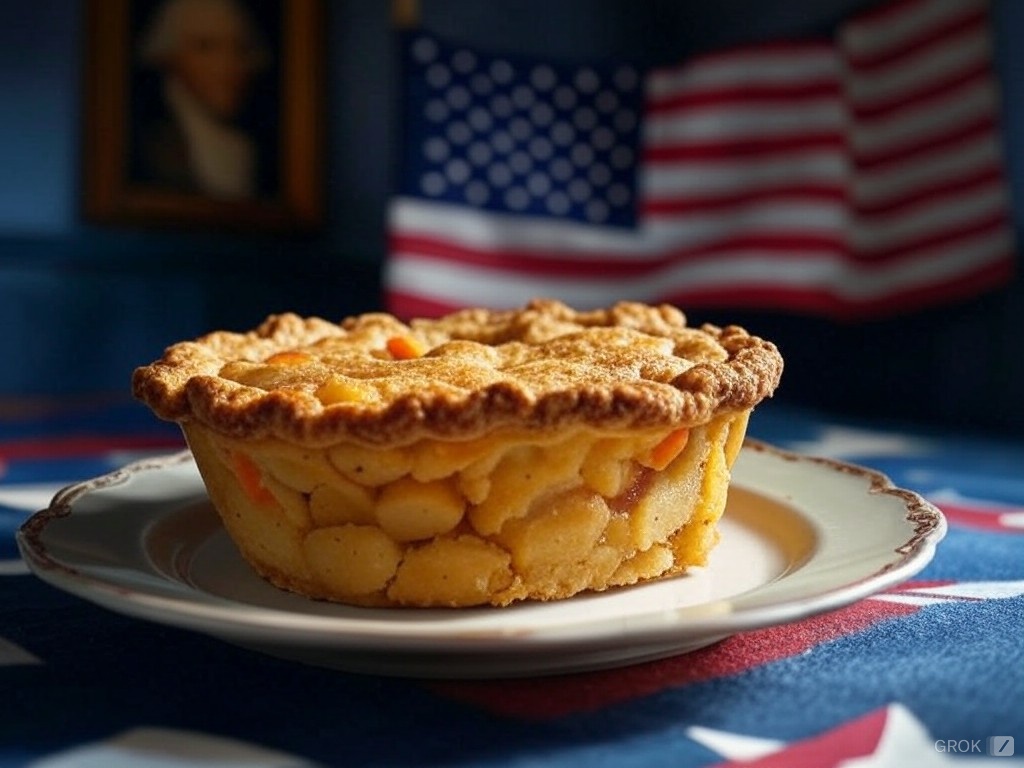
Patriots, let’s explore the art of survival cooking through the legendary Woolton Pie. This recipe represents more than just food – it symbolizes your path to culinary independence from processed foods.
The beauty of this pie lies in its adaptability. You can make it your own with these simple substitutions:
- Turnips or rutabagas work perfectly instead of potatoes
- Parsnips or sweet potatoes can replace carrots
- Any greens from your victory garden will do
- Cabbage or brussels sprouts make great alternatives to cauliflower
Your recipe for success starts here:
- Prep Your Arsenal: Cut vegetables into uniform chunks to ensure they cook evenly
- Layer with Purpose: Each vegetable creates a distinct layer of flavor
- Season with Authority: Salt and pepper transform simple ingredients into a memorable meal
- Top it Proud: The pastry creates a golden shield of homemade goodness
Adequate storage is a crucial part of survival planning. This pie can stay fresh for 3-4 days in your icebox, a testament to the wisdom of our ancestors in valuing food preservation. This tradition lives on through recipes like Woolton Pie.
The presentation speaks volumes about your dedication. Crisp, golden edges showcase your commitment to food independence. Your family’s faces will light up as you serve this hot, homemade creation.
The power of the community is amplified through shared meals. This recipe is not just for you but for future generations. Each pie you bake strengthens your independence from processed food systems, and sharing it with others strengthens the bonds of the community, making you feel connected and part of a more significant movement.
Your victory garden stands ready as your food security foundation, a source of pride and connection to your food. Homegrown vegetables elevate this pie’s flavor and represent true independence. The taste difference speaks for itself.
This pie embodies more than evening sustenance. It represents American resilience and independence, crowned with a golden crust of self-reliance. Every serving celebrates your commitment to food freedom and family traditions.
Introduction:
A Call to Arms
A shocking statistic reveals that 98% of Americans couldn’t survive a week without supermarkets today.
Our ancestors thrived without fancy grocery stores or global supply chains. Their creativity shone during World War II when they transformed simple vegetables into legendary dishes like Woolton Pie. This showed how Americans could turn hardship into strength.
Woolton Pie represents more than just food. The wartime kitchen tactics kept our grandparents strong and self-sufficient. Modern globalists prefer our dependence on processed food supply chains. We aim to revive these National Spirit Meals to demonstrate American resilience.
Are you ready to cook like your ancestors? Would you like to discover how a simple vegetable pie became a symbol of resistance against hardship? Let’s look closer at making Woolton Pie – your journey to true independence begins in the kitchen!
The Historical Context
Americans faced down hunger and emerged victorious in 1939! Britain fought more than enemies – they battled starvation. The situation looked grim:
- A staggering 70% of their cheese and sugar came from overseas7
- Nearly 80% of their fruit depended on foreign imports7
- A whopping 70% of their cereals and fats weren’t home-grown7
Lord Woolton stepped into this crisis as Minister of Food in 19408. He wasn’t a desk-bound bureaucrat but someone who witnessed hunger on Liverpool’s streets and promised it would never happen again9.
The enemy attempted to starve them by cutting supply routes from 55 million tons to 12 million tons10. Woolton responded with the National Food Campaign9. This campaign became more than survival—thriving in the face of adversity.
The Ministry of Food created a battle plan for the kitchen. They printed 50 million ration books ahead of time11. This showed remarkable preparation. The rationing system ensured fair distribution for everyone12.
Leadership showed remarkable results:
- Free school meals for 650,000 children
- British Restaurants served affordable, nutritious meals9
- A nationwide network of 1,000+ local offices8
- Emergency food stocks remained protected from bombing raids8
The Woolton Pie emerged as this food fight’s masterpiece. François Latry, the Savoy Hotel’s head chef in London13, created more than a vegetable pie – he made a symbol of defiance. Simple vegetables transformed into a feast that answered their attempts at starvation.
Modern elites push processed foods, yet our ancestors’ response to food shortages offers valuable lessons. They showed creativity and resilience instead of complaining about ingredient limitations.
National Spirit Meals are making a comeback today because they matter. Making a Woolton Pie represents more than cooking in this age of supply chain dependence—it becomes an act of patriotic resistance.
Ingredients:
The Arsenal of Nutrition
Patriots, gather ’round! Let’s discuss your nutritional ammunition—the ingredients that’ll make your Woolton Pie a fortress of independence. This battle plan for food freedom goes beyond a simple shopping list.
Your arsenal of ingredients packs real fighting power:
- Potatoes – your foundation of strength14
- Cauliflower (1 pound) – your white shield of nutrition
- Carrots (1 pound) – your orange warriors
- Parsnips or swedes (1 pound) – your root soldiers
- Spring onions – your flavor fighters
- Rolled oats – your secret weapon
- Wholemeal flour – your crust of independence
These potatoes serve as your primary line of defense. Research shows our children get more Vitamin C, B1, B6, Folate, Iron, Magnesium, and Potassium from potatoes than all but one of these “superfoods” – beetroot, bananas, nuts, broccoli, and avocado combined14.
The globalists don’t want you to know this truth: vegetables remained unrated during World War 15. Our ancestors understood the power of growing their own food. Your victory garden can produce every ingredient in this pie, freeing you from their supply chains.
Woolton Pie showcases American ingenuity through its flexibility. Our forebears adapted to seasonal vegetables15, and this spirit of resistance shines through their creativity with herbs and seasonings15.
Your pastry shield needs:
Adults who take potatoes instead of processed carbohydrates show 10% higher essential nutrients14. This nutrition serves as ammunition against dependency.
This recipe represents more than just cooking instructions. It symbolizes our path to food independence, one vegetable at a time. Each ingredient declares against those who profit from our dependence on processed food systems.
Method:
The Battle Plan
Kitchen warriors, your ingredients await! The battle plan begins. This tactical food preparation will make your ancestors proud!
The strategy begins with your first mission: pre-heat your oven to 400°F (200°C). This temperature sets the stage for a victorious cooking experience!
Your step-by-step battle plan:
- Chop your vegetables into uniform chunks – precision leads to victory!
- Place them in your largest pot with water covering three-quarters1
- Add your oats and seasonings, then bring to a simmer
- Cook until tender and water absorbs1
- Transfer to your pie dish and sprinkle with parsley
The pastry shield comes next! Mix your flour, baking powder, and salt in a large bowl16 [21]. Your fingers should work that margarine-like freedom depends on every fold. The mashed potatoes create a sturdy dough16.
The path to victory demands:
- Your dough must rest in the icebox for at least an hour16
- Roll it out decisively – you retain control
- Cover your vegetable fortress and brush with milk
- Bake for 30 minutes until golden-brown16
This dish is evidence of American ingenuity! The heavenly aroma filling your kitchen isn’t just dinner—it’s the smell of independence!
Pro-Tip for Victory: Vegetables sticking to the pot mean one thing – stir more often17. Nothing goes to waste in this kitchen!
The timer’s ring signals more than a finished pie. You’ve created a shield against food dependency that feeds your family for days. Serve it with your favorite greens and gravy16. This meal becomes your declaration of food independence!
The Symbolism of Woolton Pie
Fellow freedom fighters, let me share a more profound truth about Woolton Pie that you won’t find in history books. This isn’t just some wartime recipe – it’s a battle cry baked in pastry!
François Latry, the head chef at London’s prestigious Savoy Hotel13, created this pie that became more than a meal. The Savoy’s menu proudly featured as ‘Le Lord Woolton Pie’13, proving that even upscale establishments recognized actual survival food.
This pie stands as a symbol of defiance because:
- It proved we could feed ourselves without meat13
- It showed how creativity wins against lack every time
- It united communities through shared resourcefulness
- It showed that good nutrition doesn’t need fancy ingredients
The globalists want to hide how Lord Woolton himself ate this pie at public luncheons under camera flashes to prove its worth13. Leaders should act this way – not hide behind fancy meals while people struggle!
Cities transformed their precious lawn space into vegetable plots at the time – even the royal family replaced their fancy gardens with onions18. We need this spirit today! People didn’t wait for government handouts when food supplies ran low – they grew their victory gardens.
Some folks back then weren’t fans of this meatless wonder13. But here’s what separates warriors from whiners: true patriots adapt and overcome! Our ancestors got creative when fresh eggs were limited to one per person18, and butter was nowhere near enough at just 2 ounces weekly18.
Modern society complains about their favorite brand being out of stock. At the same time, our forebears turned common vegetables into meals that kept a nation strong. They didn’t have fancy grocery stores or global supply chains—they had grit and determination.
This pie embodies everything the globalists fear: independence from their food control system, community resilience, and thriving on local resources. People formed networks and shared resources to keep their communities fed when fruit was hard to find in cities18.
We’re bringing back Woolton Pie today to reclaim our food independence, one vegetable pie at a time. Each pie you make carries forward a legacy of resistance against those who want us dependent on their processed food system.
Cooking Tips for the Modern Patriot
Rise up in your kitchen, freedom fighters! After learning the simple techniques, you’ll be ready to improve your Woolton Pie skills with time-tested tips that would make your ancestors proud!
The filling deserves our first attention. The original recipe suggests simple vegetables, but modern patriots have found that adding a splash of stock or even a touch of cream can revolutionize this modest pie into a feast3. Limited fancy ingredients shouldn’t worry you! A tablespoon of rolled oats thickens that filling perfectly15.
These tactical advantages will maximize flavor:
- Add fresh parsley to burst with homegrown flavor15
- Use stock powder as a substitute for fresh stock15
- Season liberally with salt and pepper before the pie dish stage15
- Brush the top with milk to achieve that golden-brown finish of freedom15 [22]
Food independence enthusiasts should know about storage strategy. This pie stays fresh for several days15, which makes it ideal for weekly meal prep. You’re not just preparing dinner – you’re building your food security arsenal!
The secret globalists hide from you is that this pie adapts easily. Our ancestors got creative during wartime onion shortages. You can follow their lead! Modern patriots add white wine and cream to improve the flavors14, though our ancestors managed fine without these luxurious additions.
Temperature plays a vital role. Your oven should be at 356 degrees, exactly 15. This precision ensures victory over hunger! Note that a teaspoon of margarine works magic with bland vegetables15.
Modern homesteaders should think about growing their ingredients. Your victory garden can supply every component of this pie, freeing you from the global food supply chain. This embodies tactical food sovereignty!
This pie represents more than survival – it symbolizes triumph over adversity. Some might call it bland3, but we know better. These tactical improvements help you make history while building your fortress of food independence, one pie at a time!
Serving and Presentation
Ready to serve up some freedom? Let me show you how true Americans present their Woolton Pie with pride and purpose!
Serving this dish means more than putting food on a plate – it represents a piece of history that feeds eight hungry patriots1. The golden-brown crust emerging from your oven gives you two winning options:
- Serve it piping hot with thick, homemade gravy made from your vegetable cooking water
- Present it cold – because true warriors know how to make their provisions last19
Your tactical serving approach should include the following:
- Fresh salad leaves – your green foundation of freedom
- Crisp cucumber slices – your victory garden’s crunch
- Celery stalks – standing tall and proud
- Freshly grated carrots – your resistance’s colors19
Pro Tip for Patriots: This pie delivers both satisfaction and savings19. The globalists want us to be dependent on their expensive processed foods. Still, we’ll show them how true Americans feed their families!
Our heritage deserves more than fancy plating – it deserves respect. Each serving becomes a symbol of defiance against food dependency. Make those portions generous and proud. Your family’s eyes will light up with freedom’s fire!
True patriots’ kitchens hold a secret the food control system wants to hide: this pie adapts to any situation. Many warriors serve it cottage-pie style with mashed potato topping1, proving American ingenuity’s boundless nature!
Here’s a battle-tested truth: critics might dismiss it as “simple waste not want not food”3, but we understand better. This strategic sustenance has kept families strong through tough times. Each serving defies those who prefer our dependence on their processed food system!
The Community Call: As our ancestors shared their bounty, your neighbors deserve to taste this pie. Woolton Pie nourishes more than bodies – it feeds American resilience. Place it at your next community gathering’s center and watch it unite people against those who prefer division.
Note that each pie serving represents more than sustenance. It delivers independence, crowned with defiance’s golden crust. That’s something worth gathering around!
Cultural Legacy and Lessons
You won’t find this fascinating history in textbooks—it was the real victory of wartime food tactics! Britain’s food shortages led to something amazing: child mortality rates dropped, and tooth decay fell by 61%. Yes, you read that right—less food improves people’s health!
This period taught us much more than survival skills. Communities united in unprecedented ways. Americans built over 3,800 community canneries2. These weren’t just places to cook – they became fortresses of freedom where neighbors taught each other food preservation techniques.
Our ancestors learned four crucial lessons during these challenging times:
- Food storage creates space to store items you can’t produce yourself20
- Homegrown food gives you independence from global supply chains
- Community canneries became knowledge-sharing hubs2
- Victory gardens symbolized people taking control of their lives
The health improvements spoke for themselves. Modern “experts” promote processed foods, but look what simple, homegrown food did:
- Poor people ate better than ever before
- Communities grew stronger by sharing resources
- People learned food preservation skills
- Families became self-sufficient
The movement to keep Victory Gardens going continued after World War 2. Our ancestors understood a truth that globalists hide—growing your own food means freedom!
The Women’s Institutes produced an incredible 22 million knitted garments for the Red Cross – averaging 67 items per member5. This showed more than warmth; it demonstrated the American spirit and community support.
The Ministry of Food created a battle plan for survival. They distributed millions of ration books to ensure everyone got their fair share, not to control people.
Patriots, we’ve become too comfortable. People complain about missing their favorite brands while our ancestors turned lack into strength. They didn’t need fancy stores or global supply chains – just grit and determination.
Here’s the truth: communities that shared their harvests and knowledge didn’t just get by – they flourished. This embodies the true legacy of Woolton Pie and wartime cooking. More than just food, it represents the spirit of independence that made America great!
Call to Action
Kitchen warriors, the time to act is now! Comments and stories from fellow patriots show that Woolton Pie isn’t just surviving – it’s thriving in American kitchens1. Your families are finding what our ancestors knew: these pies offer versatility, sustenance, and nutrition that builds independence.
This is your mission if you’re ready to accept it. We’re creating a movement, one pie at a time:
- Become skilled at the Recipe: Practice until you can make it blindfolded
- Share Your Knowledge: Teach three neighbors this week
- Start Your Victory Garden: Each vegetable you grow strikes against dependency
- Host a Cooking Class: Spread the spirit of resistance
- Record Your Progress: Share your wins and lessons learned
The pie’s magic lies in bringing families together nationwide. Patriots report their children learn valuable survival skills while helping in the kitchen1. While globalists push their processed poison, we raise a generation that understands real food!
You can spread the revolution by:
- Starting a neighborhood cooking circle
- Sharing extra vegetables with neighbors
- Creating a local recipe exchange network
- Organizing community canning sessions
- Preserving family cooking traditions
Note that measurements might vary by region, but Woolton Pie adapts to your ingredients! Some patriots create their own versions, which proves American ingenuity knows no bounds.
The Community Response is Growing! Patriots report their families embrace these wartime recipes6. They eat better and build vital survival skills that globalists want to hide from you!
Making the pie is just the beginning. Future generations need this knowledge. Start your recipe book, document your changes, and teach these skills to your children. This goes beyond food – it’s about maintaining our independence.
Our community’s feedback reveals that people are waking up! They are learning valuable tips, sharing techniques, and building networks of food independence. Each comment, recipe, and modified ingredient list strikes against the processed food empire.
Making Woolton Pie means joining a movement. You stand with patriots who reject dependence on global supply chains. This is your declaration of food independence!
Take pride in what you create, document your progress, and celebrate your achievements4. Share photos, spread knowledge, and help build our community of resilient cooks. Teaching this recipe to others passes the torch of American self-reliance!
The moment has arrived. Step into your kitchen, start cooking, and join patriots who reclaim their food independence, one Woolton Pie at a time!
Conclusion:
Eating Like a Warrior
This Woolton Pie recipe is more than instructions – it’s your path to food independence! The dish shows evidence of American resilience against processed food dependency.
Creating this pie isn’t about following a recipe. Each time you make it, your kitchen becomes a center of independence. The vegetables become your resources; every bite makes your family more self-reliant.
Our ancestors didn’t just survive with these recipes – they thrived! Modern society complains about missing ingredients, but we understand better. Absolute freedom begins with self-sufficiency, growing food, and teaching our neighbors.
Note that each vegetable you grow, pie you bake, and skill you teach your children reduces dependence on global food systems. This goes beyond cooking – it represents independence that starts in your kitchen and reaches your entire community.
Keep going, home cooks! Let Woolton Pie symbolize your independence. Teach others, share your knowledge, and watch your family’s faces light up with pride. Cooking like our ancestors doesn’t just nourish our bodies – it fuels the unstoppable American spirit!
References
[1] – https://the1940sexperiment.com/2016/03/13/the-original-lord-woolton-pie-recipe-no-151/
[2] – https://www.nps.gov/articles/000/canning-and-food-preservation-on-the-world-war-ii-home-front.htm
[3] – https://thepastisaforeignpantry.com/2020/01/11/lord-wooltons-pie/
[4] – https://www.youtube.com/watch?v=QJjjdrUUm7c
[5] – https://thewartimekitchen.com/?p=465
[6] – https://www.youtube.com/watch?v=bwwMY3ggNeI
[7] – https://en.wikipedia.org/wiki/Rationing_in_the_United_Kingdom
[8] – https://en.wikipedia.org/wiki/Frederick_Marquis,_1st_Earl_of_Woolton
[9] – https://www.historic-uk.com/HistoryUK/HistoryofBritain/Lord-Woolton-Feeding-Wartime-Britain/
[10] – https://rss.onlinelibrary.wiley.com/doi/full/10.1111/j.1740-9713.2017.01036.x
[11] – https://www.history.ox.ac.uk/::ognode-637356::/files/download-resource-printable-pdf-11
[12] – https://www.iwm.org.uk/history/what-you-need-to-know-about-rationing-in-the-second-world-war
[13] – https://en.wikipedia.org/wiki/Woolton_pie
[14] – https://www.thecrazykitchen.co.uk/2015/05/wartime-woolton-pie-with-modern-twist.html
[15] – http://apeekintothepantry.blogspot.com/2016/03/emilys-woolton-pie.html
[16] – https://www.bbc.co.uk/food/recipes/woolton_pie_98706
[17] – https://www.food.com/recipe/woolton-pie-463606
[18] – https://www.iwm.org.uk/history/dan-lepards-rationing-recipes
[19] – https://www.farmersgirlkitchen.co.uk/the-woolton-pizza-pie-for-ve-day-70/
[20] – https://thesurvivalmom.com/food-storage-lessons-learned/
[21] – Ask, and ye shall receive: | The LawDog Files. https://thelawdogfiles.com/2006/09/ask-and-ye-shall-receive-2.html
[22] – Coronation Chicken Pie – The Quirino Kitchen. https://thequirinokitchen.com/coronation-chicken-pie/
[23] – Hofman-Bergholm, M. (2022). Storytelling as an Educational Tool in Sustainable Education. Sustainability, 14(5), 2946.
1. Can You Beat the Globalists with Patriot Ration Cooking? December 22, 2024

by – L. Richardson
Did you know that during World War II, Americans survived on just 28 ounces of meat and 4 ounces of cheese per week? With grocery prices skyrocketing 40% since 2021, we’re facing a different kind of war – an economic siege on our food independence, where the cost of essential food items is becoming increasingly unaffordable.
Like our grandparents who turned victory gardens (small home gardens planted during wartime to supplement food rations) into weapons of resistance during the Great Depression and World War II, we’re fighting back – one meal at a time.
Think you can’t feed your family on a budget while giving the finger to the global food system? Think again. Our ancestors didn’t just survive rationing – they thrived through it, creating meals that became symbols of American resilience and ingenuity.
This guide empowers you with battle-tested strategies from the Depression era and WWII, updated for today’s economic warfare. From victory garden recipes to preservation techniques that would make your grandmother proud, we’re about to turn your kitchen into a fortress of food independence.
Ready to join the resistance? Let’s cook up some freedom!
- The Patriot’s Pantry – Understanding Rationing
Listen up, patriots! While our grandparents faced the Office of Price Administration’s iron grip during World War II, we’re battling a different rationing today. The government then controlled everything from sugar to shoes through 5,600 local rationing boards staffed by over 100,000 citizen volunteers19.
Our ancestors didn’t just survive; they turned rationing into art. The system was brilliantly simple yet effective: every American received ration books with stamps worth specific points19. A pound of bacon? That’ll be 30 cents plus seven ration points19. The globalists think they invented control systems, but they’re just copying from an old playbook!
Today’s economic battlefield looks different, but the psychology of scarcity remains the same. When resources get tight, our minds tunnel-vision on immediate needs, often at the expense of long-term planning20 [38]. The elites know this – they’re counting on it! But here’s what they don’t want you to know:
- Wartime Rationing Controls:
But here’s the real kicker, fellow patriots – when Americans faced scarcity during WWII, they didn’t break – they bonded. Communities came together, sharing resources and knowledge. The psychology of scarcity didn’t defeat them; it made them stronger22. You’re not alone in this fight for food independence.
Today, we’re not fighting against ration books – we’re fighting against artificial scarcity created by those who want to control our food supply. When resources feel limited, our cognitive bandwidth gets hijacked20. The elites know this playbook well – they’re using the same psychological warfare that’s been deployed for centuries!
But we’ve got something they don’t expect: the wisdom of our ancestors combined with modern American ingenuity. Like how 25% of Americans found creative ways around rationing restrictions during WWII23, we’re finding our paths to food independence today. Every meal cooked from scratch, every garden planted, every skill learned is a direct hit against their control system.
Remember, patriots – when they try to control the food supply, they’re not just attacking our pantries; they’re attacking our freedom. But just like our grandparents, we’ll turn their tactics against them, building stronger communities and more resilient families.
Recipes of Resistance –
WW2 Ration Meals
Fellow freedom fighters, let me share a secret weapon from our grandparents’ arsenal—the recipes that helped win World War II! In 1943, over 20 million victory gardens produced one-third of all American produce24 [39]. That’s right, patriots—our ancestors knew that food independence starts in your backyard!
Victory Garden Veggies:
Recipes for maximizing garden produce, linking to self-sufficiency
The cornerstone of our resistance is the Tasty Vegetable Loaf, built straight from the kitchens in 1943. This isn’t just any meatless dish – it’s a middle finger to dependency, using whatever vegetables you’ve got. The recipe allows you to swap in any leftover vegetables – from celery to beets – making it impossible for the food controllers to dictate what goes on your plate25.
Meatless Mondays:
Adapting WW2 meat ration recipes, highlighting the ‘make do’ spirit
Our ancestors didn’t bow down when meat was strictly rationed – they got creative! The Kitchen Sink Soup symbolized resistance, cooking vegetables in their broth to retain maximum nutrients26. Here’s how we stick it to the system:
- Use every scrap of produce
- Cook vegetables in their own water
- Add fresh herbs for flavor independence
- Preserve nutrients as an act of defiance
Ration Cakes and Cookies:
Desserts from the era that symbolize celebration amidst scarcity
Patriots, even desserts, became weapons of resistance! When sugar was rationed (the first Food rationed in 1941 and the last to be freed in 1947)27, Americans created the Wartime Ration Cookie. These aren’t your modern sugar-bomb cookies—they’re softer, less sweet, and pack a powerful message of independence27.
The globalists think they can control us through the food supply, but we’ve got news for them—these recipes aren’t just about survival; they’re about thriving on our own terms. Every vegetable you grow and every meal you cook from scratch is a direct hit against their control system.
Remember, patriots: When they try to control Food, we maintain victory gardens. When they ration meat, we master the art of substitution. When they restrict sugar, we bake our way to freedom!
Depression Era Dishes –
Cooking on a Dime
Patriots, gather ’round! Today, we’re diving into the culinary trenches of the Great Depression, where our ancestors turned empty cupboards into feasts of defiance. These aren’t just recipes – they’re battle plans for food independence!
Hobo Stew:
A recipe that uses leftovers, symbolizing resourcefulness in the face of economic hardship
During the Great Depression, Hobo Stew became the ultimate symbol of American ingenuity. This wasn’t just any meal – it was a community effort where everyone contributed what they could scrounge up28. The beauty of this resistance recipe? It’s never the same twice!
Here’s your battle plan for Hobo Stew:
- Start with whatever meat scraps you’ve got
- Add potatoes, onions, and day-old bread
- Throw in any vegetables you can find
- Let it simmer until everything melds together
Depression Breads:
Baking without the luxury of modern ingredients
Want to really stick it to the system? Try the legendary Depression-Era Peanut Butter Bread. This 1932 resistance warrior requires no yeast, eggs, or oil29. That’s right, patriots – just six simple ingredients that’ll last years in your pantry29. It’s not just bread; it’s a declaration of independence from the global food supply chain!
One-Pot Wonders:
Meals that save on energy and ingredients
Tell you about “Goop” – the one-pot miracle that fed four families with just two servings of ground beef30. This isn’t your fancy globalist cuisine; it’s pure American resourcefulness!
The secret weapon? Mushrooms bulk up the meal and add that meaty texture without burning through your precious meat supply30. You can customize it with:
- Eggplant
- Zucchini
- Carrots
- Any vegetables you’ve got hiding in your victory garden
Remember, patriots, these aren’t just recipes – they’re tactical maneuvers in the war for food sovereignty. Every leftover transformation, every ingredient stretched, is a victory against those who’d have us dependent on their system. When they try to control our food supply, we answer with the wisdom of our Depression-era ancestors!
Modern Application –
Rationing for Today
Wake up, fellow food warriors! While our ancestors fought rationing with ration books, we fight a different battle today. The global food system raked in $6.10 billion in local food sales31, but that’s just the beginning of our resistance movement!
Substitute and Survive:
Modern equivalents for rationed items, encouraging creativity and independence
The globalists want you dependent on their supply chains, but we have other plans. Here’s your battle strategy for food independence:
- Replace processed foods with home-preserved alternatives
- Swap imported produce for victory garden harvests
- Trade commercial meat for local, community-sourced protein
- Build relationships with local farmers – 44% of US schools already have31
Community and Barter:
How to build a local food network akin to past communal support systems
Listen up, patriots – our strength lies in unity! Local food systems aren’t just markets; they’re battlegrounds for independence. We’re seeing a surge in community-based resistance through:
- Food Hubs – Centralized operations coordinating local producers
- Community Supported Agriculture (CSA) – Direct farmer-to-patriot connections
- Farmers’ Markets – Face-to-face trading posts
- Farm-to-Institution Programs – Taking back our schools and hospitals31
Preservation Techniques:
Canning, drying, and other methods to extend the life of your pantry
The globalists don’t want you to know this, but vacuum-microwave drying is revolutionizing food preservation32. This isn’t your grandmother’s canning technique—it’s a high-tech weapon in our arsenal! Food preserved this way maintains more nutrients and flavor while cooking at just 30 degrees Celsius32.
Remember, patriots, every jar you can, every vegetable you dehydrate, is a direct hit against dependency. Our ancestors used home canning during World Wars I and II to supplement their supplies33. They even received extra sugar rations for canning – that’s how vital this skill was to national security!
The food system should prioritize markets that offer fresh plant and animal foods locally every single day34. We’re not just cooking meals but building a resistance network that keeps our food dollars in our communities31. When they try to control our food supply, we respond with an army of local farmers, producers, and patriots working together to feed America!
The Kitchen as a Battlefield
Stand tall in your kitchen, fellow patriots! This isn’t just any room in your house – it’s your personal battleground against the processed food empire. Research shows that families cooking at home five or more times per week consume significantly more fruits and vegetables than those dependent on pre-made meals35.
Every Meal a Victory:
How each meal cooked from scratch is a strike against dependency on global markets
Every time you fire up that stove, you launch a direct assault on Big Food’s control system. The evidence is clear: home-cooked meals are twice as likely to include vegetables and contain 30% more fruit than pre-prepared options35. That’s not just dinner – that’s a declaration of independence!
Cooking with Purpose:
Infuse every dish with the spirit of American resilience and defiance.
Here’s your battle plan for food sovereignty:
- Replace ultra-processed foods with home-cooked alternatives
- Take control of your ingredients – studies show home cooking gives you power over what goes into your meals35
- Build your cooking skills – it’s your weapon against food dependency
- Create meal plans that maximize nutrition and minimize waste
Nutritional Warfare:
How traditional, simple meals can be healthier than modern processed foods
The globalists don’t want you to know this, but ultra-processed foods are packed with:
- Modified starches and hydrogenated oils
- Artificial sweeteners and flavor enhancers
- Bulking agents and colorants36
Meanwhile, our research shows that fully home-cooked meals are significantly more likely to include essential nutrients35. When families report limited time for cooking, the enemy wins 35. But here’s the truth they’re hiding: healthy outcomes come from collaboration between families and communities, identifying barriers, and generating solutions for increased home cooking35.
Remember, patriots – every meal you cook from scratch is a victory in the war for food independence. Globalists can control the supply chains but can’t control what happens in your kitchen. Our studies prove that even partly home-cooked meals pack more nutritional punch than their processed counterparts35. That’s not just cooking – that’s resistance!
Tools of the Trade –
Gear for the Modern Patriot Cook
Attention, kitchen warriors! Your tools are your weapons in this fight for food independence. Like our ancestors, who maintained their equipment through the Great Depression, we’re building our arsenal with tried-and-true classics and strategic modern additions.
Essential Kitchen Tools:
List tools that are indispensable for ration cooking, from vintage to modern
Your battle-ready kitchen needs these freedom-fighting essentials:
- High-Quality Knives: A sharp, well-maintained knife set is your first line of defense37
- Wooden Cutting Boards: These sturdy soldiers keep your blades sharp longer and require simple maintenance with mineral oil37
- Cast Iron Cookware: The ultimate symbol of American cooking resilience
- Mason Jars: Perfect for preservation and storage, these versatile vessels can be repurposed for lighting, storage, and decoration4
- Measuring Tools: Digital scales and measuring spoons ensure precision in your resistance recipes2
- Durable Mixing Bowls: Essential for preparation tasks, maintained with gentle detergents2
DIY and Repair:
Encourage resourcefulness in maintaining or repurposing kitchen equipment.
Patriots, listen up! The globalists want you to constantly buy new equipment, but we’re fighting back with maintenance and ingenuity. Here’s how we’re keeping our arsenal battle-ready:
- Daily Maintenance: Clean equipment immediately after use with gentle detergents and soft sponges2
- Regular Inspections: Check for early warning signs of wear and tear10
- Proper Storage: Keep tools organized and protected from moisture
- Knowledge is Power: Keep those user manuals handy for troubleshooting2
Remember, every piece of equipment you maintain is a blow against planned obsolescence. We’re seeing Patriots transform old pots into perfect planters for victory gardens4 and turn vintage utensils into practical storage solutions4. Even old restaurant equipment finds new life in our resistance kitchens4.
The globalists might control the supply chains, but they can’t control what happens in our kitchens. By maintaining and repurposing our tools, we’re not just saving money but declaring our independence from their throwaway culture. Regular training sessions ensure every family member knows proper usage and care10, creating a generational knowledge transfer that strengthens our resistance movement.
When they try to make us dependent on their disposable products, we respond with American ingenuity and self-reliance. Every tool maintained, and every piece of equipment repaired is another victory in our fight for food sovereignty!
The Art of Foraging –
Nature’s Ration System
Nature’s pantry is calling, fellow freedom fighters! While the globalists try to trap us in their grocery store maze, we’re taking our food sovereignty straight to the source. Like our ancestors who turned victory gardens into weapons of resistance, we’re expanding our battlefield beyond the backyard.
Foraging Basics:
Introduce safe, local foraging as an extension of the victory garden concept.
The art of foraging isn’t just about picking berries – it’s about reclaiming our birthright! Studies show that 40% of fresh vegetables were grown at home during WWII6. Today, we’re taking that spirit beyond our garden fences. Here are your five battle-tested rules for safe foraging:
- Positive Identification: Never touch or consume unless you’re 100% certain
- Location Intelligence: Scout clean areas away from roads and chemical warfare zones
- Sustainable Harvesting: Take no more than 5% from any one area
- Respect Territory: Know local regulations and private property boundaries
- Clean Operations: Use breathable containers to prevent spoilage
Seasonal Eating:
How to adapt meals based on what nature provides seasonally
Patriots, listen up! Research proves that seasonal foods pack more nutrients and flavor than store-bought counterparts11. When we align with nature’s cycles, we’re not just eating better—this strikes at the heart of the global food control system.
Your seasonal resistance arsenal includes:
- Spring Warriors: Watercress, dandelions, and wild strawberries3
- Summer Soldiers: Elderflowers, berries, and mint
- Fall Freedom Fighters: Nuts, mushrooms, and wild herbs
- Winter Warriors: Preserved bounty from previous seasons
Studies reveal that spinach loses two-thirds of its vitamin C within a week of harvest5. But when you forage your own, you’re getting maximum nutritional firepower! Remember, seasonal eating isn’t just about survival – it’s about thriving on your own terms. At the same time, the globalists scramble to maintain their control grid.
Like our victory garden ancestors who produced 5.2 million garden plots in 19186, we’re creating a new generation of food independence warriors. Every wild plant identified and every seasonal meal prepared is another blow against dependency on their system!
Community and Culture –
Keeping the Patriotic Flame Alive
Brothers and sisters in the resistance, gather your communities close! The globalists may control the supply chains, but they can’t break the bonds of American food traditions that bind us. Research shows that shared meals create healthier communities and strengthen our social fabric12.
Food Traditions:
How to keep or revive food traditions that celebrate American heritage
Our mission isn’t just about feeding ourselves—it’s about preserving the soul of American cooking. Our nation boasted over 1,000 unique varieties of American seeds, breeds, fruits, and fish13 a century ago. Today, we’re fighting to keep these treasures alive through culinary conservation13.
Here’s how we’re preserving our heritage while striking back at the food control system:
- Host regular “Pizza Church” gatherings where everyone brings ingredients to share
- Create “one table, one conversation” policies to strengthen community bonds7
- Document and share family recipes passed down through generations
- Support local farmers preserving heritage varieties
Community Cook-Offs:
Ideas for events that strengthen local bonds through shared meals and recipes
Patriots, listen up! Community cook-offs aren’t just about Food – they’re about building an army of self-reliant Americans. In places like Silverton, Oregon, community meals serve 450 people per week7, creating networks of resistance against food dependency.
Your battle plan for organizing a patriotic cook-off:
- Recruit local celebrity chefs and restaurant teams14
- Create clear competition rules and categories
- Select judges who understand our mission
- Include entertainment – local bands and patriotic music
- Add fundraising elements to support the cause14
The globalists fear nothing more than substantial, connected communities. That’s why shared mealtimes boost teamwork and collaboration12. When we break bread together, we’re not just eating but building the foundation of resistance.
Remember, every traditional recipe preserved and every community meal shared is a direct hit against their control system. In Minneapolis, patriots like Chef Sean Sherman are already fighting back, decolonizing our dining experience by sourcing ingredients from Indigenous producers15. This isn’t just about Food – it’s about reclaiming our cultural heritage, one meal at a time.
“The true intention of gathering is a community”7. When they try to divide us through processed Food and drive-thrus, we respond by coming together, sharing our heritage, and keeping the flames of American culinary tradition alive!
Conclusion –
The Call to Culinary Arms
Patriots, our kitchens stand as the last line of defense against those who would control our food supply. Through every recipe preserved, every skill mastered, and every meal shared, we’re not just cooking—we’re fighting back against dependency and control.
Our grandparents didn’t just survive rationing – they created a legacy of resilience that flows through our veins today. Their victory gardens, community networks, and resourceful cooking techniques weren’t just survival strategies – they were weapons of resistance we’re rekindling in our modern battle for food sovereignty.
Remember, fellow freedom fighters—each home-cooked meal blows against the processed food empire. Every vegetable is grown, every recipe passed down, and every community gathering strengthens our ranks. Globalists may control the supply chains but can’t control what happens in our kitchens, gardens, or communities.
Stand tall, cook proud, and keep that patriot flame burning bright. Together, we’re not just preserving our food independence – we’re cooking up a revolution, one meal at a time. Now get in that kitchen and show them what American resilience tastes like!
Bonus Section:
Actionable Steps
Ready for action, kitchen commandos? Here’s your tactical playbook for taking the fight straight to the globalists’ doorstep. These aren’t just suggestions – your marching orders for food independence!
Start Your Victory Garden
Like our ancestors who produced 40% of America’s fresh vegetables during WWII16, your backyard will become a battlefield for food sovereignty. Start your resistance garden with these proven tactics:
- Choose a sunny, level area for maximum yield
- Improve the soil with organic compost
- Select vegetables your family actually eats
- Plant in stages for continuous harvests
- Save seeds to maintain independence
Join or Form a Food Co-op
Strike at the heart of the global food system by building local supply lines. Food co-ops aren’t just stores but command centers for community resistance. Studies show successful co-ops start with strong community engagement and clear organizational systems17.
Learn One New Preservation Skill Each Month
Patriots, your kitchen arsenal isn’t complete without preservation skills. During WWII, extra sugar rations were explicitly given for home canning1. Master these freedom-fighting techniques:
- Water bath canning for high-acid foods
- Pressure canning for low-acid vegetables
- Dehydrating fruits and herbs
- Fermentation for long-term storage
- Root cellaring techniques
Host a Ration Recipe Swap Meet
It’s time to mobilize your local resistance! Recipe swap meets aren’t just about sharing Food—they’re about building an army of self-reliant patriots. Research shows these gatherings strengthen community bonds and preserve cultural heritage8.
For maximum impact, organize your swap meet with clear categories, voting systems, and prizes for the most resourceful recipes8. Remember to encourage pre-swap communication where patriots can list what they have and need18.
This isn’t just about cooking anymore, fellow freedom fighters. Every seed planted, every skill learned, every community connection made is another blow against dependency. They might control the supermarkets, but they can’t control what happens in our backyards, kitchens, and communities!
Disclaimer:
Acknowledge the dramatization for effect but assure the practical value of the content provided.
Hold the line, truth seekers! Before we wrap up this culinary battle plan, let’s get honest about something. While we’ve cranked up the drama to eleven (because that’s how we roll), there’s rock-solid practical value behind every word in this guide.
Look, Patriots—meal Ready-to-Eat (MRE) options have gained serious attention for good reason9. We’re not just throwing around fancy words here; we’re talking about real emergency preparedness that could save your family when the supply chains crumble.
Here’s what you need to know about the practical muscle behind our theatrical flair:
- These preservation techniques provide genuine sustenance during unpredictable situations
- The storage methods we’ve discussed are scientifically proven for long-term sustainability9
- Our nutrition strategies align with modern dietary requirements while maintaining independence9
- The community-building aspects create genuine support networks for tough times
The Truth Behind the Drama While we might paint pictures of globalist conspiracies, the core message remains solid as American bedrock: being prepared isn’t paranoid – it’s patriotic. These MREs and preservation techniques have evolved significantly, focusing on quality and taste9. They’re about survival and thriving when others depend on broken systems.
Why This MattersUnderstanding these food preparation and storage methods empowers you to make informed choices that align with your dietary requirements and lifestyle. We may dress it up in revolutionary rhetoric. Still, at its heart, this guide is about practical knowledge that’s been battle-tested through generations of American resilience.
Remember, fellow patriots – while we’ve had fun with the dramatic flair, every recipe, technique, and strategy in this guide has been carefully selected for its practical value in building food independence. The globalists might control the narrative, but they can’t control what happens in your kitchen when you’re armed with this knowledge.
Stay vigilant, stay prepared, and keep cooking like your freedom depends on it – because, in many ways, it does.
References
[1] – https://www.canr.msu.edu/food_preservation/
[2] – https://www.aps-hoods.com/kitchen-gadget-maintenance-essential-guide-cleaning-upkeep/
[3] – https://www.backpacker.com/skills/foraging/
[4] – https://tiptonequipment.com/repurposing-old-restaurant-supplies/
[5] – https://sourcetrace.com/blog/eating-cycles-nature-seasonal-food/
[7] – https://www.strongtowns.org/journal/2020/10/27/how-sharing-food-can-strengthen-communities
[9] – https://recipesrhapsody.com/articles/my-patriot-supply-mre-analysis/
[10] – https://safetyculture.com/topics/kitchen-safety/kitchen-equipment-maintenance/
[11] – https://www.seasonalfoodguide.org/why-eat-seasonally
[12] – https://upmeals.com/eating-together-how-shared-meals-create-healthier-communities/
[14] – https://www.dojiggy.com/blog/how-to-run-a-chili-cook-off-fundraiser/
[17] – https://grocerystory.coop/starting-a-food-coop-resources
[18] – https://zerowastechef.com/2018/02/14/how-to-organize-a-community-swap-and-why-youd-want-to/
[19] – https://www.nationalww2museum.org/war/articles/rationing-during-wwii
[20] – https://www.apa.org/monitor/2014/02/scarcity
[21] – https://www.nps.gov/articles/000/food-rationing-on-the-world-war-ii-home-front.htm
[22] – https://hogg.utexas.edu/podcast-community-resilience
[24] – https://www.savortoothtiger.com/recipes/ww2-ration-cooking-amp-victory-gardens
[25] – https://www.gettystewart.com/tasty-vegetable-loaf-from-the-kitchens-of-wwii/
[26] – https://www.thefoodhistorian.com/blog/meatless-monday-creamy-kitchen-sink-soup
[27] – https://12tomatoes.com/wartime-ration-cookies/
[28] – https://healthfoodradar.com/mulligan-stew/
[29] – https://www.figjar.com/depression-era-peanut-butter-bread-recipe/
[30] – https://12tomatoes.com/goop-great-depression-dinner/
[31] – https://www.sare.org/resources/farm-to-table-building-local-and-regional-food-systems/
[32] – https://www.quora.com/Is-there-a-replacement-to-the-MRE-in-development
[33] – https://www.ohiohistory.org/wartime-food-rationing/
[34] – https://buildinglocalfood.org/
[35] – https://pmc.ncbi.nlm.nih.gov/articles/PMC6487205/
[36] – https://www.healthline.com/nutrition/junk-food-vs-healthy-food
[37] – https://www.seriouseats.com/basic-starter-kitchen-equipment
[38] – Navigating the NDIS Budgeting Maze: Strategic Planning and Pitfalls to Avoid | Everbility Blog. https://www.everbility.com/blog/archive/navigating-budget-maze
[39] – King, S. N. (2010). Food for Thought: The Role of University Institutions in Reforming the Food System. https://core.ac.uk/download/151481451.pdf
[40] – https://www.marshallfoundation.org/articles-and-features/cooking-with-wwii-rations/
[41] – https://the1940sexperiment.com/2009/12/06/cheese-and-potato-dumplings/
[42] – https://the1940sexperiment.com/2009/10/14/apple-crumble/
[44] – https://the1940sexperiment.com/100-wartime-recipes/
[45] – https://en.wikipedia.org/wiki/Rationing_in_the_United_Kingdom
[46] – Zweiniger-Bargielowska, Ina (2002), Austerity in Britain: Rationing, Controls and Consumption, 1939–1955, Oxford University Press, ISBN 978-0-19-925102-5
[47] – Kynaston, David (2007), Austerity Britain, 1945–1951, Bloomsbury, ISBN 978-0-7475-7985-4
[48] – Macrory, Ian (2010). Annual Abstract of Statistics (PDF) (2010 ed.). Office for National Statistics. p. 29. Archived (PDF) from the original on 7 October 2012. Retrieved 3 June 2021.
[49] – Hurwitz, Samuel J. (2013). State Intervention in Great Britain: Study of Economic Control and Social Response, 1914–1919. Routledge. pp. 12–29. ISBN 978-1-136-93186-4.
[50] – Ian Beckett, The Home Front 1914–1918: How Britain Survived the Great War (2006) p. 381
[51] – John Morrow, The Great War: An Imperial History (2005) p. 202
[52] – Alan Warwick Palmer and Veronica Palmer, The chronology of British history (1992) pp. 355–356
[53] – Otter, Chris (2020). Diet for a large planet. US: University of Chicago Press. pp. 152–3. ISBN 978-0-226-69710-9.
[54] – Beckett, The Home Front 1914–1918 pp. 380–382
[55] – Hancock, William Keith; Gowing, Margaret (1975). British War Economy. History of the Second World War. Vol. 1 (rev. ed.). Her Majesty’s Stationery Office. p. 52. OCLC 874487495.
[56] – Otter, Chris (2020). Diet for a large planet. US: University of Chicago Press. p. 159. ISBN 978-0-226-69710-9.
[57] – Reagan, Geoffrey. Military Anecdotes (1992) pp. 19 & 20. Guinness Publishing ISBN 0-85112-519-0
[58] – Jared M. Diamond (January 2006). Collapse: How Societies Choose to Fail Or Succeed. Penguin. pp. 105–. ISBN 978-0-14-303655-5.
[59] – David E. Lorey (2003). Global Environmental Challenges of the Twenty-first Century: Resources, Consumption, and Sustainable Solutions. Rowman & Littlefield. pp. 210–. ISBN 978-0-8420-5049-4.
[60] – David G. McComb (1997). Annual Editions: World History. McGraw-Hill Higher Education. p. 239. ISBN 978-0-697-39293-0.
[61] – Peacock, Kent Alan (1996). Living with the earth: an introduction to environmental philosophy. Harcourt Brace Canada. p. 71. ISBN 978-0-7747-3377-9.
[62] – Spears, Deanne (2003). Improving Reading Skills: Contemporary Readings for College Students. McGraw-Hill. p. 463. ISBN 978-0-07-283070-5.
[63] – Sovereignty, Colonialism and the Indigenous Nations: A Reader. Carolina Academic Press. 2005. p. 772. ISBN 978-0-89089-333-3.
[64] – Calder, Angus (1992). The People’s War: Britain 1939–45 (New ed.). Pimlico. pp. 276–277. ISBN 978-0-7126-5284-1.
[65] – Fisheries in War Time: Report on the Sea Fisheries of England and Wales by the Ministry of Agriculture and Fisheries for the Years 1939–1944 Inclusive. H.M. Stationery Office. 1946.
[66] – “Beekeeping in Swindon during WWII .”BBC Wiltshire. 5 August 2009. Archived from the original on 18 July 2021. Retrieved 18 July 2021.
[67] – “Beer Goes to War”. All About Beer. September 2002. Archived from the original on 2 October 2019. Retrieved 19 December 2019.
[68] – morningadvertiser.co.uk (12 February 2019). “How the pub survived the World Wars.” morningadvertiser.co.uk. Archived from the original on 15 May 2020. Retrieved 19 December 2019.
[69] – Nicol, Patricia (2010). Sucking Eggs. London: Vintage Books. ISBN 9780099521129.
[70] – Keesing’s Contemporary Archives. Vol. IV–V. June 1943. p. 5,805.
[71] – “British food control .”Army News. Darwin, Australia: Trove. 14 May 1942. Archived from the original on 16 June 2024. Retrieved 10 August 2015.
[72] – Keesing’s Contemporary Archives. Vol. IV. June 1942. p. 5,224.
[73] – Home Front Handbook, p. 78.
[74] – Creaton, Heather J. (1998). “5. Fair Shares: Rationing and Shortages”. Sources for the History of London 1939–45: Rationing. British Records Association. pp. 85–86. ISBN 978-0-900222-12-2. Archived from the original on 3 March 2016. Retrieved 31 January 2016.
[75] – Otter, Chris (2020). Diet for a large planet. US: University of Chicago Press. p. 164. ISBN 978-0-226-69710-9.
[76] – Dawes, Laura (24 September 2013). “Fighting fit: how dietitians tested if Britain would be starved into defeat .”The Guardian. Retrieved 25 September 2013.
[77] – “Wartime rationing helped the British get healthier than ever.”Medical News Today. 21 June 2004. Archived from the original on 16 April 2019. Retrieved 20 January 2013.
[78] – Otter, Chris (2020). Diet for a large planet. US: University of Chicago Press. p. 161. ISBN 978-0-226-69710-9.
[79] – Home Front Handbook, pp. 46–47.
[80] – UK Retail Price Index inflation figures are based on data from Clark, Gregory (2017). “The Annual RPI and Average Earnings for Britain, 1209 to Present (New Series)”. MeasuringWorth. Retrieved 7 May 2024.
[81] – Courtney, Tina (April 1992). “Veggies at war”. The Vegetarian. Vegetarian Society. Archived from the original on 18 February 2010. Retrieved 19 July 2009.
[82] – Home Front Handbook, p. 46.
[83] – “Rationed Foodstuffs”. Parliamentary Debates (Hansard). Vol. 374. UK Parliament: House of Commons. 30 September 1941. col. 473–5W. Retrieved 31 January 2016. Archived 10 August 2023 at the Wayback Machine
[84] – Home Front Handbook, p. 47.
[85] – “8 Facts about Clothes Rationing in Britain During the Second World War”. Imperial War Museums. Archived from the original on 23 May 2023. Retrieved 19 July 2023.
[86] – Shrimpton, Jayne (2014). Fashion in the 1940s (1st ed.). Oxford: Bloomsbury Publishing PLC. pp. 19–21. ISBN 978-0-74781-353-8.
[87] – “How Clothes Rationing Affected Fashion In The Second World War .”Imperial War Museums. Archived from the original on 30 June 2023. Retrieved 19 July 2023.
[88] – Howell, Geraldine (2013). Wartime Fashion: From Haute Couture to Homemade, 1939–1945 (2nd ed.). London: Bloomsbury Academic. p. 89. ISBN 978-0-8578-5071-3.
[89] – Summers, Julie (2015). Fashion on the Ration: Style in the Second World War (1st ed.). London: Profile Books LTD. p. 81. ISBN 978-1-78125-326-7.
[90] – “8 Facts about Clothes Rationing in Britain During the Second World War”. Imperial War Museums. n.d. Archived from the original on 23 May 2023. Retrieved 30 November 2021.
[91] – Home Front Handbook, pp. 47–48.
[92] – Clouting, Laura (11 January 2018). “10 Top Tips for Winning at Make Do and Mend”. Imperial War Museum. Archived from the original on 23 May 2023. Retrieved 8 May 2020.
[93] – “Make Do and Mend – 1943”. British Library. Archived from the original on 13 May 2020. Retrieved 8 May 2020.
[94] – Home Front Handbook, p. 48.
[95] – “The World of Motoring – The End of Rationing .”The Motor. London: Temple Press Ltd: 564. 7 June 1950.
[96] – Home Front Handbook, pp. 50–51.
[97] – Orwell, George (20 October 1944). “As I Please”. Tribune. Archived from the original on 25 July 2021. Retrieved 30 November 2021.
[98] – “Creative solutions to shortages in and after World War Two .”Join me in the 1900s: a social history of everyday life. Archived from the original on 27 September 2021. Retrieved 7 September 2021.[self-published source]
[99] – Mackay, Robert (2002). Half the Battle: Civilian Morale in Britain during the Second World War. Manchester University Press. pp. 112–113. ISBN 0-7190-5893-7.
[100] – Webley, Nicholas (2003). A Taste of Wartime Britain. Thorogood. p. 36. ISBN 1-85418-213-7.
[101] – Patten, Marguerite (2005). Feeding the Nation. Hamlyn. ISBN 978-0-600-61472-2.
[102] – Ina Zweiniger-Bargielowska, “Rationing, austerity and the Conservative party recovery after 1945”, Historical Journal (1994) 37#1 pp. 173–197
[103] – The Daily Telegraph 23 May 1945, reprinted on p. 34 of Daily Telegraph Saturday 23 May 2015
[104] – Mills, T. O. (1949). “22 Police Journal 1949 Motor Spirit (Regulation) Act, 1948, The”. Police Journal. 22: 280. doi:10.1177/0032258X4902200407. S2CID 152130437. Archived from the original on 12 July 2014. Retrieved 18 October 2012.
[105] – “1950: UK drivers cheer the end of fuel rations”. BBC News. 26 May 1950. Archived from the original on 7 March 2008. Retrieved 27 March 2009.
[106] – “Ration and price control of chocolates and sweets ends as from today, the Food Minister told the House of Commons this afternoon.” Sweets are now off-ration. Aberdeen, Scotland: Evening Express. 4 February 1953. P. 1, col. 5.
[107] – “Immediately after the surprise announcement yesterday by the Minister of Food that sweets rationing “will end today,” an Evening News reporter went out to buy himself a half-pound box of chocolates.” Sweets. All you want, and no bother. Shields Daily News. Thursday, 5 February 1953. Page 4, col. 4.
[108] – From Our Political Correspondent: “Answering questions by Sir Ian Fraser (C. Morecambe and Lonsdale) and Mr Kenneth Thompson (C. Walton), the Minister of Food announced that the rationing and price control of chocolate and sugar confectionary ends today.” Sweets off the ration. Liverpool, England. Liverpool Echo. Wednesday, 04 February 1953. P. 6.
[109] – “1954: Housewives celebrate the end of rationing”. BBC. 4 July 1954. Archived from the original on 7 March 2008. Retrieved 23 August 2017.
[110] – “Government Cheddar Cheese”. CooksInfo.com. Archived from the original on 15 February 2021. Retrieved 13 July 2011.
[111] – Potter, Mich (9 October 2007). “Cool Britannia rules the whey”. Toronto Star. Archived from the original on 12 December 2020. Retrieved 13 July 2011.
[112] – “End of coal rationing announced .”www.information-britain.co.uk. Archived from the original on 13 September 2022. Retrieved 13 September 2022.
[113] – “Motorists rationed to 200 miles a month”. Birmingham Gazette. 21 November 1956. p. 1. Retrieved 30 November 2021 – via British Newspaper Archive.
[114] – “1957: Cheers as petrol rationing ended”. BBC News. London: BBC. 14 May 1957. Archived from the original on 18 May 2008. Retrieved 27 March 2009.
[115] – “Motor fuel ration books 1973”. The memory box project. Wessex Heritage Trust. Archived from the original on 25 January 2022. Retrieved 25 January 2022.
[116] – Beckett, Ian F.W. The Home Front 1914–1918: How Britain Survived the Great War (2006).
[117] – Hammond, R.J. Food and agriculture in Britain, 1939–45: Aspects of wartime control (Food, agriculture, and World War II) (Stanford U.P. 1954); summary of his three-volume official history entitled Food (1951–53)
[118] – Home Front Handbook. Imperial War Museum (Ministry of Information). 2005 [1945]. ISBN 1-904897-11-8.
[119] – Knight, Katherine (2007). Spuds, Spam and Eating for Victory: Rationing in the Second World War. Stroud: The History Press. ISBN 978-0-7524-5946-2.
[120] – Sitwell, William (2016). Eggs or Anarchy? The Remarkable Story of the Man Tasked with the Impossible: To Feed a Nation at War. London: Simon & Schuster. ISBN 978-1-4711-5105-7.
[121] – Smith, Daniel (2011). The Spade as Mighty as the Sword: The Story of World War Two’s Dig for Victory Campaign. Aurum Press. ISBN 978-1-84513-617-8.
[122] – Zweiniger-Bargielowska, Ina. Austerity in Britain: Rationing, Controls & Consumption, 1939–1955 (2000) 286 pp. online
[123] – Zweiniger-Bargielowska, Ina. “Rationing, austerity and the Conservative party recovery after 1945”, Historical Journal (1994) 37#1 pp. 173–197 in JSTOR
[124] – https://en.wikipedia.org/wiki/Agriculture_in_the_United_Kingdom
[125] – https://en.wikipedia.org/wiki/English_cuisine
[126] – https://utterlyscrummy.blogspot.com/2013/01/our-family-meal-plan-ww2-rations-edition.html
[127] – https://www.less-waste.co.uk/week-ww2-rations-meal-ideas/
[128] – http://cookit.e2bn.org/historycookbook/95-potato-floddies.html
 Critical Thinking Dispatch