
Kayla Bartkowski / Contributor / Getty
Key Takeaways
When automotive journalist Joel Feder and his wife were surrounded at gunpoint over an AI error, it exposed how Flock’s surveillance cameras are creating a constitutional crisis that threatens every American family. But this story is not only a warning—it is also an appeal to act. Citizens have the power to push back by organizing in their communities, contacting local officials, and joining grassroots efforts to insist on accountability and constitutional protections. This incident reveals the dangerous reality of machine-generated “probable cause” operating without warrants, judges, or human accountability—precisely the tyranny our Founders fought to prevent.
• Flock’s AI system tracked an innocent couple for days and triggered an armed police ambush based on a license plate misread—the algorithm couldn’t detect small manufacturer numbers, creating a false “stolen vehicle” match that put law-abiding Americans at gunpoint. (Flock cameras mistakenly track car reviewer over ‘stolen’ tags – police ambush tester in store parking lot and detain him for an hour, 2026)
• This represents a direct Fourth Amendment violation: no warrant was issued, no judge reviewed evidence, and no human established probable cause—only a private company’s algorithm generated suspicion that police acted upon, bypassing every constitutional safeguard the Founders established.
• At least 26 documented cases show innocent Americans held at gunpoint, arrested, or jailed due to Flock errors, with the system processing 20 billion monthly scans that generate countless false hits endangering families nationwide. (LAPD hits pause on Flock surveillance cameras due to ‘serious concerns around civil liberties and privacy’, 2026)
• Communities are successfully fighting back—Denver, Oak Park, Mountain View, and 30+ localities have canceled Flock contracts, even the LAPD paused operations, proving We the People can restore constitutional order when we organize and insist on accountability. (Smith, 2026)
The route ahead requires immediate action: contact local officials to end unconstitutional surveillance contracts, support judicial challenges through organizations such as the Institute for Justice, and join grassroots efforts to map these cameras. True safety comes from constitutional principles, not mass surveillance by private tech companies that turn every American into a suspect. If you want to protect your community, you can attend city or county council meetings and voice your points during public comment sessions. Neighbors can form local groups to petition for changes, organize town halls, and distribute flyers or information about Flock cameras and their risks. Some residents have even started neighborhood watch committees focused on digital privacy and have coordinated letter-writing campaigns to demand greater oversight. These concrete actions bring the issue to light for both officials and other citizens who might not know their rights are at risk. The Flock cameras’ Fourth Amendment crisis became real when automotive journalist Joel Feder and his wife were boxed in by four police cars outside a Kohl’s in Plymouth, Minnesota. Police had tracked them for days using Flock’s AI surveillance network over a Flock Safety error that flagged their plates as stolen[17][18]. The system records about 20 billion scans per month [19] and generates countless false hits that endanger law-abiding American families. (Jacobs, 2026) This incident exposes how machine-generated suspicion operates without warrants or human probable cause. This is the unconstitutional surveillance the Founders fought to prevent. We the People must understand what happened and why it threatens the Republic itself.
What Happened: The Day an Innocent American Family Was Ambushed

- Image Source: DL-Online
“There are billions of scans a day in America. If there’s even just a 10% error rate, that means there are so many opportunities for abuse to happen.” — Brian Hofer, Executive Director of Secure Justice.
The sequence of events on June 28, 2026, in Plymouth, Minnesota
Joel Feder made a decision that millions of Americans make every Sunday afternoon in late June: take the car out to run errands with his spouse. He was testing a Range Rover that week as part of his automotive journalism work. The couple stopped at Kohl’s in Plymouth, Minnesota, dropped off Amazon returns, and walked back to the SUV. Feder reversed maybe two feet out of the parking spot.
Four police cars came flying out of nowhere and boxed them in[18].
Officers jumped out with hands on their guns and yelled orders at an innocent American husband and wife who had committed no crime.
This video shows the real-world result of a Flock camera error: multiple police cars surrounding an innocent American family in a parking lot, officers with hands on their weapons, all based on a machine-generated alert with no warrant and no human probable cause.
Officer Max Ganshyn approached the driver’s side and demanded to know if Feder was armed. Two officers circled to the passenger side to extract his wife from the vehicle. Ganshyn patted Feder down and asked for identification; when satisfied that he posed no threat[18], he presented no threat.
What came next made no sense. “The plates on this car are stolen,” Ganshyn said[18]. Feder’s face grimaced in disbelief. The officer clarified they weren’t certain whether the car itself or just the plates were stolen. But the plates were flagged in their system.
This was no random traffic stop. Plymouth Police had been tracking Feder for days using Flock cameras scattered throughout the area and had waited for the right time to strike [18]. The cameras kept losing the trail, so officers set up their ambush and waited for the couple to emerge from the store after one of them alerted them that the Range Rover had turned into Kohl’s that morning [18]. The tense confrontation lasted an hour. Officers ran the Range Rover’s VIN, and it returned clean. Yet they still insisted the plates were stolen.
This is not how free Americans are supposed to live. No warrant. No affidavit. No judge. Just machine-generated suspicion acting on American families going about their Sunday errands.
The data error from California, the New Jersey manufacturer plate quirk, and how Flock’s AI created a false “stolen” hit
The technological chain that led to this ambush began 2,000 miles away in California [18]. A simple data entry error created what Feder later described as “an edge case within an edge case”[18].
The New Jersey plates that were stolen from an LA dealer were 34 03 DTM[18]. But someone left out the middle numbers when the police report was created and entered into Flock’s system. It was recorded as just 34 DTM[18].
The Range Rover Feder was driving had New Jersey manufacturer plates reading 34 10 DTM, with “VEHICLE MFR” printed along the bottom [18]. These manufacturer plates use a non-standard format common to vehicles in automaker media fleets. Officer Ganshyn pulled out his phone, opened the Flock app, and showed Feder the AI-captured images: a wide shot of the Range Rover and a zoomed-in shot of the plate[18].
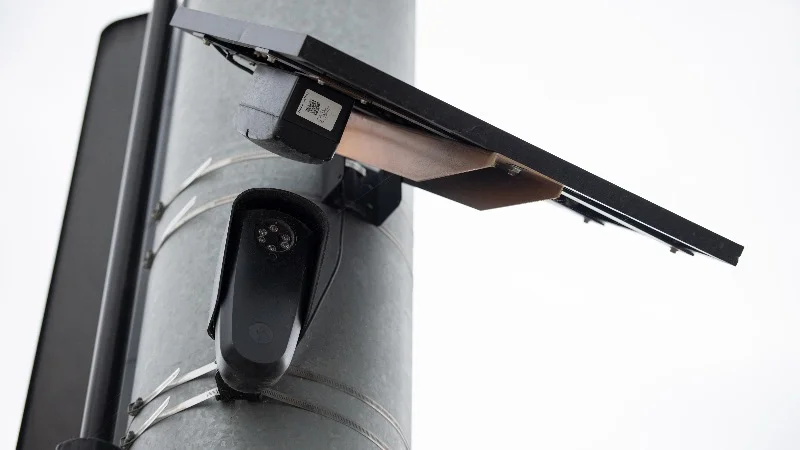
Here’s where Flock Safety’s error became dangerous: the AI wasn’t registering the small manufacturer number in the middle of the plate[18]. It only saw 34 DTM in large type and started sending alerts to local police that the stolen vehicle had been spotted [18].
Here’s where Flock Safety’s error became dangerous: the AI wasn’t registering the small manufacturer number in the middle of the plate. It only saw 34 DTM in large type and started pinging alerts to local police that the stolen vehicle had been spotted.

Official Plymouth Police Department Incident Report – June 28, 2026
Summary: “LPR hit on a stolen license plate. Incomplete plate number in the alert.”
This is the actual police report generated after Flock’s system identified Joel Feder and his wife. No warrant. No judge. No human probable cause. Just a private company’s algorithm and an incomplete plate number that put an innocent American family at gunpoint.

Officer Max Ganshyn’s Supplemental Report – June 28, 2026
In his own words, Officer Ganshyn confirms:
“I received a FLOCK automated license plate reader alert for a stolen license plate from New Jersey 34DTM… The plate was reported as NJ 34DTM instead of NJ 3403DTM.”
This is the official police narrative. A private company’s AI alert with an incomplete plate number became the sole basis for boxing in an innocent American husband and wife with multiple officers. No warrant. No independent probable cause. Just the machine.
This wasn’t an isolated technological failure. Officer Ganshyn observed that many vehicles in the Jaguar Land Rover media fleet share the same alphanumeric structure, 34 ## DTM, which made it a nationwide issue[18]. Four other vehicles with that plate structure were being tracked around Minnesota that same week[18]. (Staff, 2023) Feder just happened to be the first one nabbed.
The officer warned Feder to drive straight home, park the Range Rover, and leave it there. Cross into a neighboring town, and the whole ordeal would repeat, with a different set of officers responding to the same false alert [18].
This represents unconstitutional surveillance at scale. A private company’s AI creates false hits. Police departments act on those hits without independent verification. No human applies constitutional probable cause. No magistrate reviews an affidavit. The machine says “stolen,” and officers move.
The drone overhead and the warning that Minneapolis police “definitely would’ve come at you with guns drawn”
The surveillance apparatus deployed against this innocent couple reached beyond ground-level cameras. Feder noted they “even had a drone flying above during the ‘bust'”[18].
A drone. Circling above two Americans picking up household items at a department store on a Sunday afternoon.
But Officer Ganshyn’s parting words carried an even more disturbing message about how warrantless surveillance operates across jurisdictions. “You’re lucky we’re in Plymouth,” he told Feder. “If you were in Minneapolis, they definitely would’ve come at you with guns drawn”[18].
Read that statement again. An officer of the law told an innocent American that he was fortunate the ambush happened in one suburb rather than another because the neighboring police force would have been more aggressive based on the same false machine alert.
This is the surveillance state the Founders fought to prevent. The Fourth Amendment exists to protect We the People from this kind of technological tyranny dressed up as public safety. There was no probable cause here, only an algorithm that couldn’t read small numbers on a manufacturer’s plate, combined with a data-entry error 2,000 miles away.
Joel Feder’s kids could have been in that car. Any American family could be next. The full account of what happened is documented at https://www.thedrive.com/news/how-flock-cameras-wrongly-tracked-me-for-days-over-stolen-plates-and-sent-police-after-me, and it should terrify every citizen who values liberty over the false promise of machine-driven security.
Flock Cameras Fourth Amendment Violation
How does this incident represent a direct assault on the Fourth Amendment?
What happened to Joel Feder represents more than a police error. It exposes a fundamental breach of the constitutional order that protects every American from state overreach. The Fourth Amendment exists to prevent what occurred in that Kohl’s parking lot: state agents detaining citizens based on unverified, machine-generated suspicion rather than human assessment, protected by constitutional safeguards.
The Fourth Amendment states that “the people have a right ‘to be secure in their persons, houses, papers and effects, against unreasonable searches and seizures'”[2]. This right limits police power to seize and search people, their property, and their homes. No officer can lawfully detain an American citizen without meeting constitutional standards. Yet Feder and his wife were surrounded at gunpoint, removed from their vehicle and held for an hour based only on an alert from a private company’s AI system that misread a manufacturer plate.
A federal court recognized this exact problem on February 5. The U.S. District Court for the Eastern District of Virginia found the city’s tracking “notably similar” to the Supreme Court’s landmark Carpenter decision in a case challenging Norfolk’s use of Flock to track residents indiscriminately[20]. The court held that citizens have a reasonable expectation of privacy in their movements and that Norfolk’s pervasive camera systems violated that expectation [20]. The court ruled that querying Flock’s databases to access long-term location data without a warrant constituted a Fourth Amendment violation[20].
That ruling matters because it confirms what many Americans understand: just because technology allows mass surveillance doesn’t mean the Constitution permits it. The court recognized that Flock’s system enables officials to “create maps of where people have been, where they tend to drive, and even who they tend to meet up with” without a warrant or probable cause[20]. Norfolk’s police chief admitted, “it would be difficult to drive anywhere of any distance without running into a camera somewhere”[20]. This is warrantless surveillance at a scale the Founders could never have imagined but would have recognized as tyranny.
There was no warrant, no human probable cause, and no judge—only a machine-generated alert from a private company.
The constitutional requirements for lawful searches are clear and demanding. The Fourth Amendment mandates that “no warrants shall issue, but upon probable cause, supported by oath or affirmation, and particularly describing the place to be searched and the persons or things to be seized”[2]. Each element serves a purpose rooted in centuries of legal protection against arbitrary state power.
Machines cannot manufacture probable cause. The Supreme Court has characterized probable cause as “the kind of ‘fair probability’ on which ‘reasonable and prudent’ people act”[21]. It requires a human officer to present sworn testimony or a written affidavit to a neutral magistrate, who then determines whether sufficient cause exists to intrude on a citizen’s rights[21]. This process secures accountability; the judge reviews the evidence. An officer puts their credibility on the line under oath. The warrant must describe what is searched and what is being seized [21].
None of these safeguards existed when Plymouth police detained the Feders. No officer swore out an affidavit describing why he believed this Range Rover was stolen. No magistrate reviewed the evidence and determined that probable cause existed. No warrant described the vehicle or the suspected crime. A private company’s algorithm identified it instead, and police acted on that machine determination alone.
This is a machine probable cause, and it obliterates the constitutional framework. Flock Safety and similar firms now function as private warrant-issuing authorities, except without judicial oversight, sworn testimony, or the constitutional limitations that stop government abuse. Police departments rely on these AI-generated alerts as if they carry the force of human decision-making in the legal process. They do not.
The Founders’ rejection of general warrants and “suspicionless searches”
The Framers designed the Fourth Amendment to prevent this scenario. British officials used general warrants and writs of assistance to search and seize colonists’ property at will before the American Revolution[5]. These instruments specified neither the places to be searched nor the items to be seized, and gave officials unfettered power to harass and intimidate [5]. Americans were outraged because such warrants violated the fundamental principle that “a man’s house is his castle”[5].
John Adams and other Founders fought to ensure the new Republic would never replicate that abuse. They wanted constitutional guarantees against “hasty and unreasonable search warrants, warrants not founded on oath, and not issued with due caution”[5]. The Fourth Amendment was their answer. Justice Joseph Story wrote in one of the first major texts on the Constitution that the Amendment “seems indispensable to the full enjoyment of the rights of personal security, personal liberty, and private property”[5].
The Framers used the term “secure,” which contemporary dictionaries define as “protected from danger” and “free from fear”[5]. Property isn’t yours if government officials may intrude at any moment without cause. Adams himself declared that “property must be secured, or liberty cannot exist”[5]. This philosophy built a Republic in which citizens could move without fear of arbitrary state action.
Flock cameras create the dragnet surveillance the Founders sought to prohibit. These systems capture billions of scans monthly and function as digital general warrants. They don’t target specific individuals based on suspicion. They track everyone, store that data, and flag citizens once algorithms determine a match exists. No human swears to the accuracy. No judge reviews the technology’s reliability. The system alerts, and police respond.
Modern scholarship recognizes this parallel. Legal scholars argue that “modern practice of policing by means of roving, armed government agents conducting frequent, warrantless searches replicates the abuses of general warrants and writs of assistance”[6]. Constitutional rights should never be construed to provide less protection than they did when instituted[6]. The Fourth Amendment was intended to prevent suspicionless searches that allow the government to surveil American families going about their daily lives.
We, the People, built this Republic on the principle that liberty requires boundaries on state power. Those boundaries include warrants issued by judges, based on probable cause sworn to by officers and describing what is searched. When private AI systems bypass every one of those safeguards and police act on their alerts as if the constitutional process has been satisfied, the framework collapses. This is how free people become subjects of a surveillance state that tracks their every movement, detains them at gunpoint in parking lots and justifies it all by claiming the machine said so.
The Human Cost to American Families

- Image Source: Sentinel Colorado
This could have happened to any law-abiding American family.
Every American parent makes the same calculations Joel Feder made that Sunday. Drop off returns. Pick up groceries. Test drive a car for work. These mundane decisions define our daily lives in a free Republic. Yet any one of those decisions can trigger a Flock Safety error that puts your family in the crosshairs of armed law enforcement.
Feder himself acknowledged the randomness: he happened to be testing a Range Rover with manufacturer plates that week. The AI misread the small numbers. A data entry error 2,000 miles away created a false match. Those coincidences met in a Kohl’s parking lot, but they could have met anywhere. Your grocery store. Your child’s school pickup line. Your own driveway.
This is not simply a story of one journalist and his wife. This is a warning to every American family. Flock cameras are only one example among many technologies eroding Fourth Amendment protections. Other surveillance systems, like Vigilant Solutions, Motorola Solutions, and Rekor, also deploy automated license plate readers across the country. Chicago, Atlanta, and New York City have widespread camera networks feeding data to fusion centers and law enforcement. Even doorbell camera companies and smart city partnerships add to this expanding web of surveillance. These systems work together to turn constitutional rights into little more than suggestions rather than real protections. They allow private companies as well as algorithms to establish ‘probable cause’ without a warrant, a judge, or human accountability. What happened to Joel Feder and his wife in that Minnesota parking lot could happen to any of our children or us tomorrow.
The technology doesn’t discriminate. Sarah Judson learned that at age 76, Boulder County Sheriff’s deputies pulled her over twice in two weeks due to ALPR errors [7]. Judson was driving to see her grandchildren when Flock came and identified her plate as stolen. A deputy approached from both sides of her car. “I stuck my head out of the window and said, ‘Hello?'” she recalled. “And so I think about that time he realized I wasn’t the ringleader of some stolen plate deal”[7].
Deputies found her again in a restaurant parking lot two weeks later and waited. “I have two other officers out looking for you right now,” the deputy told her[7]. Judson started taking alternate routes to avoid cameras and added ten extra minutes to every trip to see her grandkids. She called Boulder County seeking removal from the stolen vehicle database. They told her there was nothing they could do[7].
Feder’s kids could have been in the car.
The mental impact of what almost happened haunts families who’ve experienced these stops. Feder’s children weren’t with him that day, but they could have been. Imagine explaining to your kids why police officers surrounded the car with hands on holsters and ordered their parents out at gunpoint over a computer error.
Other American families didn’t have to imagine it. JC and Carolyn Herron were driving their 3-year-old granddaughter Penelope to a doctor’s appointment when Morristown police pulled them over in Tennessee. Officers drew their weapons and ordered the elderly couple out of their black Ford Expedition[1]. JC worried that one wrong move would get him shot. Officers handcuffed both grandparents while Penelope remained terrified and alone inside the car[1].
The couple’s personalized license plate read “LOVEY,” a nickname Carolyn’s seven grandchildren gave her[1]. But Flock’s system recorded it as “L0VEY,” with a zero instead of the letter O, and matched it to a stolen Ford F-150 that had already been recovered[1]. Body camera footage shows Carolyn refusing to raise her hands because she was frightened and worried authorities might take her granddaughter away. “We were two old people just on our way to the doctor,” Carolyn said. “What kind of threat were we with a 3-year-old in the backseat?”[1]
Española police stopped 12-year-old sisters in New Mexico based on a similar error. Jaclynn Gonzales was driving her younger sister to the park in July 2023 when police stopped them after a Flock alert indicated the Kia had been stolen [1]. Officers ordered both girls out and handcuffed them. Body camera footage captured the younger sister asking, “Can you call my mom?”[1]
Sarah Judson’s fear reached past her own harassment. Her grandson will turn 16 soon, and she plans to let him drive her vehicle. “If he gets stopped, he’ll be 16,” Judson said. “What kind of harassment will he get as opposed to me, who’s just an old lady?”[7] The ACLU of Colorado echoed those concerns, noting that police interactions vary based on a person’s identity. “We know that in a different situation on a different day in a different jurisdiction, it could turn into much more than just an inconvenience,” said Anaya Robinson[7].
This is not an isolated incident — it endangers everyday citizens across the Republic.
The Institute for Justice has documented at least 26 cases of innocent people held at gunpoint or jailed due to Flock errors. That number represents only the victims who came forward, filed complaints, or contacted attorneys. For instance, the cases documented at https://ij.org/ reveal a disturbing pattern affecting citizens across demographics and geographies.
Brandon Upchurch’s life collapsed after a Flock camera’s gunpoint stop in Toledo. Officers arrested him based on a false alert, and a police dog bit his arm during the encounter[1]. The injuries left him unable to feel his fingers. He quit his job as a forklift driver because he could no longer lift heavy objects or maneuver equipment [1]. He sold his truck to try to keep up with the rent, but it wasn’t enough. Upchurch was eventually evicted and moved into his mother’s home. He gave up his two dogs, Bruno and Madness, whom he’d raised from puppies[1]. “I didn’t want to,” he said, “but I no longer felt comfortable around dogs”[1].
Jason Burkleo was stopped at gunpoint in April 2021 in Silicon Valley’s Atherton neighborhood after a Flock camera confused an ‘H’ for an ‘M’[1]. Officers ordered him to lie on the ground and handcuffed him. Police records note that “the Flock cameras misread” the plate[1]. Burkleo filed a lawsuit and settled with the town and the police officers for $45,000 [1].
Katie Rothman discovered in August 2025 that her 2019 Subaru Forester had been flagged for nearly two years due to a single keystroke error [7]. Jefferson County Sheriff’s deputies blocked her car in an Evergreen parking lot after Aurora Police entered her plate into the Colorado Crime Information Center database incorrectly in 2023 and substituted a number one for the letter I[7]. “I’m pretty sure my neighbors heard me shriek,” Rothman said. “I’m not a one-off. I’m not a real standalone event. This is happening, and this is not OK”[7].
Chrisanna Elser’s experience in Colorado left her feeling the burden had moved. “It became my job to prove my innocence,” she said. “And I thought it was supposed to be the other way around”[8]. She worries for those who lack the technology or resources to prove where they were when falsely accused. “It’s kind of altering the narrative,” Elser observed. “Now it’s about proving where you are and what you’re doing, instead of fighting crime”[8].
This represents unconstitutional surveillance operating without the safeguards that protect We the People from state overreach. No judicial review catches these errors before they ruin lives. No magistrate questions whether probable cause exists. The system signals to citizens, and consequences follow. Grassroots organizations like those at https://deflock.org/ are assisting communities in charting these cameras and organizing resistance, but the danger spreads faster than citizens can respond. Yet, even in the face of these growing threats, communities have begun to fight back and win. Across the country, citizens have successfully organized to halt or reverse Flock camera deployments, pressured local governments to terminate contracts, and brought public attention to unlawful surveillance practices. These victories show that united effort makes a concrete difference—proving that when Americans unite, their voices can reclaim constitutional protections and push back against unchecked technology. Every day, technology runs amok without constitutional constraints, but every successful resistance shows the power people hold to protect their rights.
We the People Are Already Fighting Back

- Image Source: The Cornell Daily Sun
Denver, Oak Park, Mountain View, and other communities are canceling or removing contracts with Flock.
Americans are already fighting back and winning. Communities nationwide are rejecting these unconstitutional surveillance systems. Cities are canceling contracts. The LAPD has paused its use of Flock cameras.
Mountain View shut down all 30 of its Flock cameras in February after Police Chief Mike Canfield found that federal and state agencies had accessed city data without authorization [9]. The City Council voted unanimously to terminate the contract[9]. Oak Park’s Village Board voted 5-2 in August 2025 to cancel its contract after learning that over 99% of Flock alerts produced no police action[10]. Louisville deactivated its cameras in September 2025, and Longmont declined to renew the contract that December [11].
At least 30 localities have either deactivated cameras or canceled contracts since early 2025[3]. (LAPD hits pause on Flock surveillance cameras due to ‘serious concerns around civil liberties and privacy’, 2026) Denver’s audit revealed its data had been searched more than 1,400 times for ICE since June 2024[11]. (Brumer, 2025)
The LAPD paused its use of Flock cameras.
The Los Angeles Police Department suspended all Flock operations amid concerns about data control and federal data sharing [12]. You can find details at https://www.latimes.com/california/story/2026-07-11/lapd-suspends-use-of-flock-surveillance-cameras-over-privacy-issues.
grassroots efforts like Deflock.org helping citizens map and resist these systems
We the People are organizing through https://deflock.org/, which has crowdsourced locations for more than 76,000 license plate readers nationwide [3]. (Gann, 2024) These efforts prove constitutional fidelity still drives American The Way Forward Road Forward: Restoring Constitutional Order.
True safety comes from constitutional principles, not mass surveillance by private tech companies.
Constitutional protections exist because the Founders understood a truth Americans must reclaim: liberty requires boundaries on state power, not limitless technological reach. The Fourth Amendment establishes minimum legal requirements that government surveillance must meet[13]. So warrantless tracking violates those requirements, whether the source is a police cruiser or a private AI camera.
Safety built on unconstitutional surveillance is no safety at all. These technologies operate with effectiveness that remains mostly unstudied. Their empirical validity and reliability are not examined [13]. Law enforcement deploys them without the constitutional and statutory regulation that has long governed immediate surveillance, such as wiretapping[13]. Courts rely on company-produced information that may overstate utility or understate problems because external evaluations don’t exist[13]. (Slobogin & Brayne, 2023)
ending these unconstitutional partnerships between police and AI surveillance firms
Government surveillance now operates outside statutory and constitutional limits[14]. Secret surveillance must be prohibited. Total surveillance must be rejected[15]. Congress should require warrants before law enforcement searches Americans’ private data[16]. Tech companies have become surveillance intermediaries. They wield power never intended for private corporations[4].
We, the People, built this Republic. We, the People, can defend it.
The Fourth Amendment was not written for perfect times. It was written for times exactly like these, when technology makes it easier for power to grow beyond its proper limits. We, the People, still have the power to defend the Constitution and protect our families. The question is whether we will use it.
Call to ActAction
What happened to Joel Feder could happen to any American family tomorrow. Machine-generated alerts bypass every constitutional safeguard the Founders designed to protect We the People from tyranny. No warrant. No judge. No human probable cause. Just algorithms tracking our every movement and armed officers responding to their errors. Communities are already fighting back, and we must join them.
Here’s how you can take action in simple steps:
1. Contact your local officials:
– Look up your city council or county board website for email addresses or contact forms.
– Write a short message describing your concerns. Ask them to end contracts with Flock and insist on clarity about how surveillance technology is used in your community.
– Attend city or county council meetings. Use the public comment period to speak out. Bring a prepared statement if useful.
2. Join or support grassroots groups:
– Connect with organizations like the Institute for Justice or Deflock.org that fight unconstitutional surveillance.
– Join local digital privacy or civil liberties groups in your area. These groups often organize petitions, rallies, or educational events.
3. Map surveillance cameras in your area:
– Visit Deflock.org and use their crowdsourced map tool to locate license plate readers near you.
– Submit information about cameras in your community that are missing from public maps.
4. Educate your neighbors:
– Share this story and relevant resources through social media, neighborhood groups, or community forums.
– Organize a meeting or flyer campaign to raise awareness about how Flock cameras operate and the risks they pose.
Liberty wins as long as we stand together. Get the Flock out.
FAQs
Q1. Do Flock cameras violate constitutional protections against unreasonable searches? Yes, federal courts have found that Flock’s pervasive tracking systems can violate Fourth Amendment protections. A U.S. District Court ruled that querying Flock databases to access long-term location data without a warrant violates the Constitution, as citizens have a reasonable expectation of privacy in their movements.
Q2. Who can access data collected by Flock surveillance cameras? Multiple agencies can access Flock camera data, often without proper authorization. Denver’s audit revealed its data had been searched over 1,400 times by ICE since June 2024. Mountain View shut down all 30 cameras after discovering federal and state agencies had accessed city data without authorization.
Q3. Have victims filed legal action against Flock camera systems? Yes, multiple lawsuits have been filed. Jason Burkleo settled with Atherton, California, for $45,000 after being stopped at gunpoint due to a Flock misread. The Institute for Justice has documented at least 26 cases of innocent people held at gunpoint or jailed due to Flock errors, with several causing legal action.
Q4. How are communities resisting Flock camera installations? At least 30 localities have deactivated cameras or canceled contracts since early 2025. Communities such as Denver, Oak Park, Mountain View, Louisville, and Longmont have rejected or terminated contracts with Flock. Grassroots organizations like Deflock.org help citizens map camera locations and organize local resistance and protest efforts. What causes Flock cameras to generate false alerts? Flock’s AI system struggles with non-standard plate formats and can misread characters, confusing letters for numbers or missing small text. With 20 billion monthly scans, even small error rates create countless false hits. Data entry errors from distant jurisdictions can also trigger alerts against innocent drivers thousands of miles away.
References
[1] – https://www.businessinsider.com/flock-safety-alpr-cameras-misreads-2026-3
[2] – https://constitutioncenter.org/the-constitution/amendments/amendment-iv/interpretations/121
[3] – https://www.npr.org/2026/02/17/nx-s1-5612825/flock-contracts-canceled-immigration-survillance-concerns
[4] – https://harvardlawreview.org/print/vol-131/cooperation-or-resistance-the-role-of-tech-companies-in-government-surveillance/
[5] – https://ij.org/issues/ijs-project-on-the-4th-amendment/the-right-to-be-secure-the-foundation-of-the-fourth-amendment/
[6] – https://pennlawreview.com/2025/06/24/policing-as-general-warrants/
[7] – https://www.9news.com/article/news/local/coloradan-stopped-by-police-data-errors-flock-alerts/73-593a3772-f43d-46b1-8744-af888b9bd7f2
[8] – https://www.cbsnews.com/colorado/news/flock-cameras-lead-colorado-police-wrong-suspect/
[9] – https://www.mountainview.gov/Home/Components/News/News/1211/284
[10] – https://derekeder.com/blog/why-i-voted-to-cancel-flock
[11] – https://www.aclu.org/campaigns-initiatives/get-the-flock-out
[12] – https://www.latimes.com/california/story/2026-07-11/lapd-suspends-use-of-flock-surveillance-cameras-over-privacy-issues
[13] – https://pmc.ncbi.nlm.nih.gov/articles/PMC10704392/
[14] – https://papers.ssrn.com/sol3/Delivery.cfm/SSRN_ID4530608_code238438.pdf?abstractid=4350066&mirid=1
[15] – https://harvardlawreview.org/print/vol-126/the-dangers-of-surveillance/
[16] – https://www.americanbar.org/groups/crsj/resources/human-rights/2024-june/mass-surveillance-dangerous-american-communities-reforming-section-702/
[17] – https://www.jalopnik.com/2211127/flock-camera-error-auto-journalist-detained-police-stolen-range-rover/
[18] – https://www.thedrive.com/news/how-flock-cameras-wrongly-tracked-me-for-days-over-stolen-plates-and-sent-police-after-me
[19] – https://www.techspot.com/news/112940-ai-camera-networks-tracking-billions-vehicles-residents-pushing.html
[20] – https://epic.org/vehicle-fingerprinting-through-pervasive-camera-surveillance-likely-violates-fourth-amendment-court-finds/
[21] – https://www.congress.gov/crs-product/IF13169
[22] – (July 10, 2026). Flock cameras mistakenly track car reviewer over ‘stolen’ tags – police ambush tester in store parking lot and detain him for an hour. https://www.tomshardware.com/tech-industry/big-tech/flock-cameras-mistakenly-track-car-reviewer-over-stolen-tags-police-ambush-tester-in-store-parking-lot-and-detain-him-for-an-hour
[23] – (July 13, 2026). LAPD hits pause on Flock surveillance cameras due to ‘serious concerns around civil liberties and privacy’. TechRadar. https://www.techradar.com/vehicle-tech/hybrid-electric-vehicles/lapd-hits-pause-on-flock-surveillance-cameras-due-to-serious-concerns-around-civil-liberties-and-privacy-as-the-backlash-continues-to-grow
[24] – Smith, D. (July 10, 2026). LAPD suspends use of Flock surveillance cameras over privacy issues. Los Angeles Times. https://www.latimes.com/california/story/2026-07-11/lapd-suspends-use-of-flock-surveillance-cameras-over-privacy-issues
[25] – Jacobs, S. (June 29, 2026). License plate cameras are scanning 20 billion vehicles a month; cities are starting to push back. TechSpot. https://www.techspot.com/news/112940-ai-camera-networks-tracking-billions-vehicles-residents-pushing.html
[26] – Staff, W. (May 23, 2023). Woodbury Police Arrest 2 After Chase on I-94, Crash. CBS Minnesota. https://www.cbsnews.com/minnesota/news/woodbury-police-arrest-2-after-chase-on-i-94-crash/
[27] – (July 13, 2026). LAPD hits pause on Flock surveillance cameras due to ‘serious concerns around civil liberties and privacy’. TechRadar. https://www.techradar.com/vehicle-tech/hybrid-electric-vehicles/lapd-hits-pause-on-flock-surveillance-cameras-due-to-serious-concerns-around-civil-liberties-and-privacy-as-the-backlash-continues-to-grow
[28] – Brumer, D. (August 5, 2025). Frequent immigration-related searches of Denver Flock camera data were revealed in logs. Colorado Newsline. https://coloradonewsline.com/2025/08/06/immigration-denver-flock-camera/
[29] – Gann, H. (November 14, 2024). Software Engineer Maps Locations of License Plate Readers. https://www.govtech.com/public-safety/software-engineer-maps-locations-of-license-plate-readers
[30] – Slobogin, C. & Brayne, S. (2023). Surveillance Technologies and Constitutional Law. Annual Review of Criminology 6. https://doi.org/10.1146/annurev-criminol-030421-035102
[31] – https://www.alexjoneslive.com/2026/07/16/flock-camera-error-gets-innocent-driver-boxed-in-by-police/
[32] – https://reclaimthenet.org/flock-camera-error-gets-innocent-driver-boxed-in-by-police
[36] – https://www.thedrive.com/news/your-kids-school-bus-is-about-to-become-a-roaming-surveillance-vehicle
[40] – https://www.jalopnik.com/2023-range-rover-sport-jalopnik-reviews-1851027606/
[41] – https://www.jalopnik.com/2194476/80000-ai-flock-cameras-capture-cars-without-license-plates/
[42] – https://www.instagram.com/reel/Dal4EWpx-g8/?utm_source=ig_embed&utm_campaign=loading
[43] – https://www.jalopnik.com/2194843/deflock-open-source-project-mapping-flock-cameras/
[44] – https://www.jalopnik.com/2209937/cop-uses-license-plate-reader-stalking-woman/
[45] – https://www.jalopnik.com/2194735/how-flock-cameras-work/
[47] – https://www.techspot.com/news/112750-flock-ai-cameras-allegedly-used-police-stalk-ex.html
[48] – https://www.techspot.com/news/113099-gigawiper-malware-can-wipe-hard-drive-spy-you.html
[49] – https://www.wsj.com/us-news/the-nationwide-backlash-against-cameras-watching-your-car-401a656a
[52] – https://www.thedrive.com/
[53] – https://reclaimthenet.org/lawsuit-against-flock-safety-surveillance-in-norfolk-to-proceed
[54] – https://reclaimthenet.org/fourth-amendment-under-fire-court-deems-google-location-data-fair-game
[55] – https://reclaimthenet.org/surveillance-nation-on-trial
[56] – https://media.reclaimthenet.org/docs/Schmidt-et-al-MTD-Order.pdf
[59] – https://www.eff.org/deeplinks/2024/11/human-toll-alpr-errors
[60] – https://www.cbsnews.com/news/license-plate-readers-alpr-mistakes/
[63] – https://ij.org/wp-content/uploads/2025/12/ECF-179-1-Pltfs-Memo-ISO-MSJ-Revised-Redactions.pdf
[64] – https://www.cbsnews.com/news/license-plate-readers-alpr-mistakes/
[66] – https://reclaimthenet.org/san-diego-flock-misidentification
[69] – https://www.sandiego.gov/sites/default/files/2024-01/Fully%20executed%20agreement_Ubicquia.pdf
[71] –https://reclaimthenet.org/how-one-patent-envisions-a-nation-under-surveillance
[77] – https://reclaimthenet.org/face-recognition-tech-wrongful-arrest
[78] – https://reclaimthenet.org/github-to-ditch-coding-terms-master-and-slave-amid-protests/
[80] – https://reclaimthenet.org/microsoft-is-accused-of-helping-china-develop-sinister-ai-tech
[81] – https://www.nytimes.com/2020/06/24/technology/facial-recognition-arrest.html
[82] – https://reclaimthenet.org/detroit-woman-false-arrest-facial-recognition
[83] – https://media.reclaimthenet.org/docs/gov.uscourts.mied.371448.1.0_1.pdf
[84] – https://www.macarthurjustice.org/case/williams-v-city-of-chicago/
[85] – https://endpolicesurveillance.com/
[86] – https://igchicago.org/2021/08/24/the-chicago-police-departments-use-of-shotspotter-technology/
[87] – https://www.macarthurjustice.org/blog2/shotspotter-is-a-failure-whats-next/