
Key Takeaways
The Congo Ebola outbreak exposes serious failures in global health systems and border security that directly threaten American lives. In response, this document will preview actionable policy options to defend against these threats and set them out in detail below. Here’s what you need to know:
• The outbreak is vastly underreported: WHO estimates the actual case count may be 2-4 times higher than the 1,759 confirmed cases, with 80% of new infections having no known link to existing patients—revealing catastrophic surveillance failures. (Gale, 2026)
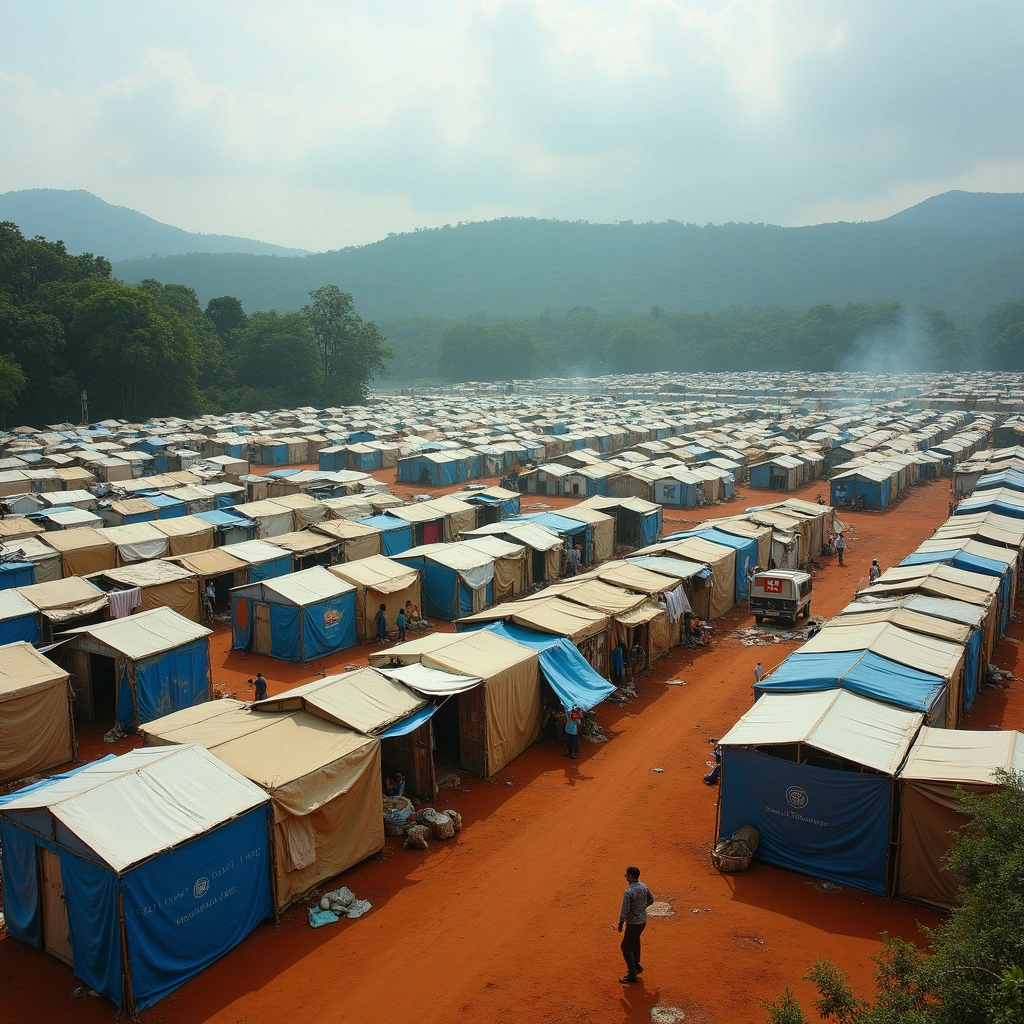
• Refugee camps have become disease incubators: Over 320,000 displaced persons live in unsanitary camps where Ebola spreads unchecked, with death rates spiking from 1-3 monthly to 45 in recent weeks at Kigonze camp alone. (Death rate at camp in DR Congo spikes amid fears of Ebola spiraling, 2026)
• Contact tracing has collapsed: Only 15% of expected contacts are being identified and monitored, compared to the necessary 100% for containment, allowing the virus to spread through invisible transmission chains. (Garfield et al., 2024)
• Social resistance accelerates transmission: Communities refuse testing and safe burials, believing Ebola is caused by “Western injections,” while traditional funeral practices—where mourners touch infected bodies—have been linked to 60-80% of cases.
• Global health institutions have failed: Funding cuts, institutional collapse, and the absence of USAID have left response efforts underfunded by nearly $680 million, with medical workers going on strike over unpaid wages (Ombuor & Chason, 2026)while treating patients.
• Open borders create direct pathways for disease: With 2+ million displaced persons moving across porous borders and 80% of cases untracked, the constitutional duty to “provide for the common defense” demands sovereign border control, not reliance on failed international bureaucracies. (Garfield et al., 2024) At the same time, these border challenges involve real humanitarian complexities—many displaced persons are fleeing violence and lack basic necessities. Effective policies must take these realities into account and seek to balance strong disease prevention with respect for human dignity and international humanitarian duties.
The crisis demonstrates that protecting American citizens from imported diseases is not optional—it’s a constitutional imperative that cannot be outsourced to underfunded, ineffective global organizations.
Official reports show 1,759 confirmed cases and 600 deaths from the Congo Ebola outbreak[27], but the crisis may actually be two to four times larger than reported[28]. This open-borders catastrophe reveals a failure to protect American lives. Most concerning: 80% of new cases have no known link to existing patients[28]. The disease spreads more rapidly in refugee camps housing over 320,000 displaced persons [29]. (Ebola virus disease – Democratic Republic of the Congo, 2025) Our Constitution demands we act: borders exist to provide for the common defense and secure liberty for our Posterity, not to import chaos from failed globalist systems.
The Outbreak Is Far Larger Than Reported

- Image Source: Reuters
“Underreporting compromises evidence-based infectious disease prevention and mitigation strategies, and contributes to bias in mathematical models.” — Authors of the study, Researchers in infectious disease reporting.
The true scale may be 2 to 4 times larger than official numbers.
WHO estimates, based on modeling and test positivity rates, indicate that the outbreak may be between two and four times larger than the number of confirmed cases [28]. This assessment comes from WHO Emergencies Director Chikwe Ihekweazu, who analyzed surveillance data from the epicenter in Bunia, Ituri province. Official government data showed 1,792 confirmed infections and 625 deaths [28]. But the modeling shows the actual case count could range anywhere from 3,584 to 7,168 infections.
This massive discrepancy exposes a surveillance catastrophe. The outbreak surpassed 1,000 confirmed cases within just 40 days of the response being activated [30]. The 2018 Ebola outbreak in North Kivu, DRC, took about 235 days to reach the same milestone[30]. Four weeks after being declared a public health emergency, this outbreak recorded three times as many cases as any previous Ebola outbreak at the same stage [31]. The West Africa outbreak, which infected an estimated 28,600 people, had recorded only 242 cases at four weeks [31]. The current outbreak had documented 875 cases and 202 deaths at that same four-week mark[31]. (Ebola disease caused by Bundibugyo virus – Democratic Republic of the Congo, 2026)
The speed outpaces every containment effort. Health workers on the ground report the outbreak is spreading faster than previous Ebola outbreaks, making it now the third largest Ebola outbreak on record[30]. Africa CDC epidemiologist Dr. Wessam Mankoula confirmed that the virus spreads faster than responders can deploy resources to control the situation [32]. Treatment centers in Ituri province report capacity at over 90% full[31], creating a bottleneck that delays care and increases mortality. (Ebola en Ituri : les centres de traitement débordés, 96 % des lits occupés, 2026)
The statistic that 80% of new cases have no known link to existing patients
Eighty percent of new Ebola patients confirmed in Bunia, the outbreak’s heart, are coming from outside known contacts [28]. This single statistic reveals that the outbreak is spreading through communities undetected [32]. WHO Emergencies Director Ihekweazu identified strengthening surveillance as the biggest challenge facing the response[28].
The World Health Organization has publicly acknowledged the scale of undetected transmission. In a recent declaration, the WHO warned that many infections are going unreported because people are choosing to recover at home rather than seek testing. Health authorities are now urging residents in the hardest-hit areas, particularly in Ituri Province, to come forward for testing immediately rather than attempt self-treatment.
This admission from the WHO itself confirms what contact-tracing data has already shown: the official numbers significantly undercount the virus’s true spread.
Contact tracing accounts for about 60% of cases in the DRC [33]. But the actual number of identified and checked contacts tells a more troubling story. Responders have listed around 6,000 contacts, whereas there should be 17,000 to 35,000 contacts based on an estimated 20 to 40 contacts per patient [31]. Of those 6,000 listed contacts, only around 4,000 have been traced[31]. Only about 15% of the expected contacts have been identified and checked [31].
One missed contact can become a new chain of transmission[33]. The importance of contact tracing in Ebola containment cannot be emphasized enough. Following all contacts of an Ebola patient during the 21-day incubation period prevents secondary transmission[34]. Detection of secondary cases early in the disease course enables their isolation before additional transmission occurs [34]. Rigorous attention to contact tracing is an important step in containment; a single missed contact can result in ongoing transmission [34].
The breakdown in surveillance creates exponential risk. Insecurity makes North Kivu inaccessible to most responders [31]. This province has the lowest contact tracing rate among the three affected provinces and reports the highest case fatality rate [31]. (Ngalamulume et al., 2025) Contact tracers experience barriers, including delayed payments, inadequate transport, limited protective equipment, weak data tools, and security threats [33]. Some people move because of fear, others because of conflict, and still others for work or family reasons[33]. Ebola spreads in the gaps left by incomplete surveillance.
How globalist organizations (WHO, Africa CDC) are struggling with contact tracing and underfunding
The humanitarian response architecture has degraded, especially due to the absence of the organization that anchored it: USAID [35]. Sweeping cuts to U.S. foreign aid in 2025, combined with extensive layoffs at the CDC, weakened the United States’ ability to help contain the outbreak and contributed to delayed detection[35]. The closure of most U.S. humanitarian programs, including its extensive humanitarian health portfolio in eastern Congo, left the United States with nowhere near the awareness of possible outbreaks in the region [35]. The U.S. withdrawal from the WHO earlier this year further weakened both the WHO and U.S. health emergency readiness[35].
What remains is a patchwork of overstretched and underfunded organizations operating in a conflict zone[35]. More than 6 million people in eastern Congo depend on aid from UN agencies and NGOs, yet humanitarian donors have committed less than 52 percent of the required humanitarian funding [35]. This figure does not account for additional Ebola response costs. The funding gap for humanitarian needs stands at nearly $679 million [35]. The Africa CDC and WHO issued a new joint funding appeal requesting an additional $518 million to respond to the current Ebola outbreak[35]. (Addressing the Ebola Crisis Amid the Humanitarian Emergency in Eastern DRC, 2026)
OCHA allocated $60 million from the Central Emergency Response Fund[35]. While this represents a step in the right direction, it falls well short given the massive funding shortfalls. The partnership among core global health emergency institutions, which had been at the center of the Ebola response over the last decade, is now in tatters [35]. The weakening of these institutions over the last year and a half creates a new challenge layered atop the outbreak’s operational difficulties [35].
Healthcare workers face direct consequences of this institutional collapse. As many as 20% of cases are healthcare workers [36]. Violence against healthcare workers and shortages of individual protective equipment lead to infections during patient treatment [30]. Ebola responders in the country’s hardest-hit province went on strike over unpaid benefits and poor working conditions[32]. (Ebola deaths in Congo top 500 as health workers threaten to strike, 2026) Without timely pay, transportation, phones, data tools, protective equipment, and security arrangements, contact tracers cannot function [33].
This is simply not a foreign problem — it is a failure of international systems America has relied on
The degradation of global health emergency institutions affects American security. For months, the Ebola epidemic propagated more quickly than the international community, including the CDC, responded[37]. Critical barriers comprise limited electronic connectivity, insufficient numbers of trained staff, inability to surge quickly enough to provide needed case detection and contact tracing, and poorly functioning national health systems [37]. Surveillance and information management systems were overwhelmed[37]. (Garfield et al., 2024)
Border closures with neighboring countries limit case detection, as movement occurs through informal routes [38]. Cross-border transmission has been confirmed[38]. Frequent population movement and cross-border travel increase the risk of spread to Uganda, South Sudan, and Rwanda[30]. (Ebola disease caused by Bundibugyo virus – Democratic Republic of the Congo, 2026) These informal movement patterns create pathways for disease to reach American shores through our open borders.
The current outbreak combines some of the greatest difficulties of both previous large-scale Ebola responses: an insecure setting with widespread violence and displacement, low community trust and rampant misinformation, unprecedented outbreak momentum, and no proven vaccine or treatments[35]. The Bundibugyo strain driving this outbreak has no approved vaccine or treatment[38]. (Ebola and Bundibugyo Virus Frequently Asked Questions, 2026) Health responders must negotiate militia checkpoints, navigate looted warehouses and border closures, and contend with attacks based in community distrust built up over years of conflict and broken promises[35].
The world is better prepared to detect and stop emerging health threats than at any time in history, yet it is at greater risk of the rapid dissemination of infectious diseases [37]. This paradox stems from encroachment on forest areas, the spread of antimicrobial-resistant organisms, and the increasing ease of creating pathogens, all of which occur in a mobile and linked world [37]. (Frieden & Damon, 2015, pp. 1897-1903) If the response and global assistance had been implemented earlier and more quickly, far fewer cases and deaths, and much less social disruption, would have occurred [37].
America built its disease security upon a foundation of international institutions that have now crumbled. The constitutional duty to provide for the common defense cannot be outsourced to failing bureaucracies unable to track 80% of new Ebola cases or secure adequate funding for contact tracing operations. Policymakers now have to consider bold alternative plans to defend against these threats. Options include forging robust bilateral agreements with key regional partners in Africa to improve frontline detection and reporting, investing in the upgrade of domestic public health infrastructure and rapid-response capabilities, and advancing new global coalitions specifically designed to address high-consequence outbreaks where current organizations fall short. By increasing funding for domestic epidemic preparedness, leveraging emerging technologies for cross-border disease tracking, and creating rapid deployment teams in partnership with trusted allies, the U.S. can take a leadership position in global disease security while restoring control over the protection of its own citizens.
Refugee Camps Have Become Ebola Super-Spreaders
The horrific conditions in camps like Kigonze (15,000 residents), where dozens have died
Death rates in Congo Ebola refugee camps reveal the true scope of this crisis. Kigonze camp, housing more than 15,000 residents on the outskirts of Bunia, recorded at least 30 deaths since the start of May[39]. Camp spokesperson Desire Grodya Bapi confirmed the death toll hit unprecedented levels: “People didn’t just die like this before”[39]. The camp recorded between one and three deaths each month[39]. Camp President Dz’djo Ndrutsi Etienne reported that 10 people were buried in a single week alone[39]. By early July, the death count had climbed to about 45 people, including both adults and children. Twenty of those deaths were confirmed as caused by Ebola virus disease[40]. (Reuters, 2026)
All victims displayed symptoms associated with Ebola: headaches, fever, and vomiting[39]. Justin Zanamuzi, director of Catholic aid organization Caritas, saw the devastation firsthand. His team on Wednesday saw several bodies covered in sheets, including a pregnant woman and children[39]. Verified footage from Thursday showed health teams in hazmat suits disinfecting bodies and preparing tiny coffins next to a crucifix as mourners wailed[41].
The living conditions produce a perfect breeding ground for Ebola transmission. Large families share plastic tents spaced less than a meter apart. Children wander through dirt alleyways barefoot [41]. The latrines overflow constantly, forcing residents to empty them themselves, sometimes by hand [40][41]. Water remains scarce, soap is often unavailable, and families live in cramped shelters where disease spreads quickly[40]. Bienvenu Loli, who has lived in Kigonze for nine and a half years, identified access to healthcare as one of the camp’s biggest problems: “Children fall ill, and deaths are frequent, without the possibility of evacuating them to the hospital”[40]. Kato Lonu, 47, lost two children, including a 6-month-old: “These are conditions that no human being should have to live in. If you look around, people are dying one after another”[41].
Local resistance to testing, attacks on health workers, and families refusing safe burial protocols
Families in Kigonze refused to allow doctors to inspect the bodies until Thursday [39][7]. This resistance delayed confirmation of Ebola cases for weeks while the virus spread unchecked. Zanamuzi reported his team tried to persuade people to accept medical examination: “Our team tried to persuade people to accept doctors to inspect the bodies. They completely refused”[39]. Health workers collected samples from five victims, some of which returned positive for the disease[39]. Three aid sources confirmed that test samples on some of this week’s victims came back positive for Ebola[39].
The resistance stems from beliefs that Ebola is caused by “Western injections” or represents a “mystical illness” rather than a genuine disease threat[4]. Marienne Ilobe, who has lived in Kigonze for seven years, expressed the confusion: “Each time, the cases increase quickly. I do not really understand this kind of disease called Ebola”[40]. Communities believed the disease to be “witchcraft” and sought treatment from prayer centers and traditional healers rather than hospitals[4].
Recent on-the-ground interviews in the Democratic Republic of Congo confirm this widespread skepticism. Local residents openly stated that they view the Ebola outbreak as a “hoax” deliberately caused by Western medicine and injections, rather than a natural disease.
This level of distrust has severely hampered containment actions. When large portions of the population believe the disease itself is fabricated by outsiders, they naturally resist testing, treatment, and safe burial protocols — allowing the virus to spread more freely through communities and refugee camps.
Unsafe traditional funeral ceremonies accelerate transmission. Ebola virus is transmitted by direct physical contact with an infected person or their body fluids during the later stages of illness or after death[42]. Contact with the bodies and fluids of persons who have died of Ebola is common in areas where family and community members often touch and wash the body of the deceased to prepare for funerals[42]. These cultural practices serve as major routes of Ebola transmission[42].
Health workers face violent attacks while attempting to save lives. Since January 2019, WHO documented more than 300 attacks on healthcare workers that caused 6 deaths and 70 injuries of healthcare workers and patients in the DRC[43]. At least 25 health workers died in violent attacks between August 2018 and June 2020[44]. Community resentment and resistance to the Ebola effort put health workers at risk, with threats and assault peaking during the height of the Ebola response[44]. At least 27 health workers were abducted by non-state armed groups while traveling to and from intervention sites[44]. Health facilities were attacked by non-state armed groups over 40 times[44].
The 2+ million internally displaced persons (IDPs) and 320,000+ living in unsanitary camps
More than 2 million forcibly displaced people, including over 320,000 refugees, live in areas at risk in Congo where fighting continues with the spread of Ebola[45]. DRC Minister of Social Affairs Eve Bazaiba warned Thursday that Ituri has about 1.15 million displaced people living in 69 displacement facilities[40]. Should Ebola spread through those camps, she cautioned, daily infections could climb to at least 1,000[40]. (G, 2026)
Cases are surging in a region of Congo that hosts over 3.4 million internally displaced people, about two-thirds of the country’s total 5.3 million IDPs[35]. Nearly 468,000 IDPs are living in IDP settlements in eastern Congo that are often overcrowded and under-resourced[35]. More than 10,000 IDPs in a single settlement in Bunia have access to only one handwashing station and one infrared thermometer [35]. (Ebola virus disease – Democratic Republic of the Congo, 2025)
Funding cuts have worsened sanitation conditions. Data compiled by the UN showed that funding for toilets and handwashing stations in Congo more than halved between 2024 and 2025, to around $38 million. This year’s $80 million appeal is only 21% funded[41]. Four aid groups confirmed that their U.S.-funded water, sanitation, and hygiene projects for displaced people in the three Ebola-affected provinces have been scaled back or dropped since last year’s cuts [41]. Mercy Corps built 82 taps and more than 400 public toilets serving over 125,000 displaced people in 2024, but this year, funding cuts result in fewer than 19,000 people being served by six taps and no public toilets [41]. (Mercy Corps: US Aid Cuts Will Cost Lives, 2025)
How conflict and mass movement are accelerating the spread
Armed conflict with no end in sight drives the Congo Ebola open-borders threat. Despite a June 2025 peace deal between the DRC and Rwanda, armed clashes have increased between government forces and the Rwanda-backed M23 armed group. More than 2,100 people have been killed since the agreement was signed[46]. Over 120 armed groups operate in eastern DRC and compete for control of minerals and resources while civilians are forced to flee[46]. (Ogao, 2024)
UNHCR witnessed the recent movement of some 2,250 people from Mbau, 20 kilometers from Beni, one of the outbreak’s epicenters, to Oicha, North Kivu province, due to fear of armed groups[45]. Contact tracing becomes difficult when millions are on the move [46]. People living in the borderlands spanning DRC, Uganda, and South Sudan cross between countries, often via informal routes, to maintain trade and social networks [10]. This high level of regional connectivity accelerates the transmission of infectious diseases [10]. Population movement increases as people flee violence or seek to avoid areas seen as at risk from Ebola[10].
Conflict was substantially associated with an increased risk of reported Ebola cases in the DRC, with a 1.88 times increased risk[11]. The greatest effects were observed in conflict-prone areas and during protest- and riot-related events [11]. Protests and riots disrupt access to transportation and healthcare, often occurring within densely inhabited urban areas [11]. (Evaluating the risk of conflict on recent Ebola outbreaks in Guinea and the Democratic Republic of the Congo, 2024)
Why the Response Is Failing: Mistrust and Globalist Incompetence

- Image Source: NBC News
The deep local distrust, including beliefs that Ebola is caused by “Western injections”
Conspiracy theories dominate the Congo Ebola open borders response zones. Communities believe that nonprofit workers brought the disease to extract donations and pad their own pockets [12]. Others claim the outbreak was fabricated to frighten the population and gain access to minerals, including gold[13]. A population-based survey published in The Lancet Infectious Diseases found inhabitants of eastern DRC avoided medical care and Ebola vaccination because they did not believe the Ebola virus was real[14].
This mistrust stems from centuries of violent abuse, from slavery to contemporary conflicts and predatory resource extraction[14]. People told field workers they believe medicines and vaccines exist, but wealthier nations hoard these resources as locals are left to die[12]. Some communities welcomed response teams. Others were hostile and threw stones at vehicles[3]. One community liaison worker reported: “To my dismay, up to now, some people do not believe there was Ebola. The only thing they believed was that if Ebola existed, we had brought it to the community”[3].
The term “super spreader” itself offends communities that argue their governments and foreign corporations should be held accountable as super-spreaders, given corruption and the underdevelopment of health systems [14]. One man from Liberia responded that mining companies prevented the development of functional health systems through lobbying[14]. Global health organizations function as channels for the neoliberal logics of predatory accumulation without analytically considering how sociohistorical forces are embodied as pathology[14].
How traditional healers and unsafe burial practices are turning into super-spreader events
Traditional healers falsely claim they know how to cure Ebola, causing catastrophic transmission events[1]. About 70-80% of the population in some West African countries relies on traditional medicine [1]. One prominent traditional healer near Kenema became infected and died, and mourners came by the hundreds to honor her memory through traditional funeral ceremonies[7]. Quick investigations suggested participation in that funeral could be linked to as many as 365 Ebola deaths[7]. Guinea accounted for 60% of all cases linked to traditional burial practices [7]. (Sierra Leone: a traditional healer and a funeral, 2015)
Faith healers prayed for Ebola victims through laying on hands. They contracted the disease themselves and passed it to others[1]. Several high-ranking church members contracted and died from Ebola after they participated in a healing prayer meeting where they laid hands on the body of a sick person[1]. Funeral rituals include washing and cleaning the dead body, with relatives washing their hands in a common bowl and touching the deceased’s face in a “love touch”[1]. Data from Guinea’s Ministry of Health indicated that 60% of cases were linked to traditional burial and funeral practices [15]. WHO staff estimated that 80% of cases in Sierra Leone were linked to such practices [15]. (Sierra Leone: a traditional healer and a funeral, 2015)
Understudies of prominent members of secret societies sleep near highly infectious corpses for several nights, believing this allows transfer of powers[15]. Some mourners bathe in or anoint others with rinse water from washing corpses in Liberia and Sierra Leone[15]. A single traditional funeral led to a sharp increase in Ebola cases in a previously low-incidence district in Sierra Leone, with at least 36 Ebola cases and nine deaths that might have been prevented had the pharmacist had a safe, medical burial[16]. (Curran et al., 2016)
The WHO and international response was slow, underfunded, and ineffective.
The WHO’s response was slow and ineffectual by September 2014[17]. An unauthorized release of an internal review identified severe shortcomings in the WHO’s response[17]. Senior WHO officials resisted calls to invoke the International Health Regulations despite dire warnings of a growing humanitarian crisis and overwhelmed response agencies, suggesting that such steps would be viewed as a hostile act [8]. The organization was too slow to see what was unfolding. The response revealed shortcomings in administrative, managerial, and technical infrastructure [8]. (WHO Acknowledges Flubbed Response to Ebola Outbreak, 2014)
The WHO downplayed the West Africa outbreak, and when WHO leadership said Ebola might be getting out of control, the governments involved asked them not to do so because of how it would look in the public eye[9]. We would be talking about 1,000 deaths rather than 11,000 if the world had responded differently in June 2014 [9]. WHO failed to respond promptly due to insufficient funding and a weak health workforce, weak global health governance, and political and economic concerns [18]. WHO monitors 800 disease outbreaks worldwide every year, but its staff of 7,000 is 50% smaller than the CDC’s [18]. (WHO Politics Interfered With Ebola Response, Panel Says, 2015)
Skepticism of global health organizations
The WHO’s subservience to major funding states dates back to the 1970s, with donors controlling around 80% of the WHO’s budget by the 2000s[19]. The organization’s total annual budget is around $5.6 billion, compared with Australia’s federal health budget of $120 billion [19]. This limits WHO’s capacity and makes it responsive to the largest funders, thereby jeopardizing its independence [19]. One department central to WHO’s emergency response capacity saw its core team reduced from 90 to 36 in the 12-month period before the West Africa EVD outbreak [8]. Member states reduced the outbreak and crisis response budget by 51% in 2013 for 2014-15[8]. (WHO Program Budget 2014–2015, n.d.)
The global system for addressing infectious disease outbreaks was not fit for purpose[19]. This behavior was typical of this weak and subservient organization, long accustomed to kowtowing to its biggest funders, rather than China infiltrating the WHO [19]. The surge in travel restrictions implemented by countries to counter COVID-19 prompted arguments that the WHO failed to examine these violations despite having the authority to do so[2]. Global health leaders based their actions on skepticism toward key aspects of the International Health Regulations [2]. America built disease security upon a foundation of international institutions that have now crumbled, with the constitutional duty to provide for the common defense outsourced to failing bureaucracies.

- Image Source:
The Constitutional Imperative
“Government implies the power of making laws.… If there be no penalty annexed to disobedience, the resolutions or commands which pretend to be laws will, in fact, amount to nothing more than recommendation.” — Alexander Hamilton, Founding Father, first Secretary of the Treasury
The Preamble: The Constitution was written “to provide for the common defense” and secure liberty to ourselves and our Posterity.
The framers drafted the Constitution with clear intent. The Preamble states: “We the People of the United States, in Order to form a more perfect Union, establish Justice, insure domestic Tranquility, provide for the common defense, promote the general Welfare, and secure the Blessings of Liberty to ourselves and our Posterity, do ordain and establish this Constitution for the United States of America”[20]. These are not simply aspirational phrases. The Preamble proclaims who is adopting the Constitution, why it is being adopted, and what is being adopted[21]. The stated purposes embody the aspirations We the People have for our Constitution[21].
“Providing for the common defense” represents a non-negotiable duty. Historically, the military has received the largest share of tax revenue to maintain equipment, fund personnel training, and maintain the status of the world’s most powerful country[22]. Protecting Americans from foreign threats, including diseases crossing our borders, falls squarely within this constitutional mandate. The Preamble’s final phrase, “secure the Blessings of Liberty to ourselves and our Posterity,” establishes intergenerational responsibility[23]. We must protect future generations of Americans, not gamble their safety on failing international bureaucracies.
That protecting American citizens from imported diseases is not optional; it is a constitutional responsibility. Congress has empowered the federal government with definite legal authority for disease control through statutes such as the Public Health Service Act (42 U.S.C. § 264), which authorizes the Secretary of Health and Human Services to implement quarantine and quarantine measures to prevent the introduction, transmission, and spread of communicable diseases from foreign countries into the United States. Additionally, presidential executive orders designate which diseases are subject to federal quarantine, and federal agencies, such as the Centers for Disease Control and Prevention (CDC), are granted regulatory authority under these orders to enforce disease prevention at ports of entry. This framework ensures the federal government has the necessary tools to protect public health at the border in accordance with its constitutional mandate.
The Secretary of the Department of Health and Human Services has statutory responsibility for preventing the introduction, transmission, and spread of communicable diseases from foreign countries into the United States[5]. This authority derives from the Commerce Clause of the U.S. Constitution[5]. Presidential Executive Orders specify the list of diseases for which federal quarantine is authorized, which can be amended whenever necessary to add emerging diseases that threaten public health[5].
In reality, a sharp division of authority exists. The federal government decides which non-citizens to admit into the country and the terms under which they may stay, whereas states must cover the costs of foreign nationals who present a public health threat within the United States[6]. States are primarily responsible for the prevention and control of communicable diseases acquired outside U.S. borders[6]. Our system of federalism, along with fragmented public health infrastructure, means the cost of health control measures falls on state and local governments, with uneven effectiveness and a greatly disproportionate impact in some communities [6].
With globalist approaches that weaken national sovereignty, it is imperative to propose and implement sovereignty-strengthening measures in public health. Policymakers should consider actions such as restoring and expanding robust border screening procedures at all ports of entry, including strengthened health checks for travelers arriving from outbreak regions. Establishing rapid-deployment surge-capacity teams within the United States would ensure a rapid response to any suspected imported infectious disease case. Strengthening coordination among federal, state, and local authorities can improve real-time information sharing about possible threats. Further, allocating funds to domestic stockpiles of personal safety equipment, diagnostics, and therapeutics will lessen dependence on unreliable international supply chains during public health emergencies. Finally, increasing federal funding for border disease surveillance and supporting bilateral agreements with key neighboring countries can support our capacity to detect and contain infectious diseases before they reach U.S. communities. These targeted, actionable measures directly reinforce American sovereignty and the constitutional duty to protect public health.
Border control and the sovereignty it represents have always been central elements of state power[24]. Securing and managing our borders is essential to homeland security, economic prosperity, and national sovereignty[25]. Sovereignty is a core pillar of the liberal international order[24]. Without reservation, the most significant stresses to the European Union over the past few years have centered on the erosion of sovereignty of its member states[24].
The migration crisis of 2015 generated instability in Europe, challenging the EU’s capacity to provide the most basic competence of a state: control of its borders [24]. As members of Congress, defending the sovereignty of the United States is our constitutional responsibility[26]. If the United States does not concentrate on securing its own borders, it will be hard to convince Americans to defend other nations’ sovereignty [24]. Adversaries and rivals recognize the importance of borders, which is why Russia and Belarus have weaponized migrants to undermine the European Union[24]. America’s failure to control its southern border has immediate national security implications [24], and the Congo Ebola open-border threat demonstrates why constitutional sovereignty at borders must be defended.
Policy Recommendations for U.S. Policymakers
To protect American citizens from the mounting threats detailed above, U.S. policymakers should take the following urgent actions:
1. Restore and expand robust border health screening procedures at all U.S. ports of entry, particularly for travelers from Ebola-affected regions, to block the importation of communicable diseases.
2. Establish and fund federal rapid-deployment disease response teams capable of swiftly assessing, isolating, and overseeing possible outbreaks originating at or near the border.
3. Enhance information sharing and coordination among federal, state, and local public health agencies to secure prompt identification and containment of emerging infectious threats.
4. Increase federal investment in domestic stockpiles of critical medical supplies such as personal protective equipment, diagnostic tests, and therapeutics to lessen dependence on international supply chains and guarantee preparedness for emergencies.
5. Develop new bilateral and multilateral agreements with key African partner nations to support frontline detection, reporting, and containment actions, thereby addressing outbreaks at their source.
6. Expand support for modernizing U.S. public health infrastructure, including real-time surveillance systems and next-generation disease tracking technologies.
7. Ensure that emergency funding and resources are directed to humanitarian contexts, such as refugee camps, to reduce the risk of super-spreader settings and demonstrate America’s devotion to international humanitarian values when prioritizing national safety.
Together, these prioritized steps will reinforce American sovereignty, uphold the constitutional duty to provide for the common defense, and restore U.S. leadership in global health security.
FAQs
Q1. Has Ebola been detected in the United States during the current outbreak in Congo? To date, no Ebola cases associated with the current Congo outbreak have been reported in the United States.
Q2. What is the actual scale of the Congo Ebola outbreak compared to official reports? WHO estimates suggest the outbreak may be between two and four times larger than the officially confirmed 1,759 cases, with modeling indicating the actual case count could range from 3,584 to 7,168 infections based on surveillance data and test positivity rates.
Q3. Why is contact tracing failing in the Congo Ebola outbreak? Approximately 80% of new Ebola patients in Bunia have no known link to existing cases, and only about 15% of expected contacts have been identified and checked. Barriers consist of insecurity, delayed payments to contact tracers, inadequate transport, limited protective equipment, and population movement due to conflict.
Q4. How are refugee camps adding to the spread of Ebola in Congo? Refugee camps like Kigonze, housing over 15,000 residents, have become super-spreader sites due to overcrowded conditions, overflowing latrines, scarce water and soap, and families living in cramped shelters. At least 45 deaths have been recorded in Kigonze alone, with 20 confirmed as Ebola-related.
Q5. What cultural practices are accelerating Ebola transmission in affected areas? Traditional funeral ceremonies involving washing and touching deceased bodies have become major infection pathways, with 60-80% of cases in some areas linked to such practices. Additionally, communities seeking treatment from traditional healers rather than medical facilities have led to super-spreader events, with one traditional healer’s funeral linked to as many as 365 Ebola deaths.
References
[1] – https://pmc.ncbi.nlm.nih.gov/articles/PMC4709130/
[2] – https://www.thinkglobalhealth.org/article/world-health-organization-and-pandemic-politics
[3] – https://journals.plos.org/plosone/article?id=10.1371/journal.pone.0224511
[4] – https://www.bbc.com/news/articles/cz72p75zg4qo
[5] – https://www.cdc.gov/port-health/legal-authorities/index.html
[6] – https://scholarlycommons.law.emory.edu/faculty-articles/269/
[7] – https://www.who.int/news/item/01-09-2015-sierra-leone-a-traditional-healer-and-a-funeral
[8] – https://www.tandfonline.com/doi/full/10.1080/01436597.2015.1112232
[9] – https://news.harvard.edu/gazette/story/2015/11/ebola-outbreak-a-system-that-failed/
[10] – https://www.lshtm.ac.uk/newsevents/news/2026/how-conflict-shapes-ebola-outbreaks-eastern-drc
[11] – https://pmc.ncbi.nlm.nih.gov/articles/PMC10953285/
[12] – https://www.npr.org/2026/06/04/nx-s1-5845086/fighting-suspicion-and-mistrust-about-ebola
[13] – https://www.washingtonpost.com/world/2026/05/26/ebola-conspiracies-are-rampant-outbreak-widens/
[14] – https://pmc.ncbi.nlm.nih.gov/articles/PMC6936462/
[15] – https://www.who.int/news-room/spotlight/one-year-into-the-ebola-epidemic/factors-that-contributed-to-undetected-spread-of-the-ebola-virus-and-impeded-rapid-containment
[16] – https://www.cdc.gov/mmwr/volumes/65/wr/mm6508a2.htm
[17] – https://pmc.ncbi.nlm.nih.gov/articles/PMC7122988/
[18] – https://pmc.ncbi.nlm.nih.gov/articles/PMC9202458/
[19] – https://www.lowyinstitute.org/the-interpreter/covid-19-why-did-global-health-governance-fail
[20] – https://constitution.congress.gov/constitution/preamble/
[21] – https://constitutioncenter.org/the-constitution/preamble/interpretations/37
[22] – https://www.bridgew.edu/stories/2023/preamble-us-constitution
[23] – https://constitutioncenter.org/the-constitution/the-principles-of-the-constitution/the-bill-of-rights
[24] – https://www.hoover.org/research/erosion-border-control-and-its-threat-national-sovereignty
[25] – https://www.dhs.gov/topics/border-security
[26] – https://www.grassley.senate.gov/news/news-releases/qanda-secure-the-border-for-us-sovereignty
[27] – https://nypost.com/2026/07/09/world-news/ebola-death-toll-in-congo-reaches-600-as-new-cases-suspected-in-previously-unaffected-provinces/
[28] – https://nypost.com/2026/07/10/world-news/congo-ebola-outbreak-still-spreading-largely-undetected/
[29] – https://www.alexjoneslive.com/2026/07/11/congo-ebola-outbreak-may-be-four-times-larger-than-figures-suggest/
[30] – https://www.cdc.gov/ebola/situation-summary/index.html
[31] – https://healthpolicy-watch.news/ebola-outbreak-is-three-times-bigger-than-any-previous-outbreak-at-four-weeks/
[32] – https://www.cidrap.umn.edu/ebola/ebola-outbreak-dr-congo-still-outpacing-response
[33] – https://www.thenewhumanitarian.org/interview/2026/07/09/ebola-moving-faster-response-head-africa-cdc-warns
[34] – https://www.cdc.gov/mmwr/preview/mmwrhtml/mm6404a10.htm
[35] – https://www.refugeesinternational.org/reports-briefs/addressing-the-ebola-crisis-amid-the-humanitarian-emergency-in-eastern-drc/
[36] – https://www.cidrap.umn.edu/ebola/who-drastically-downsizes-ebola-case-count-dr-congo-outbreak
[37] – https://pmc.ncbi.nlm.nih.gov/articles/PMC4622264/
[38] – https://www.care.org/media-and-press/ebola-outbreak-further-strains-drcs-underfunded-health-system-leaving-health-workers-with-limited-critical-supplies/
[39] – https://news.sky.com/story/death-rate-at-camp-in-dr-congo-spikes-amid-fears-of-ebola-spiralling-13556062
[40] – https://english.news.cn/20260706/1f9bc2b1ba6d41b5a42c5761530753f1/c.html
[41] – https://www.cnbcafrica.com/2026/at-least-30-deaths-at-congo-camp-show-ebola-could-be-spreading-fast/
[42] – https://www.cdc.gov/mmwr/preview/mmwrhtml/mm6401a6.htm
[43] – https://www.unicef.org/drcongo/en/press-releases/Ministry-Health-United-Nations-condemn-attack-health-worker-Ebola
[44] – https://www.insecurityinsight.org/wp-content/uploads/2020/11/Attacks-on-Health-Care-During-the-10th-Ebola-response-in-the-DRC-November-2020-FINAL.pdf
[45] – https://www.aa.com.tr/en/africa/risks-of-ebola-among-displaced-people-in-dr-congo-remain-high-un/3972382
[46] – https://www.rescue.org/article/ebola-outbreak-drc-what-know-and-how-help
[47] – Gale, J. (May 19, 2026). WHO-Imperial Analysis Shows Congo Ebola Outbreak Undercounted. Bloomberg. https://www.bloomberg.com/news/articles/2026-05-20/who-imperial-analysis-suggests-congo-ebola-outbreak-undercounted
[48] – (June 19, 2026). Death rate at camp in DR Congo spikes amid fears of Ebola spiraling. Sky News. https://news.sky.com/story/death-rate-at-camp-in-dr-congo-spikes-amid-fears-of-ebola-spiralling-13556062
[49] – Garfield, R., Fonjungo, P., Soke, G., Baggett, H., Montgomery, J., Luce, R., Klena, J., Mbala-Kingebeni, P., Ahuka, S., Mwamba, D., Muyembe-Tamfam, J. & Agolory, S. (2024). Ebola Outbreak Control in the Democratic Republic of the Congo. Disaster Medicine and Public Health Preparedness 18(1). https://doi.org/10.1017/dmp.2024.172
[50] – Ombuor, R. & Chason, R. (July 8, 2026). Health workers fighting Ebola go on strike after months without pay. The Washington Post. https://www.washingtonpost.com/world/2026/07/09/congo-health-workers-fighting-ebola-go-strike-after-months-without-pay/
[51] – Garfield, R., Fonjungo, P., Soke, G., Baggett, H., Montgomery, J., Luce, R., Klena, J., Mbala-Kingebeni, P., Ahuka, S., Mwamba, D., Muyembe-Tamfam, J. & Agolory, S. (2024). Ebola Outbreak Control in the Democratic Republic of the Congo. Disaster Medicine and Public Health Preparedness 18. https://doi.org/10.1017/dmp.2024.172
[52] – (November 30, 2025). Ebola virus disease – Democratic Republic of the Congo. World Health Organization. https://www.who.int/emergencies/disease-outbreak-news/item/2025-DON589
[53] – (May 20, 2026). Ebola disease caused by Bundibugyo virus – Democratic Republic of the Congo. World Health Organization. https://www.who.int/emergencies/disease-outbreak-news/item/2026-DON603
[54] – (July 3, 2026). Ebola en Ituri : les centres de traitement débordés, 96 % des lits occupés. Beto.cd. https://beto.cd/ebola-ituri-centres-traitement-lits-satures/
[55] – Ngalamulume, W., Kayembe, H. C., Mutombo, G., Mossoko, M., Mutombo, A. & Bompangue, D. (2025). Evaluation of contact tracing performance during an Ebola virus disease outbreak in a complex security environment: the case of North Kivu province, Democratic Republic of the Congo, 2018-2020. Conflict and Health 19(1). https://doi.org/10.1186/s13031-025-00650-8
[56] – (June 14, 2026). Addressing the Ebola Crisis Amid the Humanitarian Emergency in Eastern DRC. Refugees International. https://www.refugeesinternational.org/reports-briefs/addressing-the-ebola-crisis-amid-the-humanitarian-emergency-in-eastern-drc/
[57] – (July 5, 2026). Ebola deaths in Congo top 500 as health workers threaten to strike. Associated Press. https://apnews.com/article/1831766b125395f48ff626fbf664fb36
[58] – Garfield, R., Fonjungo, P., Soke, G., Baggett, H., Montgomery, J., Luce, R., Klena, J., Mbala-Kingebeni, P., Ahuka, S., Mwamba, D., Muyembe-Tamfam, J. & Agolory, S. (2024). Ebola Outbreak Control in the Democratic Republic of the Congo. Disaster Medicine and Public Health Preparedness 18. https://doi.org/10.1017/dmp.2024.172
[59] – (May 20, 2026). Ebola disease caused by Bundibugyo virus – Democratic Republic of the Congo. World Health Organization. https://www.who.int/emergencies/disease-outbreak-news/item/2026-DON603
[60] – (2026). Ebola and Bundibugyo Virus Frequently Asked Questions. Centers for Disease Control and Prevention. https://www.cdc.gov/ebola/faq/index.html
[61] – Frieden, T. R. & Damon, I. K. (2015). Ebola in West Africa—CDC’s Role in Epidemic Detection, Control, and Prevention. Emerging Infectious Diseases journal 21(11), pp. 1897-1903. https://doi.org/10.3201/eid2111.150949
[62] – Reuters. (June 19, 2026). At least 30 deaths at the DR Congo camp show Ebola could be spreading fast. South China Morning Post. https://www.scmp.com/news/world/africa/article/3357779/least-30-deaths-dr-congo-camp-show-ebola-could-be-spreading-fast
[63] – G, A. (July 5, 2026). Ituri : 1,15 million de déplacés face au risque d’une propagation explosive d’Ebola. Congo Quotidien. https://www.congoquotidien.com/2026/07/06/ebola-ituri-deplaces-bazaiba/
[64] – (November 29, 2025). Ebola virus disease – Democratic Republic of the Congo. World Health Organization. https://www.who.int/emergencies/disease-outbreak-news/item/2025-DON589
[65] – (February 27, 2025). Mercy Corps: US Aid Cuts Will Cost Lives. Mercy Corps. https://europe.mercycorps.org/en-gb/press-room/releases/USG-Programs-Terminated
[66] – Ogao, E. (February 14, 2024). Over 200 dead as thousands flee and violence flares in eastern Democratic Republic of Congo. ABC News. https://abcnews.go.com/International/200-dead-thousands-flee-violence-flares-eastern-drc/story?id=107255747
[67] – (2024). Evaluating the risk of conflict on recent Ebola outbreaks in Guinea and the Democratic Republic of the Congo. BMC Public Health 24. https://doi.org/10.1186/s12889-024-18300-8
[68] – (August 31, 2015). Sierra Leone: a traditional healer and a funeral. World Health Organization. https://www.who.int/news/item/01-09-2015-sierra-leone-a-traditional-healer-and-a-funeral
[69] – (August 31, 2015). Sierra Leone: a traditional healer and a funeral. World Health Organization. https://www.who.int/news/item/01-09-2015-sierra-leone-a-traditional-healer-and-a-funeral
[70] – Curran, K. G., Gibson, J. J., Marke, D., Caulker, V., Bomeh, J., Redd, J. T., Bunga, S., Brunkard, J. & Kilmarx, P. H. (2016). Cluster of Ebola Virus Disease Linked to a Single Funeral — Moyamba District, Sierra Leone, 2014. MMWR Morb Mortal Wkly Rep. https://doi.org/10.15585/mmwr.mm6508a2
[71] – (October 14, 2014). WHO Acknowledges Flubbed Response to Ebola Outbreak. Time. https://time.com/3516785/ebola-who-outbreak/
[72] – (July 6, 2015). WHO Politics Interfered With Ebola Response, Panel Says. Time. https://time.com/3947865/who-ebola-response/
[73] – (n.d.). WHO Program Budget 2014–2015. https://www.who.int/docs/default-source/country-cooperation/pb14-15-en.pdf?sfvrsn=5511ad85_2
[75] – https://nypost.com/2026/07/10/world-news/congo-ebola-outbreak-still-spreading-largely-undetected/
[76] – https://nypost.com/2026/05/25/health/what-is-the-ebola-bundibugyo-variant-will-it-come-to-the-us/
[79] – https://x.com/cgtnafrica/status/2075921229018509652?s=20
[80] – https://x.com/JamieAA_Again/status/2075611004613071178?s=20
[81] – https://www.samaritanspurse.org/media/pr-drc-ebola-response/
[82] – https://www.newsmax.com/newsfront/ebola-congo-outbreak/2026/07/09/id/1262277/
[83] – https://www.newsmax.com/world/globaltalk/who-congo-ebola/2026/07/10/id/1262407/
[85] – https://www.breitbart.com/africa/2026/06/29/dr-congo-ebola-cases-pass-1200-with-360-deaths/
[87] – https://www.breitbart.com/africa/2026/06/22/ebola-spreads-in-congo-refugee-camps-cases-top-1000/
[88] – https://x.com/bharatfreepress/status/2075908839887835160?s=20